The Ministry of Transport and Communications (MTC) of Peru has entered a pivotal phase in its ongoing efforts to modernize the nation’s primary road arteries. As part of a comprehensive strategy to bolster safety and connectivity, the MTC is currently overseeing the construction of three major infrastructure projects along the Panamericana Sur, a critical corridor that serves as the economic lifeline between the capital city of Lima and the southern regions.
These interventions, which encompass both pedestrian safety measures and vehicular grade separation, represent a concerted effort to mitigate the risks associated with high-traffic transit and to accommodate the increasing logistics and passenger demand in these rapidly growing provinces.
Main Facts: The Scope of Current Interventions
The current infrastructure drive is focused on two distinct geographic areas: the province of Cañete in the Lima region and the province of Chincha in the Ica region. By prioritizing these zones, the MTC aims to address historical bottlenecks and pedestrian danger zones that have long plagued local residents and travelers.
Pedestrian Safety in Cañete
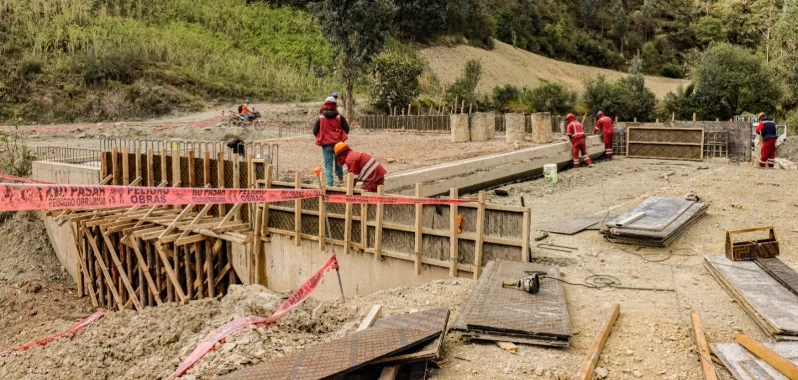
In Cañete, the MTC, in collaboration with the concessionaire, is constructing two dedicated pedestrian bridges designed to provide a secure alternative to crossing the busy Panamericana Sur at grade level.
- The 9 de Octubre Pedestrian Bridge (km 93): With an investment of S/ 7.79 million, this project is essential for linking local neighborhoods divided by the highway. Currently, the project reports a physical progress rate of 54%.
- The San Antonio Pedestrian Bridge (km 202): Representing an investment of S/ 7.93 million, this structure is set to provide critical access for the community in San Antonio. Construction is currently at 39% completion.
Vehicular Efficiency in Chincha
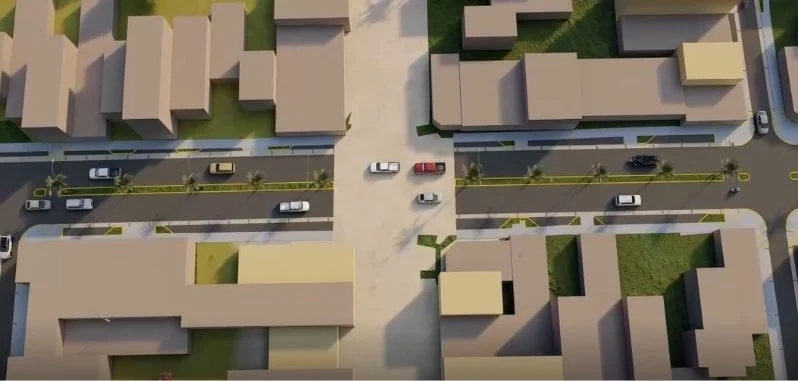
In the Ica region, the focus shifts to vehicular throughput and safety. The Chinchaysullo grade-separated intersection is the most advanced of the three projects. With a substantial investment of S/ 33.1 million, this engineering marvel is currently at 92% completion. It is projected to be fully operational by the third quarter of 2026, significantly reducing traffic congestion and accident risks for heavy-duty freight vehicles and passenger buses alike.

Chronology and the Path to Modernization
The roadmap for these infrastructure developments is rooted in the long-term planning of the MTC, which seeks to transform the Pucusana–Ica stretch into a modern, high-standard transit corridor.
- 2024: The Strategic Pivot: The foundation for these projects was cemented in 2024 with the signing of Addendum No. 11 to the concession contract for the Pucusana–Ica section. This legal framework unlocked the necessary funding and regulatory pathways to launch a broader, 21-project infrastructure package.
- Early 2025: Mobilization: Following the signing of the addendum, the Concesionaria Vial del Perú S.A. (COVIPERÚ) began the initial phases of site preparation, environmental assessment, and logistics mobilization.
- Mid-2026: Accelerated Execution: By the third quarter of 2026, the construction reached its current peak intensity. While four projects within the master plan have already reached full completion, the three highlighted projects are currently in the final stages of structural assembly and finishing works.
- 2026 and Beyond: The upcoming months are dedicated to the finalization of the Chinchaysullo intersection, while the pedestrian bridges in Cañete move toward their final stages of concrete pouring and safety feature installation.
Supporting Data: The Broader Infrastructure Package
The three projects currently under the spotlight are mere components of a larger, ambitious infrastructure program. The total investment for the 21 projects currently encompassed by the master plan is estimated at S/ 726 million.
| Project Status | Quantity |
|---|---|
| Completed | 4 |
| Under Construction | 3 |
| Pre-construction/Land Clearing | 14 |
The 14 projects currently in the pre-construction phase are navigating the complex regulatory environment of "land liberation" and "interference removal." These are critical, often time-consuming processes involving the acquisition of right-of-way land, the relocation of public utilities (such as high-voltage power lines, fiber optic cables, and water pipes), and environmental impact mitigation. The MTC has noted that once these bottlenecks are cleared, the final wave of construction will commence, further enhancing the capacity of the Panamericana Sur.
Official Responses and Strategic Rationale
The Concesionaria Vial del Perú S.A. (COVIPERÚ), as the project operator, has emphasized that these interventions are not merely aesthetic or capacity-related; they are fundamentally safety-driven.
"The primary objective is the total separation of pedestrian and vehicular flows," stated a representative for the infrastructure oversight committee. "On a highway of this magnitude, the interaction between local pedestrian crossings and high-speed vehicular traffic is a significant risk factor. By constructing grade-separated crossings and intersections, we are effectively removing the conflict points that have historically led to accidents."

The MTC has consistently highlighted that the Pucusana–Ica concession is a model for public-private partnerships (PPP) in Peru. By leveraging the technical and financial capacity of the private sector under state supervision, the government ensures that the fiscal burden of maintenance and expansion is managed sustainably while maintaining high service standards for road users.
Implications for the Future of Regional Connectivity
The completion of these works holds significant implications for the southern region of Peru:
1. Economic Integration
The Panamericana Sur is the artery through which agricultural exports, mining supplies, and tourism flows move between the coast and the inland regions. A more efficient, safer road translates to lower logistical costs and more reliable delivery times, which directly impacts the competitiveness of the regional economy.
2. Social Impact and Urban Planning
The creation of safe pedestrian crossings in areas like Cañete bridges the gap between communities that have been effectively "cut in half" by the highway. This fosters greater social cohesion and allows for safer access to schools, markets, and local healthcare centers for residents who previously risked their lives navigating the highway on foot.
3. Safety Standards
The 92% completion rate of the Chinchaysullo intersection serves as a barometer for the success of the current administration’s infrastructure agenda. If successful, this model of modular improvement—tackling one intersection or bridge at a time—provides a scalable blueprint for other highway concessions across the country.

4. Challenges Ahead
While progress is evident, the MTC remains cognizant of the challenges posed by the remaining 14 projects. The complexities of land acquisition in Peru often lead to project delays. Continued political stability and robust administrative support are essential to ensure that these projects are not stalled by bureaucratic hurdles or litigation.
Conclusion: A Transforming Landscape
The ongoing works on the Panamericana Sur are a testament to the transformative power of strategic public investment. With significant progress on the ground in Lima and Ica, the MTC is steadily inching toward a vision of a modern, safe, and efficient transport network.
As the Chinchaysullo project nears its completion date in late 2026, the focus will likely shift to the resolution of the outstanding 14 projects. The successful delivery of this S/ 726 million investment package will not only serve as a benchmark for future concessions but will also provide a tangible improvement in the quality of life for thousands of Peruvians who rely on this vital road every single day. For the Ministry of Transport and Communications, the mission is clear: to ensure that the infrastructure of tomorrow is built on the foundation of safety, sustainability, and efficiency today.