In the landscape of Peruvian mining, the challenge of translating resource extraction into sustainable regional development is often fraught with administrative hurdles and execution delays. However, the Asociación Civil Fondo Social Alto Chicama has emerged as a beacon of efficiency. As the only social fund of its kind in the La Libertad region, this organization has redefined the paradigm of community investment by achieving a remarkable leverage ratio of 91 soles for every single sol invested in technical documentation.
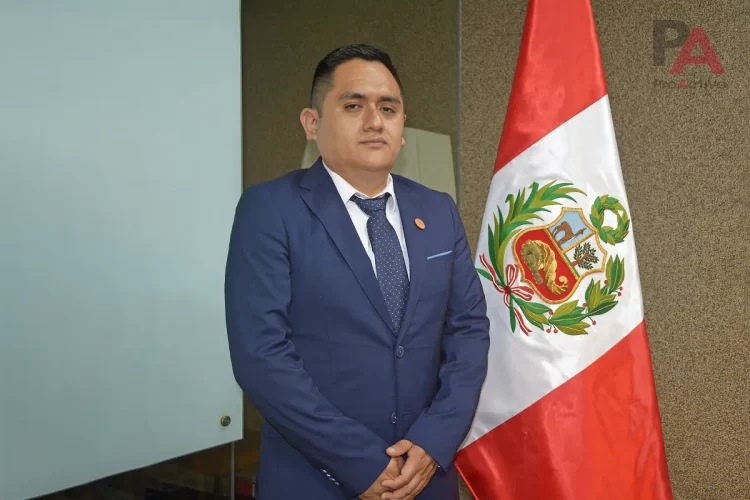
Luis Cortez Ulloa, General Manager of the Fondo Social Alto Chicama, recently presented these achievements at the Institute of Mining Engineers of Peru (IIMP). His report underscored a strategic pivot: moving away from direct, resource-heavy project execution toward a model of technical facilitation and state-level financial leverage.
The Strategic Evolution: From Direct Execution to Financial Leverage
The history of the Fondo Social Alto Chicama is intrinsically linked to the operations of the Lagunas Norte mining unit, currently managed by Minera Boroo Misquichilca. Under the original structure, the fund received direct contributions to finance local projects. However, a turning point occurred in 2019, when the previous operator, Barrick, placed the mine into maintenance mode.
"When the mine went into care and maintenance, the resources we received were minimal and no longer sufficient to develop projects directly," Cortez explained. This economic contraction forced the fund to reinvent its operational model. Instead of spreading thinning resources across a few small projects, the organization pivoted to professionalizing the "pre-investment" phase.
By investing exclusively in high-quality technical files (expedientes técnicos), the fund enabled local municipalities to present "shovel-ready" projects to various government ministries and state programs. This shift effectively transformed the fund into an engine of public investment, where a small investment in design and planning unlocks millions in national budget funding.
Chronology of Impact: Building Infrastructure and Trust
The fund’s track record is substantial, encompassing over 500 completed projects and equipment programs, supported by the development of 466 technical files.
The Shift (2019–2020)
Faced with reduced royalties due to the mine’s transition to maintenance, the organization prioritized the creation of a technical team capable of drafting high-standard municipal projects. This allowed local governments—which often lack the technical staff to draft complex project designs—to compete for regional and national funding.
The Success of the Leverage Model (2021–2024)
The results were immediate. By providing technical, legal, and financial oversight, the fund ensured that municipal projects met strict state requirements. Today, the leverage ratio stands at an impressive 91:1, a figure that continues to climb as newer projects reach the funding approval stage.

Modernizing Infrastructure (Present Day)
Recent flagship projects, such as the water treatment plant in the high-altitude city of Quiruvilca and the "Puente del Amor" in Chuyugual, represent the culmination of this strategy. These projects address critical needs—public health and mobility—while demonstrating the fund’s capacity to handle complex engineering challenges at high altitudes.
Case Studies: Water Security and Connectivity
The Quiruvilca Water Treatment Solution
The Quiruvilca project serves as a masterclass in addressing the vacuum left by departing industries. Once supported by a mining company that provided free water and electricity, the town of 10,000 people faced a severe crisis when that support evaporated.
"The population was suffering from water scarcity during the dry season, and testing revealed the presence of heavy metals and bacteriological contamination," Cortez noted. The Fondo Social stepped in, not just to fix a pipe, but to engineer a sustainable solution. By constructing a high-capacity reservoir and a modern water treatment plant—modeled after the sophisticated systems used by Sedapal—the fund ensured safe, consistent water delivery.
The project highlighted the fund’s versatility: it provides high-tech solutions for urban centers like Quiruvilca and cost-effective, simple chlorination systems for remote hamlets of 50 to 100 families.
The "Puente del Amor" (Bridge of Love)
In the community of Chuyugual, the fund addressed a 30-year-old logistical bottleneck. Residents were forced to endure a 25-minute trek across a deep ravine to reach adjacent sectors. The construction of a 100-meter arch bridge reduced that journey to less than three minutes.
What started as a purely utilitarian infrastructure project transformed into a cultural landmark. The local municipality’s decision to add LED lighting and vibrant artistic details turned the structure into a tourist attraction. This unintended consequence has sparked a small, informal economy, with local vendors now selling food and crafts to visitors, demonstrating how infrastructure can act as a catalyst for local entrepreneurship.
Official Response: The Mechanics of Efficiency
When asked about the secret to this high efficiency, Cortez emphasizes the "accompaniment" model. "We don’t just hand over a document. We participate in the entire process," he stated.
The process follows a rigorous protocol:
- Identification: Municipalities within the Social Fund’s council submit project ideas.
- Technical Validation: The fund verifies that projects comply with national norms.
- Drafting: The fund hires third-party experts to develop the technical file, supervised by the fund’s own internal technical team.
- Advocacy: The fund assists the municipality in presenting the file to state entities, intervening to resolve technical observations or requests for additional studies.
This hands-on management ensures that the investment in the technical file does not go to waste, but rather serves as a key to unlocking state budget allocations.
Implications for the Mining Industry and Public Policy
The success of the Fondo Social Alto Chicama holds significant implications for the future of social management in the Peruvian mining sector.
1. Sustainability Beyond Operations
The model proves that mining-related social funds can survive and thrive even when mining operations slow down. By focusing on institutional strengthening and project readiness, the fund ensures that the benefits of mining continue to flow to communities long after the peak of production has passed.
2. A Blueprint for Decentralization
The fund acts as an intermediary that bridges the gap between the technical requirements of central government ministries and the limited administrative capacity of rural municipalities. This model of "technical capacity building" is a scalable solution that could be applied to other regions in Peru to reduce the high rates of public investment under-execution.
3. Economic Diversification
As seen with the "Puente del Amor," strategic infrastructure can inadvertently create new economic avenues. By focusing on projects that solve basic needs—water, transport, and energy—the fund creates the foundational stability required for local commerce and tourism to flourish.
Conclusion: A Model for the Future
The Fondo Social Alto Chicama stands as a testament to the power of strategic planning. By moving from a "provider" mindset to a "facilitator" mindset, Luis Cortez Ulloa and his team have created a robust, sustainable mechanism for regional development. Their success in leveraging 91 soles for every sol invested is not merely a financial statistic; it is a vital indicator of how well-managed social funds can ensure that the legacy of mining is one of lasting, tangible progress for the communities of La Libertad.
As the organization continues to update its leverage figures and expand its portfolio, it remains a critical case study in how the mining sector can contribute to the strengthening of the Peruvian state’s own development goals.