In a significant push toward governance, accountability, and social stability, the Peruvian government has reaffirmed its commitment to the Extractive Industries Transparency Initiative (EITI). Managed through the Ministry of Energy and Mines (MINEM) and spearheaded by its General Office of Social Management (OGGS), this initiative serves as a cornerstone for building trust between the State, private corporations, and local communities. As Peru continues to rely on mining and hydrocarbons as primary engines of its economy, the EITI framework provides the essential data necessary to ensure that the wealth generated from natural resources translates into tangible development for the nation’s citizens.
The Mandate: Promoting Accountability in Extractive Industries
The core mission of EITI Peru is to facilitate a transparent flow of information regarding the financial and operational activities of companies involved in mining and oil and gas exploration. By functioning as a permanent technical secretariat, the MINEM creates a tripartite platform where government officials, corporate executives, and civil society leaders sit at the same table to engage in constructive dialogue.
The fundamental objective is twofold: first, to disclose how much revenue is generated by extractive activities; and second, to track how these funds are distributed and utilized by regional and local governments. In a country where the "resource curse" is a frequently debated topic, the transparency provided by EITI is intended to demystify the complex financial relationship between the extraction of minerals and the public budget, thereby fostering an environment of accountability.
Chronology and Evolution: From National Commitment to Regional Reach
The history of EITI in Peru is one of gradual expansion and deepening influence. Since its adoption, the initiative has transitioned from a centralized national monitoring project to a decentralized framework deeply embedded in the country’s most resource-rich regions.
- Initial Implementation: The focus was primarily on national-level data collection, establishing the basic reporting standards for companies to disclose payments to the state.
- Expansion of Transparency Mechanisms: As the initiative matured, it moved beyond simple payment reporting to include social and environmental impact data, acknowledging that citizens are concerned with more than just monetary figures.
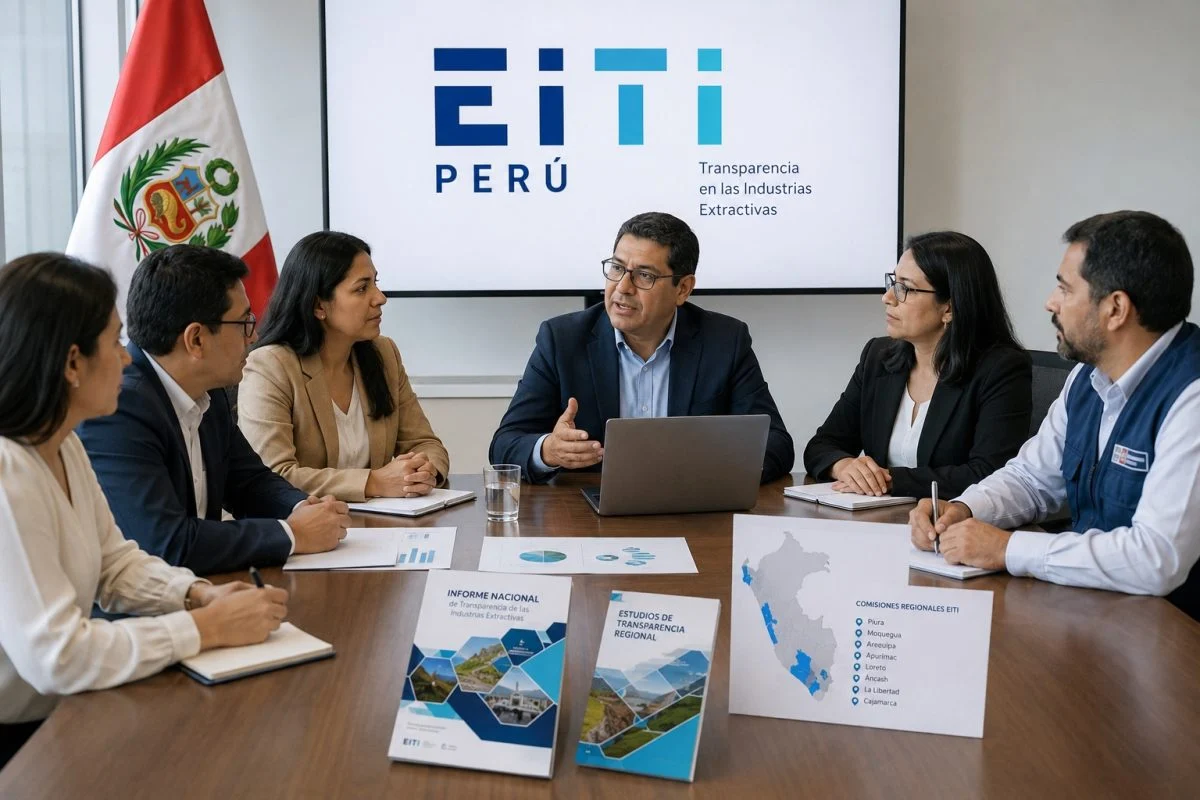
- Regional Integration: The most critical evolution has been the installation of the eight Regional EITI Commissions. These include Piura, Moquegua, Arequipa, Apurímac, Loreto, Áncash, La Libertad, and Cajamarca. Each of these regions hosts significant extractive operations, and the regionalization of EITI was a strategic move to bring transparency directly to the doorsteps of those most affected by mining and hydrocarbon projects.
- The Current Phase (2023-2024): The focus is currently on the consolidation of the X National Transparency Report (INTC), which aims to provide a comprehensive audit of the industry’s financial output during the 2023-2024 period.
Supporting Data and Tools: The X National Transparency Report
The backbone of EITI Peru’s credibility lies in its rigorous reporting tools. The X National Transparency Report (INTC) and the Regional Transparency Studies (ETR) are not merely bureaucratic exercises; they are vital instruments for public oversight.
Key Components of the Reporting Framework:
- Payment Disclosure: Companies are required to report taxes, royalties, and fees paid to the government. This data is then reconciled with the government’s records of what it has received.
- Revenue Allocation: The studies track how these funds are transferred to regional and local governments. This is crucial because, while national revenue figures are often public, the "last mile" of fund distribution—the actual execution of public projects—is where the greatest gaps in transparency often exist.
- Public Accessibility: The initiative places a high premium on "citizen-friendly" data. The goal is to move beyond complex accounting spreadsheets toward accessible information that allows community leaders, university researchers, and NGOs to effectively monitor the use of the mining "canon" (the share of mining taxes transferred to regional governments).
Official Responses and Strategic Vision
The leadership at MINEM, specifically through the OGGS, views the strengthening of EITI as an essential component of social conflict prevention. In Peru, many social conflicts are rooted in a perceived lack of development despite the presence of high-value mining projects.

"By providing clear, verifiable information on how these resources are generated and utilized, we are effectively removing the fuel that feeds misinformation and distrust," noted a spokesperson from the Ministry. The official stance is that transparency is not a hurdle for investment, but rather a catalyst for sustainable development. By involving civil society in the monitoring process, the government aims to empower citizens, turning them into active participants in the oversight of their own territorial development.
Furthermore, the government emphasizes that these transparency initiatives encourage "best practices" within the private sector. Companies that comply with EITI standards are often viewed more favorably by international investors, who prioritize ESG (Environmental, Social, and Governance) criteria.
Implications for the Future: Transparency as a Pillar of Stability
The implications of a robust EITI program in Peru are profound, touching upon economic, political, and social dimensions.
1. Strengthening Social Vigilance
When communities understand exactly how much money is available to their local governments, they are better equipped to demand accountability. This "bottom-up" pressure forces local authorities to be more responsible in their budgeting and project execution, potentially reducing corruption in municipal spending.
2. Reducing Social Conflict
A significant portion of social conflict in the Andes and the Amazon arises from the "expectation gap"—the difference between what citizens expect in terms of infrastructure and services and what is actually delivered. By clarifying the financial realities through EITI, the initiative helps manage expectations and highlights the actual contributions of the sector.
3. Improving Institutional Quality
The presence of the eight regional commissions acts as a training ground for local governance. By working alongside MINEM, regional authorities learn to handle data with higher professional standards, which in turn improves the quality of public administration in these regions.

4. Sustaining Investor Confidence
Investors in the extractive sector operate in a high-risk environment. Long-term projects require social license, which is fragile. EITI provides a standardized, neutral, and reliable information source that can be cited in public hearings and community meetings, reducing the volatility often associated with mining and hydrocarbon projects.
Challenges Ahead
Despite the progress, the road ahead is not without obstacles. The primary challenge remains the "digital and technical divide." While reports are published, ensuring that this information reaches the most remote communities—and is understood by them—requires ongoing effort. The MINEM and the Regional Commissions must continue to innovate in their communication strategies, utilizing radio, community workshops, and local media to bridge the gap between complex economic data and local public opinion.
Furthermore, the sustainability of the Regional Commissions depends on political will. As local governments change after elections, there is a risk that the momentum behind EITI could wane. Consequently, institutionalizing these commissions as permanent, non-partisan entities is critical for the long-term success of the initiative.
Conclusion
The efforts of the Ministry of Energy and Mines to fortify EITI Peru represent a mature approach to resource management. By prioritizing transparency, the Peruvian state is acknowledging that its mineral and hydrocarbon wealth belongs to the people, and that the management of this wealth must be done in the light of day.
As the nation moves forward with the publication of its X National Transparency Report and continues to support its regional commissions, the focus must remain on the ultimate goal: using data to build bridges. In a nation as diverse and geographically complex as Peru, these bridges—built on the pillars of truth, verification, and dialogue—are the only viable path toward a future where natural resource wealth leads to permanent, inclusive prosperity for all citizens.
The commitment to EITI is more than a technical initiative; it is a declaration that the future of Peru’s extractive industries will be defined not just by the volume of what is extracted, but by the transparency with which the benefits are shared and the integrity with which they are managed.