The renewable energy landscape in Argentina is undergoing a significant transformation, with the northern province of Catamarca emerging as a pivotal player in the nation’s transition toward sustainable power. The Ampajango Solar Park, a cornerstone project in the region’s infrastructure portfolio, has officially entered its final phase of construction. Boasting over 8,000 advanced photovoltaic panels, this facility is poised to become a vital artery in the local electrical grid, reinforcing energy security and promoting regional development.
Main Facts: A Milestone in Renewable Energy
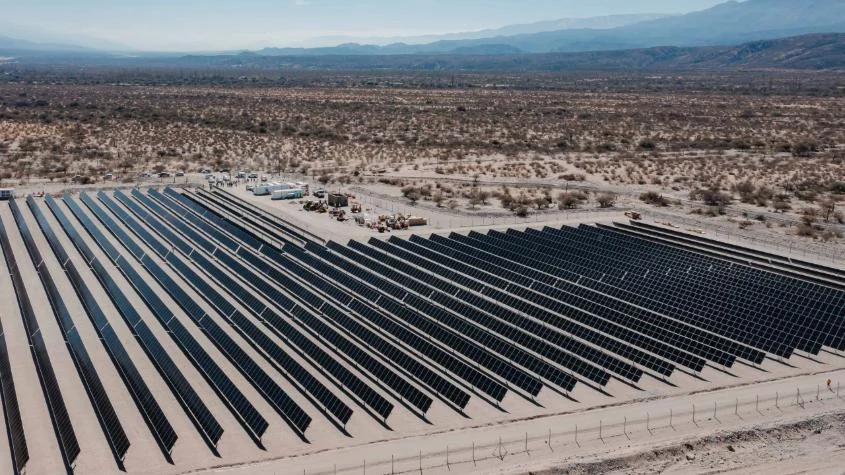
As of August 2026, the Ampajango Solar Park reports an impressive progress rate of over 80%. Strategically situated to leverage the high solar irradiance characteristic of the Catamarca region, the project is designed to bridge the gap between supply and demand for local communities.
The facility is spread across a nine-hectare site adjacent to an existing transformer station. This strategic placement is not merely logistical; it is a technical imperative that allows for the seamless integration of generated electricity directly into the distribution network managed by Energía Catamarca SAPEM.
According to Ezequiel Tejada, the project’s Chief of Construction representing the firm Trackland, the site is currently home to 8,424 high-efficiency solar modules. Each unit boasts a capacity of 720 watts, enabling the plant to produce an initial output of 6.6 megawatts (MW). Once fully commissioned, the park will contribute 5 MW to the grid during its initial phase, with a clear roadmap to scale its capacity significantly in the coming years.
Chronology: From Concept to Commissioning
The trajectory of the Ampajango project reflects the broader push by provincial authorities to decentralize energy production and reduce dependence on long-distance transmission lines.

- Initial Planning and Site Selection: The project was identified based on geographical studies highlighting the optimal solar radiation levels in the vicinity of the existing transformer station, minimizing the need for extensive new transmission infrastructure.
- Construction Phase: Throughout 2025 and early 2026, the project moved through civil works, including site leveling, mounting structures, and the complex logistical task of transporting and installing thousands of photovoltaic modules.
- Inspection and Review (August 2026): Governor Raúl Jalil conducted a formal site inspection alongside local government officials. The visit confirmed that the project is on track for its scheduled grid synchronization.
- Upcoming Commissioning (September 2026): The project is slated to begin injecting clean, renewable energy into the Catamarca grid, marking a transition from a construction site to a functioning power utility.
Supporting Data and Technical Specifications
The Ampajango project is characterized by its modularity and high-performance engineering. By utilizing 720-watt panels, the project utilizes the latest advancements in photovoltaic technology, maximizing energy density per square meter.
The development is divided into two distinct operational phases:
- Phase I (Initial Launch): The facility will contribute 5 MW of power to the regional grid. This initial injection is intended to stabilize the local electrical load and provide a reliable baseline of green energy.
- Phase II (Expansion): The project blueprint includes a secondary expansion phase that will see the facility’s total delivery capacity climb to 12 MW. This scalability is a core feature of the design, allowing the province to adjust energy output based on the evolving needs of the industrial and residential sectors in the area.
The total land footprint of nine hectares is being utilized efficiently, with the design prioritizing minimal environmental impact while maximizing the number of panels that can be installed without causing thermal interference between rows.
Official Responses and Strategic Vision
The inspection led by Governor Raúl Jalil underscored the political and social weight of the project. For the provincial administration, Ampajango is more than just a solar park; it is a proof-of-concept for the viability of renewable energy in the Argentinian north.
"The modernization of our electrical infrastructure is essential for the growth of Catamarca," Governor Jalil noted during his visit. He emphasized that the provincial government is committed to supporting projects that move away from traditional fossil-fuel dependence. The collaboration between the provincial government and private contractors like Trackland serves as a model for future Public-Private Partnerships (PPPs) in the energy sector.

Authorities have highlighted that the project serves two primary purposes:
- Grid Stabilization: By generating power close to the point of consumption, the project reduces line losses and prevents voltage drops, a common issue in remote provincial areas.
- Economic Diversification: By integrating renewable energy sources into the matrix, Catamarca is positioning itself as a hub for green investment, potentially attracting industries that prioritize a low-carbon footprint in their supply chain.
Implications for the Argentinian Energy Matrix
The completion of the Ampajango Solar Park has broader implications for the national energy strategy of Argentina. As the country seeks to meet international sustainability commitments, the decentralized approach—building smaller, highly efficient parks like Ampajango—is gaining traction over massive, centralized utility-scale projects that require years of transmission-line development.
Environmental Impact
The transition to solar energy at the local level significantly reduces the carbon footprint of the provincial energy grid. By displacing the need for electricity generated from natural gas or fuel oil, the park will contribute to a measurable reduction in greenhouse gas emissions annually.
Energy Sovereignty
One of the most critical aspects of this project is the increase in regional energy sovereignty. By producing electricity within its own borders, Catamarca becomes less vulnerable to external energy price shocks and national grid failures. This autonomy is vital for maintaining the continuity of local industries, such as mining and agriculture, which are central to the provincial economy.
Economic Development and Job Creation
The construction and eventual maintenance of the solar park generate high-quality jobs for local technicians and engineers. Furthermore, the availability of stable, clean energy serves as an incentive for new businesses to establish themselves in the province, knowing that the infrastructure can support their operational requirements.

Future Outlook
As the world watches the shift toward a greener global economy, projects like Ampajango prove that regional initiatives are just as important as national policies. The successful integration of this 12 MW potential into the Catamarca distribution network will likely serve as a benchmark for other provinces in Argentina that share similar geographical advantages.
With the September launch date approaching, the focus now shifts to the final testing of inverters, transformers, and the connection protocols with Energía Catamarca SAPEM. As the first electrons from the Ampajango park flow into the local homes and businesses of Catamarca, it will signify a new chapter in the province’s history—one defined by innovation, sustainability, and a proactive stance toward the energy challenges of the 21st century.
The successful execution of this project is a clear signal that Argentina’s northern provinces are ready to lead the charge in the nation’s energy transition, turning vast, sun-drenched landscapes into engines of modern economic prosperity.