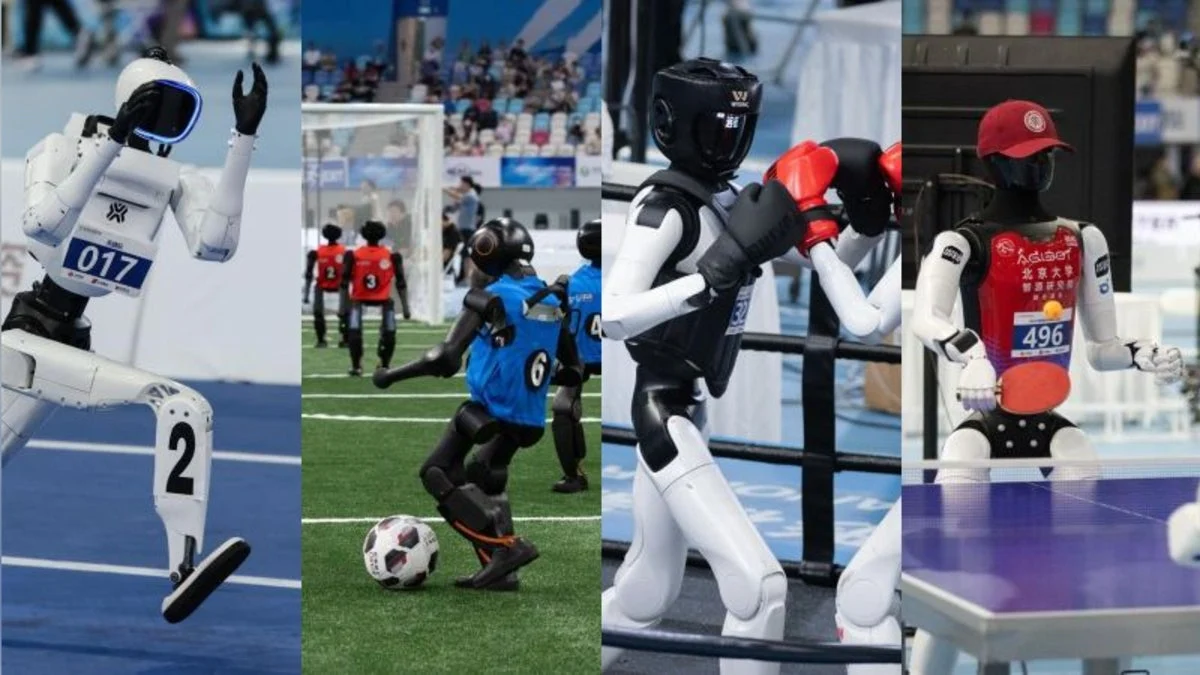
The landscape of robotics is undergoing a seismic shift, moving away from the rigid, predictable movements of industrial automation toward the fluid, adaptive capabilities of humanoid systems. During a recent exhibition in Beijing, a new generation of humanoid robots captured the global imagination by performing tasks ranging from choreographed breakdancing to precision manufacturing assembly. While the viral nature of their athletic prowess garnered headlines, industry experts argue that the true significance lies in the underlying technological advancements that could redefine the global workforce.
Main Facts: The Duality of Modern Robotics
The recent demonstrations in Beijing showcased a dual-track development strategy currently employed by leading robotics firms. On one hand, there are the "showpiece" capabilities—complex motor functions that mirror human agility, such as dancing, balancing on uneven surfaces, and expressive gesturing. These functions serve as a benchmark for mobility and sensory feedback integration.
On the other hand, the "utility" track focuses on repetitive, high-precision tasks essential for factory environments. These robots are being engineered to operate within spaces designed for humans, utilizing sophisticated vision systems and tactile sensors to handle delicate components, operate machinery, and manage logistics. The central fact remains: the robots seen in Beijing are not merely mimicking human behavior; they are being trained to integrate into existing industrial infrastructures, potentially bridging the gap between bespoke laboratory prototypes and mass-market deployment.
Chronology: A Trajectory of Innovation
The progression of humanoid robotics in China has been rapid, characterized by a transition from research-heavy academic projects to commercially viable hardware.
- 2018–2020: The Foundation Phase. Early research focused on bipedal locomotion, with laboratories struggling to maintain balance during dynamic movement. The goal was simply to ensure the robot did not fall.
- 2021: Integration of AI. The introduction of Large Language Models (LLMs) and advanced neural networks allowed robots to interpret verbal commands and respond to visual cues, moving beyond pre-programmed paths.
- 2022–2023: The Industrial Pivot. Companies began pivoting toward "embodied AI," where robots were placed in simulated factory environments to learn spatial awareness and task completion through reinforcement learning.
- 2024: The Beijing Showcase. The recent event marked the convergence of these streams. The ability to switch between high-energy movement (breakdancing) and low-energy precision (factory work) signaled a maturity in mechanical design and energy efficiency.
Supporting Data: The Mechanics of Progress
The hardware powering these humanoid machines is a testament to the rapid maturation of the sector. According to technical specifications provided by the exhibitors:
- Actuator Density: Modern humanoid robots now feature high-torque, high-speed actuators that allow for human-like speed in arm and leg movements. Some models boast a 30% increase in torque-to-weight ratios compared to models from three years ago.
- Sensory Fusion: By combining LiDAR, depth-sensing cameras, and force-torque sensors at the joints, these robots achieve a 95% success rate in object recognition and manipulation, even in environments with varying lighting conditions.
- Battery Longevity: Energy management has been a historical bottleneck. Current iterations utilize advanced lithium-sulfur or solid-state battery technologies, extending operational windows from 45 minutes to over four hours on a single charge—a critical metric for shift-based manufacturing.
- Economic Scalability: The cost of production for a high-end humanoid unit has dropped by an estimated 22% annually since 2020, as 3D printing and modular assembly techniques become the industry standard for chassis manufacturing.
Official Responses and Industry Sentiment
The demonstrations have elicited a mix of awe and measured caution from global stakeholders.
Government Perspective: Representatives from China’s Ministry of Industry and Information Technology (MIIT) have framed the development as a cornerstone of the "New Quality Productive Forces" strategy. The official stance is that humanoid robots are essential to combatting labor shortages in an aging society and maintaining a competitive edge in the global supply chain.
Industry Experts: Dr. Elena Vance, a robotics researcher, noted: "While the breakdancing performance is a clever PR move to demonstrate range of motion, the real story is in the hand-eye coordination. Watching a machine pick up a delicate microchip and then transition to tightening a heavy-duty bolt proves that these systems are becoming generalists, which is the ‘holy grail’ of robotics."
Ethical and Safety Oversight: Critics and regulatory bodies have raised concerns regarding safety protocols. In response, manufacturers emphasized that all robots showcased in Beijing were equipped with "fail-safe" sensory arrays that halt movement immediately upon detecting human proximity, adhering to international ISO standards for collaborative robotics.
Implications: The Future of the Humanoid Workforce
The implications of this technology extend far beyond the showroom floor. If these robots can successfully transition into the factory, the global economy could see a transformation in manufacturing economics.
1. Reshoring and Supply Chain Sovereignty
As humanoid robots lower the cost of labor-intensive assembly, countries that previously outsourced manufacturing due to high wage costs may find it viable to "reshore" production. This would significantly shorten global supply chains, reducing the carbon footprint associated with shipping and increasing resilience against geopolitical shocks.
2. The Shift in Human Labor Roles
The most significant impact will be on the human workforce. Rather than viewing robots as simple replacements, the industry is framing them as "cobots"—collaborative robots. The role of the factory worker is expected to evolve from manual labor to "robot orchestration," where humans oversee fleets of humanoid machines, managing their maintenance, training, and operational strategies.
3. Societal Integration
Beyond the factory, the success of these humanoid platforms suggests a future where robots might assist in elderly care, disaster relief, and hazardous environmental tasks. The fluidity shown in Beijing implies that these machines will eventually be comfortable navigating the human-built world—a world designed for two legs and two hands.
4. Economic Challenges
However, the transition will not be without friction. There are significant concerns regarding the displacement of low-skilled labor and the potential for a "digital divide" where only large, wealthy corporations can afford the initial capital expenditure of humanoid fleets. Policymakers will be forced to grapple with how to manage this transition, potentially through retraining programs or new tax structures on automated labor.
Conclusion: A New Chapter in Human-Machine Collaboration
The spectacle of a humanoid robot performing a breakdance in Beijing serves as a powerful metaphor for the current state of the industry: it is a display of confidence, agility, and technical mastery. Yet, the true substance lies in the background—the quiet, precise movements of the factory floor that represent the next industrial revolution.
As these machines move from the laboratory to the assembly line, they carry the promise of a more efficient, safer, and more productive future. Whether they will truly integrate into the fabric of human society remains to be seen, but the Beijing showcase has provided a definitive answer to one question: the era of the humanoid robot is no longer a distant sci-fi fantasy. It is here, it is moving, and it is ready to work.
The coming decade will be defined by how humanity manages this transition. The challenge lies not in the robots themselves, but in our collective ability to integrate these sophisticated tools into a society that must balance technological advancement with the preservation of human value. As we look toward the next generation of humanoid development, the focus will likely shift from what these machines can do to what they should do, marking the beginning of a profound new partnership between human ingenuity and artificial form.