Executive Summary
The Peruvian government, under the leadership of Minister of Energy and Mines Guillermo Shinno, has launched a decisive strategy to revitalize the country’s energy landscape. Central to this initiative is the "Seven Regions" gas massification project, a long-stalled private sector proposal from 2023 that the current administration is now fast-tracking. Beyond gas, the Ministry (MINEM) is prioritizing the reduction of bureaucratic hurdles ("permisología") to unlock a colossal mining and energy project pipeline valued at over $33 billion. By integrating natural gas distribution, regional infrastructure development in Cusco, and a push for new exploration in protected zones, the government aims to cement Peru’s position as a regional energy powerhouse.
The "Seven Regions" Project: Bringing Gas to the Heart of Peru
The cornerstone of Minister Shinno’s policy is the expansion of natural gas access to the interior of the country. For years, the benefits of the Camisea gas fields have been disproportionately concentrated in the Lima and Callao metropolitan areas. The "Seven Regions" project seeks to correct this imbalance by extending services to Ayacucho, Ucayali, Junín, Puno, Cusco, Apurímac, and Huancavelica.
The Mechanics of Massification
The project employs a virtual pipeline model—the transport of liquefied natural gas (LNG) via specialized road tankers—to reach regions where physical pipelines are not yet economically or geographically viable. This method allows for the rapid habilitation of residential, commercial, and industrial connections. Minister Shinno emphasized that this energy source is not only cleaner and more environmentally friendly than traditional fuels but significantly more cost-effective for families compared to electricity or LPG (liquefied petroleum gas).
Overcoming Stagnation
The project, originally conceived in 2023, faced years of legislative and bureaucratic inertia. Minister Shinno confirmed that his office is currently in the final stages of signing an addendum to the existing Lima-Callao natural gas distribution contract. This legal bridge is the key to unlocking the necessary investments to deploy infrastructure across these seven departments, effectively turning a "paralyzed" proposal into a functioning national utility.
Chronology of Development: From 2023 to 2026
- 2023: Initial proposal by private sector stakeholders to create a "Seven Regions" distribution network via virtual pipelines.
- 2024–2025: The project encounters significant delays due to regulatory bottlenecks and lack of inter-institutional coordination.
- June 2026: New administration takes office, identifying the "Seven Regions" project as a top priority to stimulate regional economies.
- August 2026: Minister Guillermo Shinno announces that the addendum for the Lima-Callao contract—a prerequisite for the nationwide rollout—is nearing completion.
- Q4 2026 (Projected): Expected signing of the addendum and the commencement of logistical planning for tanker-based distribution.
Strengthening Energy Infrastructure: The Cusco Gasoducto
While the seven-region plan focuses on broad distribution, the government is simultaneously addressing localized needs in Cusco through a dedicated regional gas pipeline (gasoducto regional).
In collaboration with ProInversión, the Ministry is spearheading a two-stage construction plan. The first stage, focused on technical feasibility and initial installation, is estimated to take approximately 18 months, excluding environmental permitting timelines. This project is vital for the Cusco region, as it provides a stable, long-term energy supply that could catalyze local industrialization and reduce dependence on external energy sources.

Expanding the Frontier: Exploration in Candamo
Addressing the long-term sustainability of the national energy grid, Minister Shinno highlighted the urgent need to increase natural gas reserves. The Ministry is currently evaluating exploration opportunities in the Puno and Madre de Dios regions, with a particular focus on the Candamo zone.
The Conflict of Conservation and Development
This proposal is not without controversy. Candamo, a biologically diverse and sensitive area, presents a complex challenge for the government. Shinno acknowledged the sensitivity of the situation, stating:
"We must reach an agreement with the National Service of Natural Protected Areas (Sernanp) and other key actors. The alternative is worse: we allow illegal mining and illegal logging to continue destroying the protected area unchecked. By introducing formal, regulated energy exploration, we can bring state presence and control to regions currently exploited by criminal elements."
MINEM’s Strategy: Unlocking $33 Billion in Investments
The Ministry’s agenda extends far beyond natural gas. Shinno has made it clear that the core mission of his tenure is to "destrabar" (unlock) the massive backlog of projects in the mining, electricity, and hydrocarbon sectors.
Tackling "Permisología"
The Minister identified the complex web of permits and overlapping institutional requirements as the primary obstacle to national development. MINEM is currently working on two fronts:
- Internal Streamlining: Reforming internal processes within the Ministry to ensure faster approval times for project proposals.
- Inter-Institutional Coordination: Working with other state agencies (such as the Ministry of Environment and the Ministry of Culture) to create a "one-stop-shop" approach to regulatory compliance, reducing the time companies spend waiting for administrative clearance.
With a project pipeline exceeding $33 billion, the potential for economic growth is significant. If these projects move from the drawing board to the construction phase, they will serve as the engine for national GDP growth over the next decade.

Official Responses and Future Outlook
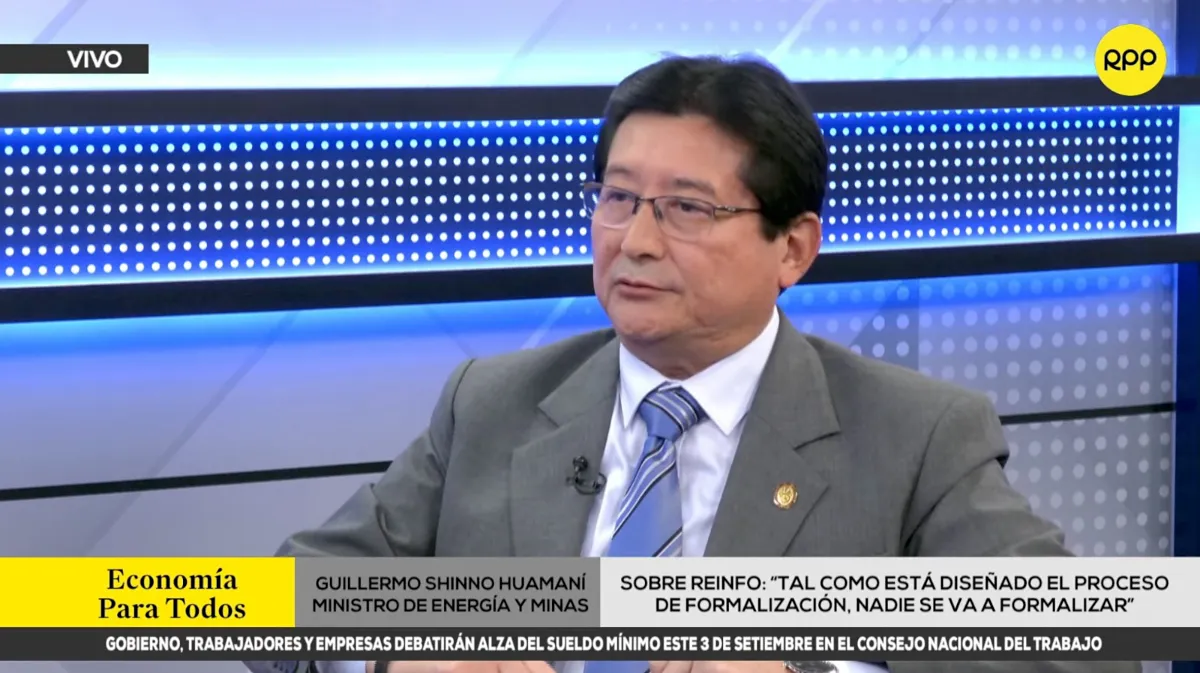
In a recent interview with RPP, Minister Shinno emphasized that the current administration will request special legislative powers from Congress. These powers are intended to expedite:
- The massification of natural gas.
- The removal of barriers for electricity generation and transmission projects.
- The formalization of the extractive industries to protect the environment.
Economic and Social Implications
The shift toward natural gas is expected to have a profound social impact. By lowering the cost of energy for households, the government aims to increase the disposable income of families in the southern and central regions. Furthermore, the development of electrical transmission infrastructure is critical to ensuring that Peru can meet its growing industrial demand without the risk of blackouts or energy shortages.
Conclusion
Minister Guillermo Shinno’s strategy represents a pragmatic pivot toward growth. By focusing on the "low-hanging fruit" of the Seven Regions project while simultaneously tackling the structural issues of permitting and exploration, the Ministry of Energy and Mines is positioning itself as a central pillar of the current government’s economic recovery plan.
As the Ministry enters the final phase of these negotiations, all eyes will be on the legislative and environmental hurdles that remain. If successful, the administration will have delivered on its promise to bring energy equity to the most vulnerable regions of the country while securing the investment necessary to power Peru’s future.
Reported by the editorial team at ProActivo.