Executive Summary: A Multi-Million Sol Loss
A recent audit conducted by the Comptroller General of the Republic (CGR) of Peru has uncovered a staggering financial prejudice of S/ 4,849,637.77 within Provías Nacional, the government entity responsible for the country’s road infrastructure. The findings, detailed in the Audit Report No. 010-2026-2-0661-AC, point to a systematic failure in oversight, involving the improper approval of work valuations and the final liquidation of a major road construction project without the application of legally mandated penalties.
The core of the controversy surrounds the rehabilitation of the Puerto Bermúdez – San Alejandro highway, a massive infrastructure endeavor that has been marred by allegations of administrative negligence and technical incompetence. Beyond the financial loss, the audit identified over 50 distinct technical deficiencies, raising critical questions about the safety, durability, and oversight of public works projects in Peru.
The Genesis of the Project: A Massive Investment
To understand the gravity of the current findings, one must look back at the origins of the project. Contracted in 2015, the rehabilitation of the Puerto Bermúdez – San Alejandro road was framed as a cornerstone for regional development, connecting remote communities and facilitating commerce across the jungle regions of Huánuco and Ucayali.
The total investment for the project was set at a staggering S/ 317,914,924.91. From the outset, the project was intended to be a model of modern engineering. However, the subsequent years of execution revealed a disconnect between the ambitious objectives and the reality on the ground. The audit report highlights that the failure to manage the contract correctly began long before the final liquidation phase, suggesting a pattern of oversight that may have been intentionally lenient.

Chronology of Negligence: From Execution to Audit
The timeline of this project serves as a case study in bureaucratic failure and lack of accountability:
- 2015: The contract for the rehabilitation of the Puerto Bermúdez – San Alejandro road is signed, marking the beginning of a high-stakes infrastructure endeavor.
- 2016–2025: Throughout the decade of execution, multiple reports and site visits suggest potential delays and quality issues. The audit specifically focuses on the documentation processed during the later stages of the project.
- The Critical Window (Valorizaciones 22–29): The audit report focuses heavily on the period encompassing the 22nd to the 29th valuations. It was during this phase that the Direccion de Obras of Provías Nacional, in coordination with the project’s external supervisors, approved documentation that contained significant inaccuracies.
- 2026 (Current Findings): The CGR releases Audit Report No. 010-2026-2-0661-AC, exposing that the failure to apply penalties for non-compliance resulted in a loss of nearly S/ 5 million to the state treasury.
Technical Deficiencies: More Than Just Financial Loss
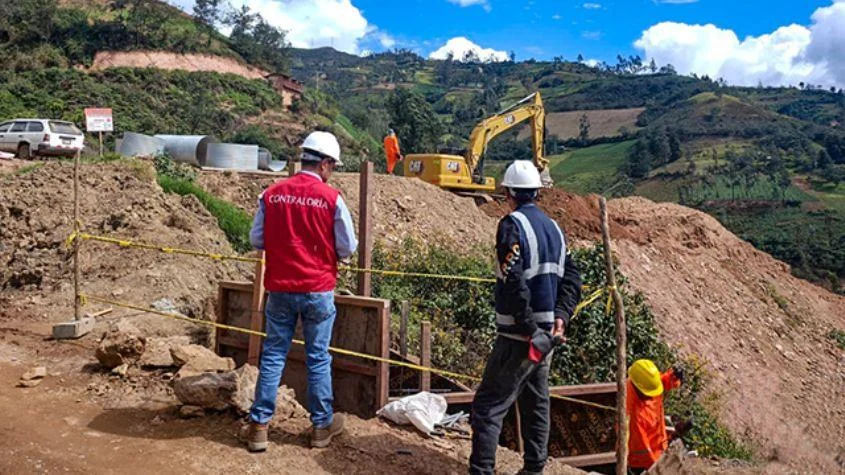
While the financial loss of S/ 4.8 million is the headline, the technical reality of the highway is equally concerning. The CGR audit identified over 50 technical failures during the inspection of the Ciudad Constitución – Puerto Súngaro stretch. These deficiencies are not merely administrative paperwork errors; they represent physical vulnerabilities in the infrastructure that taxpayers have paid for.
The Nature of the Deficiencies
The audit suggests that the technical team responsible for overseeing the project allowed for:
- Work Not Executed: Documentation was signed off as complete despite the physical absence of the promised road improvements.
- Over-Valuation: The cost of materials and labor was inflated, allowing contractors to receive payments that did not reflect the reality of the work performed.
- Unjustified Advances: Financial disbursements were made to the contractors without the necessary backing, creating a significant risk of capital flight and project abandonment.
The failure to apply penalization clauses for these issues meant that the state effectively paid a premium for substandard work, while the contractors faced no financial consequences for their inability to meet contract specifications.

The Role of Supervision and Administrative Failure
A central pillar of the audit’s findings is the complicity—or gross incompetence—of the oversight bodies. In public works, the "supervision" team is tasked with acting as the state’s eyes and ears on the ground. Their duty is to verify that every cubic meter of concrete and every kilometer of asphalt meets the engineering standards specified in the contract.
The CGR report explicitly states that the Dirección de Obras de Provías Nacional and the private supervision firms failed in their duties. By approving documentation that masked the lack of progress or the poor quality of work, these entities effectively shielded the contractors from the legal and financial penalties defined in the 2015 contract. This suggests a failure of the internal control systems designed to prevent corruption and waste.
Official Responses and Accountability
As of the release of the report, the administrative response from the involved agencies has been under intense scrutiny. The Comptroller General’s office has recommended that the appropriate disciplinary actions be taken against the public officials involved in the approval of these fraudulent valuations.
However, the question remains: will there be actual accountability? The systemic nature of the issues in Provías Nacional is well-documented in previous investigations, yet this latest report underscores that the problems are not just historical, but ongoing. Experts in public administration suggest that without a complete overhaul of the oversight process—and the introduction of real-time monitoring technologies—these types of "administrative oversights" will continue to plague Peruvian infrastructure projects.

The Economic and Social Implications
The implications of this audit extend far beyond the balance sheet. For the citizens of the regions served by the Puerto Bermúdez – San Alejandro highway, the failure of this project means:
- Reduced Connectivity: Poorly constructed or unfinished roads lead to higher transportation costs, delays in medical emergencies, and restricted access to markets.
- Diminished Public Trust: Every million soles lost to mismanagement is a million soles that could have been invested in schools, hospitals, or legitimate infrastructure elsewhere. When the state fails to protect its own treasury, it erodes the social contract.
- Increased Maintenance Costs: Because the road was not built to the required technical specifications, the state will inevitably face massive maintenance and repair costs in the coming years. This "hidden cost" of poor construction often exceeds the original investment.
Moving Forward: The Path to Reform
The CGR’s report serves as a wake-up call for the Ministry of Transport and Communications (MTC) and the broader Peruvian government. To address these systemic issues, several steps are being proposed by transparency advocates and engineering unions:
- Mandatory Digital Oversight: Moving away from paper-based valuation systems toward real-time digital monitoring and drone-based verification of road progress.
- Stricter Supervision Penalties: The audit makes it clear that if supervisors are not held financially liable for the errors they miss, they have no incentive to be diligent.
- Public Procurement Reform: Revising the criteria for awarding massive infrastructure contracts to prioritize technical track records over the lowest bid, which often leads to the exact "over-valuation" and "omission" patterns seen here.
Conclusion
The findings regarding the Puerto Bermúdez – San Alejandro highway are a stark reminder of the cost of complacency. With over S/ 4.8 million in public funds compromised and more than 50 technical deficiencies left uncorrected, the case remains a glaring example of how administrative apathy can derail national development. As the investigation continues, the focus must shift from merely identifying the losses to ensuring that those responsible for this failure face the full weight of the law, and that the physical road is brought up to the standards that the Peruvian people were promised and paid for.
The journey toward accountability in the construction sector is long, but with reports like the one issued by the Comptroller General, the path to a more transparent and efficient public works system is slowly being paved. Whether the authorities have the political will to enact these changes, however, remains to be seen.