By Editorial Staff | September 2026
In a significant diplomatic and economic engagement, the Peruvian government, represented by the Minister of Transport and Communications, Rafael Rey, has reaffirmed the nation’s unwavering commitment to the completion of the Chinchero International Airport (AICC). The confirmation came following a high-level meeting with the Ambassador of the Republic of Korea to Peru, Choi Jong-uk. This partnership, which blends South Korean technical expertise with Peru’s massive infrastructure ambitions, signals a new era for Andean connectivity.
Main Facts: A Hub for the Southern Region
The meeting between Minister Rey and Ambassador Choi Jong-uk served as a critical touchpoint to align the interests of both nations regarding the development of Peru’s logistics and transportation landscape. At the heart of these discussions was the Chinchero International Airport, a project long heralded as the primary catalyst for economic development in the Cusco region.
Situated at an altitude of over 3,700 meters above sea level, the AICC is designed to be more than just a terminal; it is envisioned as the primary hub for the southern region of Peru. The technical specifications of the project are monumental: the airport will feature a runway exceeding 4,000 meters, capable of accommodating large-body aircraft capable of long-haul international flights.
In its initial phase, the terminal is projected to manage between 7 and 12 million passengers annually. This capacity expansion is essential, as the current Alejandro Velasco Astete International Airport in Cusco—which currently handles approximately 55 flights daily—is operating at the upper limits of its capacity, often struggling to meet the demands of a growing global tourism and business market.

The Chronology of an Ambitious Project
The development of the Chinchero International Airport has been a complex, decade-long endeavor characterized by intense planning, environmental considerations, and strategic international collaboration.
- Early Conceptualization: The need for a new airport was identified as the Cusco region began to face limitations in tourism growth and cargo capacity, given the geographic constraints of the existing airport in the city center.
- The Korean Partnership: Through the Project Management Office (PMO) model, the Republic of Korea was selected to provide technical assistance, bringing global expertise in airport construction and project oversight to the Peruvian Andes.
- Initial Groundwork and Planning: The project moved through various phases of archaeological and environmental clearance, ensuring that the construction respects the cultural heritage of the Sacred Valley while meeting modern engineering standards.
- Current Phase (2026): As of September 2026, the project has entered a critical stage of structural advancement. The recent meeting between Minister Rey and Ambassador Choi marks a pivot toward the execution of essential complementary infrastructure.
- Future Outlook: The focus has now shifted to the integration of the airport with the surrounding urban and logistics grid, ensuring that when the terminal opens, it is fully supported by modern access roads, utility services, and transportation networks.
Supporting Data: Why Chinchero is Essential
The economic rationale for the Chinchero airport is supported by robust data reflecting the current bottlenecks in the Peruvian transportation sector.
Current Infrastructure Constraints
The current airport in Cusco is surrounded by urban development, which prevents the expansion of its runway and limits the size of aircraft that can land. This restriction forces many international travelers to take connecting flights through Lima, increasing travel time and reducing the efficiency of the southern supply chain.
Technical Specifications of the New Hub
- Runway Length: 4,000 meters. This length is sufficient for non-stop international flights from major global capitals, potentially bypassing Lima entirely.
- Passenger Throughput: 7–12 million annual passengers in the first phase, with modular expansion designs for future growth.
- Altitude and Engineering: At 3,700 MASL, the project involves complex engineering challenges related to atmospheric pressure and oxygen levels, which have been managed through international best practices provided by the Korean consultancy team.
Complementary Infrastructure
Minister Rey emphasized that an airport is only as effective as the infrastructure surrounding it. Therefore, the plan includes:
- Access Roads: Multi-lane highways connecting the airport to the city of Cusco and the Sacred Valley.
- Water Treatment: The construction of a dedicated wastewater treatment plant to serve the airport and the surrounding areas, ensuring environmental sustainability.
- Utility Grids: Modernizing the power and telecommunications grid in the Chinchero district to handle the increased load.
Official Responses and Diplomatic Ties
The dialogue between Minister Rafael Rey and Ambassador Choi Jong-uk was not limited to the airport alone. The meeting underscored a deepening bilateral relationship between Peru and South Korea.

Minister Rey stated that the Peruvian government is committed to providing all necessary resources to ensure that the airport meets the highest international standards. "The assistance provided by the Republic of Korea has been invaluable in maintaining the schedule and technical integrity of the project," the Minister noted.
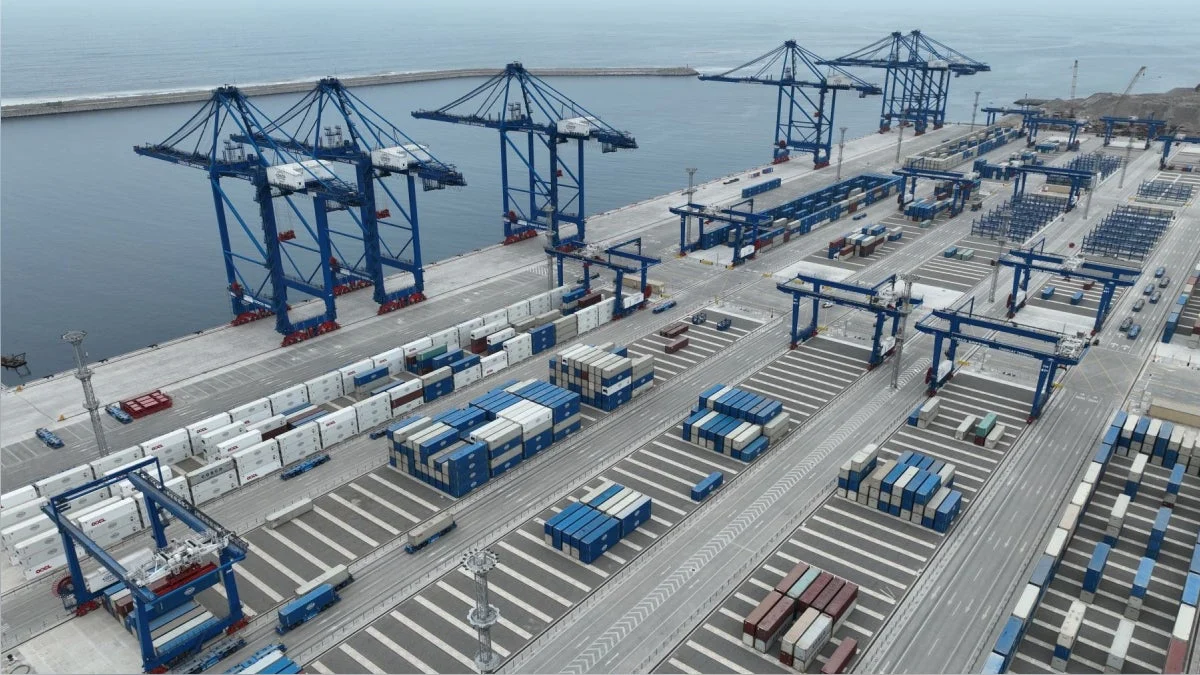
For his part, Ambassador Choi expressed the strong interest of the Korean government in participating in further Peruvian modernization efforts. Specifically, the Ambassador highlighted the potential for South Korean involvement in establishing "Smart Transportation Systems" along the Lima-Chancay corridor. This region is currently undergoing massive development due to the construction of the Chancay Mega-Port, and the introduction of Korean technology could revolutionize road safety and traffic management in one of the most vital logistics veins of the country.
Implications: A Transformed Logistics Landscape
The implications of these developments extend far beyond the construction site of Chinchero.
1. Boosting Tourism and Exports
The airport will facilitate direct entry for international tourists into the heart of the Inca civilization, drastically reducing the transit time currently experienced by travelers. Furthermore, for the agricultural sector in the southern highlands, the airport will provide a high-speed cargo route to export premium Peruvian products directly to global markets.
2. The Lima-Chancay Synergy
By looking at the Lima-Chancay corridor as an integrated smart-transport zone, the government is signaling that it views infrastructure as a holistic system. The potential for Korean investment in traffic safety and intelligent transit systems suggests that Peru is looking to adopt "Smart City" technologies to handle the expected surge in logistics activity near the new Mega-Port.

3. Strengthening International Alliances
This cooperation demonstrates that Peru is an attractive destination for foreign direct investment (FDI) when the framework is supported by stable international partnerships. By aligning with Korea—a world leader in infrastructure and digital technology—Peru is positioning itself to bridge the gap between its current infrastructure and its economic potential.
4. Regional Development and Social Impact
Beyond the macro-economic benefits, the construction of the airport and its complementary works are expected to create thousands of jobs for the local population. The integration of modern services like water treatment and better roads will permanently improve the quality of life for the residents of the Chinchero district.
Conclusion
The meeting between Minister Rafael Rey and Ambassador Choi Jong-uk marks a pivotal moment in the 2026 infrastructure calendar. As the Chinchero International Airport moves toward completion, the synergy between Peruvian ambition and Korean technical prowess stands as a model for future projects. With the simultaneous development of complementary road networks and the interest in smart logistics corridors, the Peruvian government is laying the groundwork for a more connected, efficient, and prosperous nation. The path forward remains challenging, but with firm political will and strategic international support, the vision of a modernized Peru is rapidly becoming a reality.