By Editorial Staff
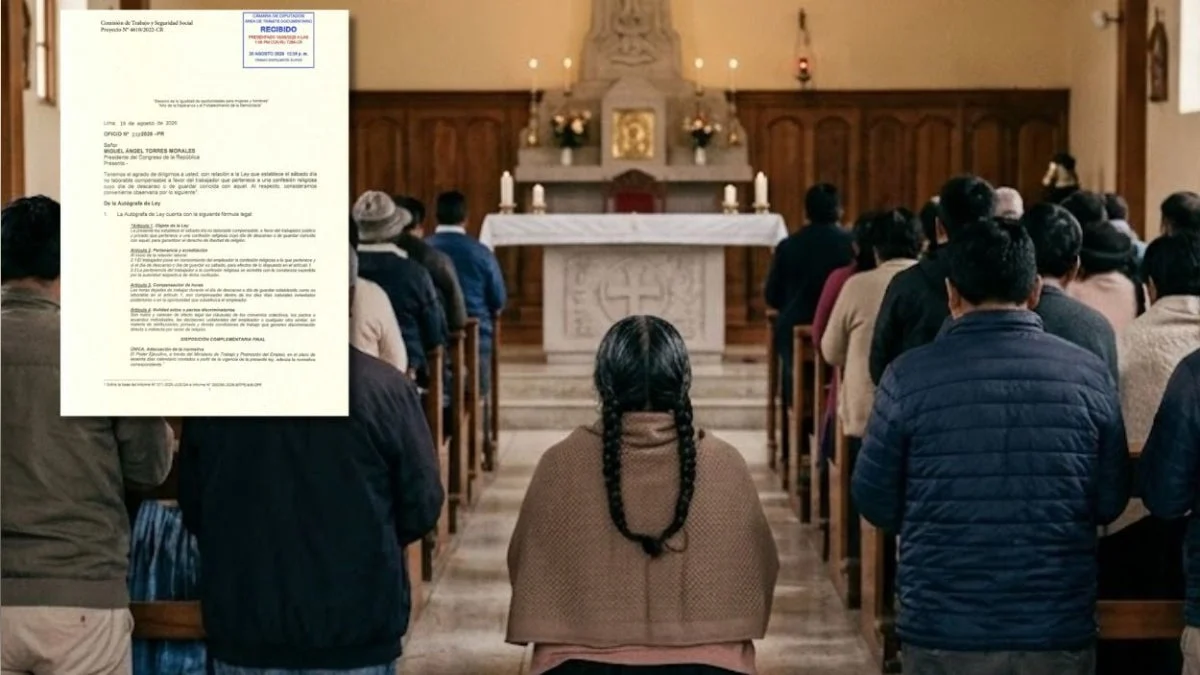
In a move that highlights the ongoing tension between safeguarding individual rights and maintaining macroeconomic stability, the Peruvian Executive Branch has officially observed a legislative proposal aimed at creating a new "compensable non-working day" for employees whose religious beliefs mandate Saturday as a day of rest.
The decision, formalized through an official dispatch signed by the President of the Republic and the President of the Council of Ministers, was delivered to Congress on August 19. The proposal, which sought to allow public and private sector employees to observe religious Sabbath rest, has become a focal point in a broader national debate regarding the excessive number of holidays in Peru and their impact on the nation’s productivity.
The Core Proposal: Bridging Faith and Labor
The legislative autographed bill proposed a framework for workers who belong to religious denominations that observe Saturday as a holy day or a day of rest. Under the proposed regulation, these employees would be permitted to treat Saturday as a non-working day, provided they compensated for the hours missed.
Key features of the proposal included:
- Notification Requirements: Workers would be required to declare their religious affiliation at the beginning of their employment contract.
- Verification: Employees would have to provide official documentation from their religious organization certifying their status and the specific requirements of their faith.
- Compensatory Mechanism: The hours not worked on Saturday would need to be "made up" within a 10-day window following the missed shift, or at a time determined by the employer.
- Non-Discrimination Clauses: The bill sought to nullify any workplace agreements or internal policies that would directly or indirectly discriminate against employees based on their religious exercise.
Chronology of the Legislative Dispute
The path to this observation began as part of a wider legislative push to institutionalize religious accommodation in the workplace. However, the timing of the bill coincided with a critical economic juncture for Peru.
- Initial Drafting: Proponents argued that current laws were insufficient to protect the rights of observant workers, particularly those in minority religious groups.
- Congressional Approval: The bill moved through committee and reached the floor, where it gained traction as a measure of religious freedom.
- Executive Review: As the bill reached the desk of the Executive, the administration began a formal review process. Simultaneously, the Ministry of Economy and Finance (MEF) was intensifying its rhetoric regarding the need to "optimize" the national calendar to curb the loss of productivity.
- August 19, Official Observation: The government formally returned the bill to Congress with a list of technical and legal objections, effectively stalling the initiative.
Official Government Rationale
The Executive Branch’s opposition is not rooted in a denial of religious rights, but rather in a critique of legal redundancy and organizational interference.
1. Legal Redundancy: The "Superposition of Norms"
The government argues that the proposed law is unnecessary. According to the Executive, the Law No. 29635 (Law on Religious Freedom) already provides a comprehensive legal framework for these situations. This law mandates that employers—both public and private—must make "reasonable efforts" to accommodate the religious practices of their workers, provided that these accommodations do not disproportionately disrupt the operations of the organization.
The administration contends that introducing a new, specific statute would lead to a "superposition of norms," creating legal confusion where a flexible, principle-based system already exists.
2. The Productivity Crisis
The backdrop of this decision is the ongoing national debate concerning the sheer volume of holidays in Peru. Policymakers have expressed concerns that an abundance of non-working days suppresses economic growth. While the government has previously flirted with the idea of cutting four national holidays established over the last five years, recent consensus—pushed by the Minister of Economy and the President—has shifted toward moving holiday observances to Mondays. This strategy aims to prevent mid-week disruptions to the supply chain and maintain industrial output.
3. Impact on Employer Autonomy
A major pillar of the Executive’s critique is the infringement upon the "power of direction." Employers, they argue, must have the autonomy to plan their workforces and operations based on market demands. The government asserts that the bill’s requirement for mandatory compensation schedules creates a rigid structure that could hamper the operational efficiency of firms and the delivery of public services.
Deep Dive: The Implications for the Peruvian Labor Market
The rejection of this bill opens a broader discussion about how modern, secular labor laws can—or should—accommodate the diverse religious tapestry of the 21st-century workforce.
The Risks of "Compensatory Fatigue"
One of the most nuanced points raised by the Executive involves the long-term impact on the worker. While the bill intended to be "pro-employee," the government warned that forcing workers to make up lost hours could lead to "compensatory fatigue." If a worker consistently works extended hours to make up for Saturdays, they may face a reduction in their overall well-being, effectively shifting the burden of their religious exercise into a physical and mental strain. The government fears this could become a form of "hidden" overtime, where the worker is essentially perpetually playing catch-up.
The Difficulty of Verification
The Executive also raised practical concerns regarding the administrative burden of the bill. Specifically:
- Defining "Authority": The bill failed to clarify what constitutes a legitimate religious authority capable of issuing a valid certificate.
- Registration Gaps: Because the Ministry of Justice maintains a voluntary registry of religious entities, many legitimate groups remain unregistered. This creates a bureaucratic vacuum where it would be difficult to verify the authenticity of an employee’s religious claims without violating their privacy or creating an administrative nightmare for HR departments.
The Intersection of Faith and Public Policy
The debate surrounding this bill illustrates the struggle to harmonize the Right to Religious Freedom with the Right to Economic Stability.
The Public Sector Challenge
In the public sector, the stakes are even higher. The Executive pointed out that public entities must operate with a degree of predictability. If a significant portion of a department were to take Saturdays off and then work staggered, compensatory hours throughout the week, the continuity of services could be compromised. The government maintains that public administration requires a cohesive schedule to ensure that citizens have access to state services at all times.
Looking Ahead
The government has recommended that if the Congress wishes to revisit this issue, it must do so by modifying existing laws rather than creating new ones. They emphasize the need for "predictability and legal security," suggesting that any future attempts at reform must be "acotada" (limited/well-defined) to avoid creating loopholes that could be exploited by either employers or employees.
Conclusion: A Delicate Balance
The observation of this bill marks a firm stance by the current administration: that while religious freedom is a constitutional right, it must be balanced against the realities of a developing economy. By prioritizing existing legal frameworks over new, potentially disruptive legislation, the Executive is signaling that it prefers a system of "reasonable accommodation" negotiated between the employer and the employee, rather than a rigid, state-mandated schedule that could undermine the fragile productivity levels the country is currently striving to protect.
As Congress deliberates its next steps, the case serves as a reminder that in the intersection of labor rights and religious observance, the devil is often in the details—specifically, in how those details affect the economic clock of a nation. Whether the legislature will attempt to override the observation or return to the drawing board to refine the existing Law of Religious Freedom remains to be seen. For now, the status quo remains, and the dialogue between faith and productivity continues in the corridors of power.