By ProActivo Editorial Staff
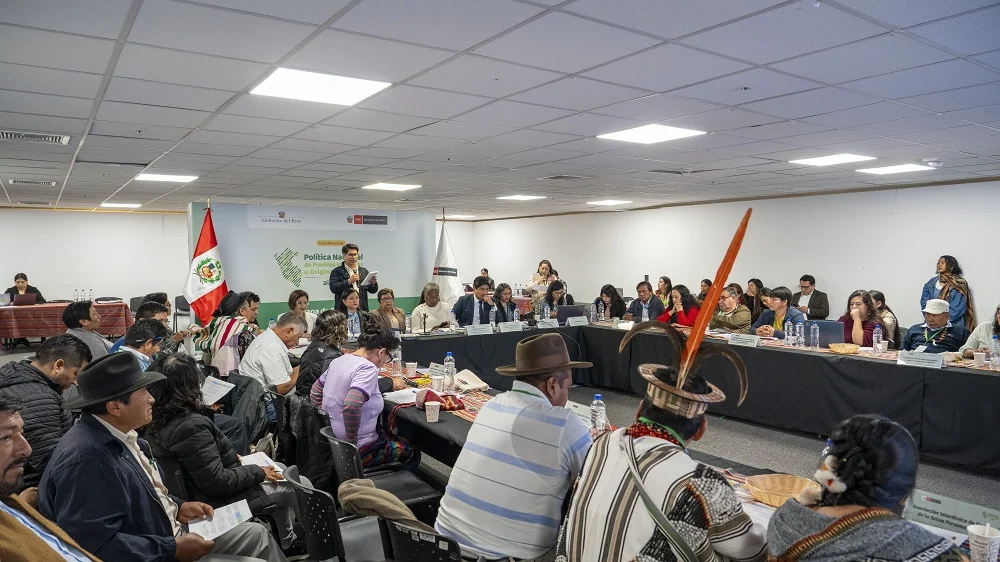
The Peruvian mining sector stands at a critical juncture. While the nation continues to boast robust macroeconomic indicators, stable currency reserves, and a favorable risk profile, a persistent paradox remains: the disconnect between national economic strength and the local social reality. This "trust deficit" was the central theme of the GESS 2026 (International Meeting on Social Management and Sustainability), held at the Lima Convention Center, where industry leaders and policymakers gathered to confront the sector’s most pressing challenge.
Jimena Sologuren, Co-chair of GESS 2026 and a prominent voice within the Instituto de Ingenieros de Minas del Perú (IIMP), framed the issue with stark clarity: "We have significant confidence at the macro level, but when we move to the one-on-one level—when we interact directly with communities, NGOs, or local governments—that trust evaporates."
The Macro-Micro Paradox: Why Data Isn’t Enough
The opening panel of GESS 2026 featured a high-level discussion with former Minister of Economy and Finance, Elmer Cuba. The dialogue centered on a frustrating reality for Peruvian policymakers: the nation’s "financial health" does not automatically translate into social peace or local prosperity.
For decades, the mining industry has operated under the assumption that macroeconomic success would naturally create a "trickle-down" effect of goodwill. However, as Sologuren noted, this top-down approach has failed to account for the human element of project development. The disconnect stems from the fact that while international investors view Peru as a stable asset, local populations often view the industry through a lens of skepticism, driven by historical grievances and a lack of tangible, daily engagement.
The Failure of the "Low Profile" Strategy
Historically, the mining sector in Peru has adopted a "low profile" communication strategy. The rationale was simple: avoid controversy, keep heads down, and focus on production. Sologuren argues that this era must come to an end. "We have been too hesitant to communicate not just our successes, but our challenges and even our errors," she stated.

The strategy of silence has inadvertently created a vacuum, which has often been filled by anti-mining rhetoric or misinformation. By failing to actively tell their story—the story of local job creation, infrastructure development, and environmental stewardship—mining companies have allowed others to define their role in the community.
Chronology of the Trust Crisis
To understand the urgency of the GESS 2026 agenda, one must look at the evolution of the Peruvian mining landscape over the last decade:
- 2016–2019: The Era of Social Conflict. Mining projects faced repeated stalls due to social unrest, primarily driven by water concerns and perceived lack of benefit-sharing.
- 2020–2022: The Pandemic Reset. COVID-19 highlighted the vulnerability of rural populations and the essential, yet often unacknowledged, role mining companies played in providing logistics, medical oxygen, and regional infrastructure.
- 2023–2025: The ESG Awakening. Global capital markets shifted their requirements. "Social License to Operate" moved from a buzzword to a non-negotiable financial metric.
- 2026: The GESS Summit. The industry recognizes that internal silos are no longer viable. The focus shifts to integrated territorial development, moving beyond the fence line of the mine.
Supporting Data: The ESG Imperative
The GESS 2026 summit was structured around four pillars: Innovation, Trust, Sustainability, and Legacy. These are not merely corporate slogans; they represent the new framework for ESG (Environmental, Social, and Governance) performance that investors now demand.
The Four Pillars of GESS 2026:
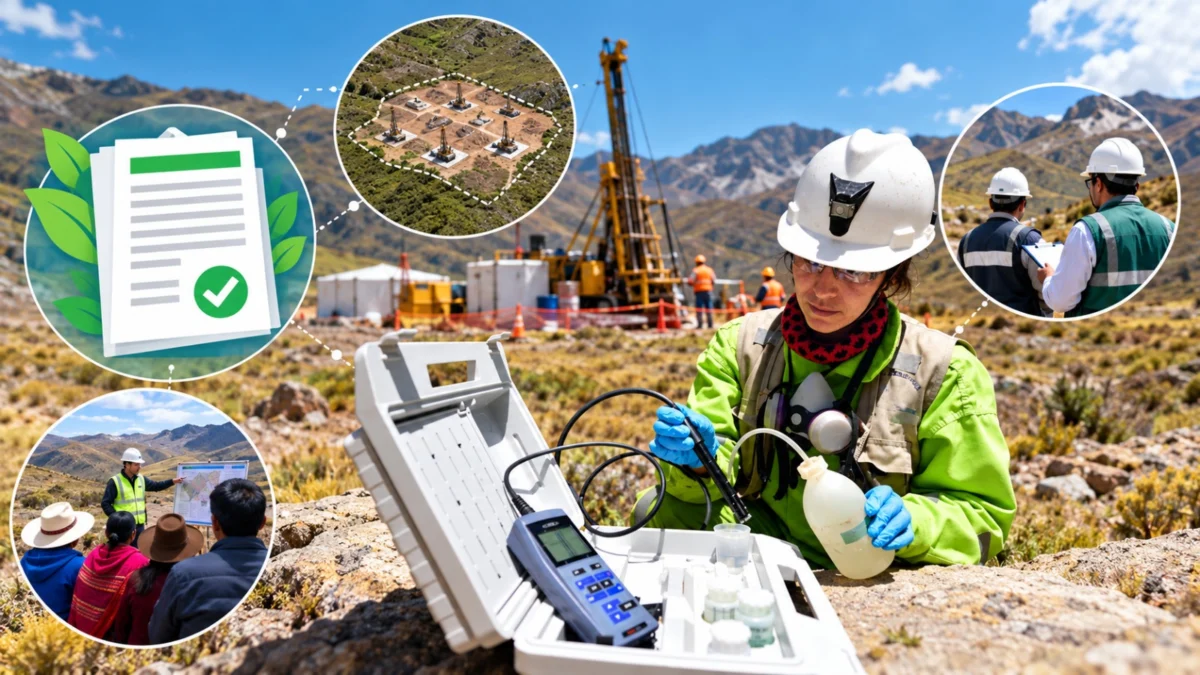
- Innovation: Moving beyond traditional extraction to digital transparency, where community members can monitor environmental data in real-time.
- Trust: The fundamental requirement for any project. This is built through consistent, transparent dialogue rather than periodic corporate donations.
- Sustainability: Ensuring that mining projects are not extractive in their social legacy—that is, the region is better off when the mine closes than when it opened.
- Legacy: Planning for the post-mining economy. How do we transition a town from a mining-dependent economy to one that supports agriculture, tourism, or industrial processing?
Breaking the Silos: A Cross-Sectoral Approach
One of the most significant shifts proposed by Sologuren and the GESS organizing committee is the integration of other industrial sectors. Historically, mining conferences have been insular, attended almost exclusively by geologists, mining engineers, and government officials.
GESS 2026 signaled a departure from this trend by inviting representatives from the retail, banking, and export sectors. The goal is to weave a "territorial fabric." As Sologuren explained, "If we continue to work in islands, we will never achieve the sustainability needed to build a long-term legacy."
For example, a mining company can provide the infrastructure (roads and electricity) that a retail chain needs to operate in a remote province. Simultaneously, banks can provide the micro-credit necessary for local entrepreneurs to supply goods and services to both the mine and the regional market. This interconnectedness creates a robust economic buffer that makes regional development less vulnerable to fluctuations in global commodity prices.

Official Responses and Strategic Shifts
During the panel, the consensus was clear: the government cannot be the sole provider of social services, nor can the mining industry be expected to act as a surrogate state. Instead, a "tripartite model"—State, Private Sector, and Community—must be institutionalized.
"If we don’t listen, if we don’t practice radical transparency, we will continue to face the same roadblocks," Sologuren remarked. Her call to action was directed at the CEOs and executives in the room: move from "communicating to be heard" to "communicating to understand."
Implications for the Future of Peru
The implications of the GESS 2026 discussions are profound. If the mining sector successfully shifts its focus from "project management" to "territorial development," several outcomes are likely:
- Reduction in Social Conflict: By integrating community stakeholders into the planning phase, projects can address concerns long before they become protests.
- Increased Foreign Direct Investment (FDI): Investors are increasingly wary of "social risk." A more transparent and socially integrated industry is a more "investable" one.
- National Economic Resilience: By diversifying the regional economies surrounding mining operations, Peru can reduce its dependence on mining royalties as the sole source of local development.
- A New Generation of Leadership: The industry is moving toward a style of leadership that prizes emotional intelligence and social expertise as much as technical and engineering prowess.
Conclusion: The Path Forward
The "trust deficit" mentioned by Jimena Sologuren is not insurmountable, but it requires a fundamental change in the industry’s DNA. As the GESS 2026 summit concluded, the message was clear: the era of the isolated mining camp is over. The future of mining in Peru will be defined by its ability to act as a partner in regional progress, a participant in local discourse, and a transparent steward of the nation’s resources.
As the industry looks toward the next decade, the success of mining will not be measured solely in ounces of gold or tons of copper, but in the strength of the relationships built on the ground. The "macro-stability" of Peru is a strong foundation, but the true wealth of the nation lies in the trust shared between its people and the industries that operate within its borders.
In the words of Sologuren: "We must be the ones to tell our story, with all the transparency it requires. If we don’t, we leave the future to chance."