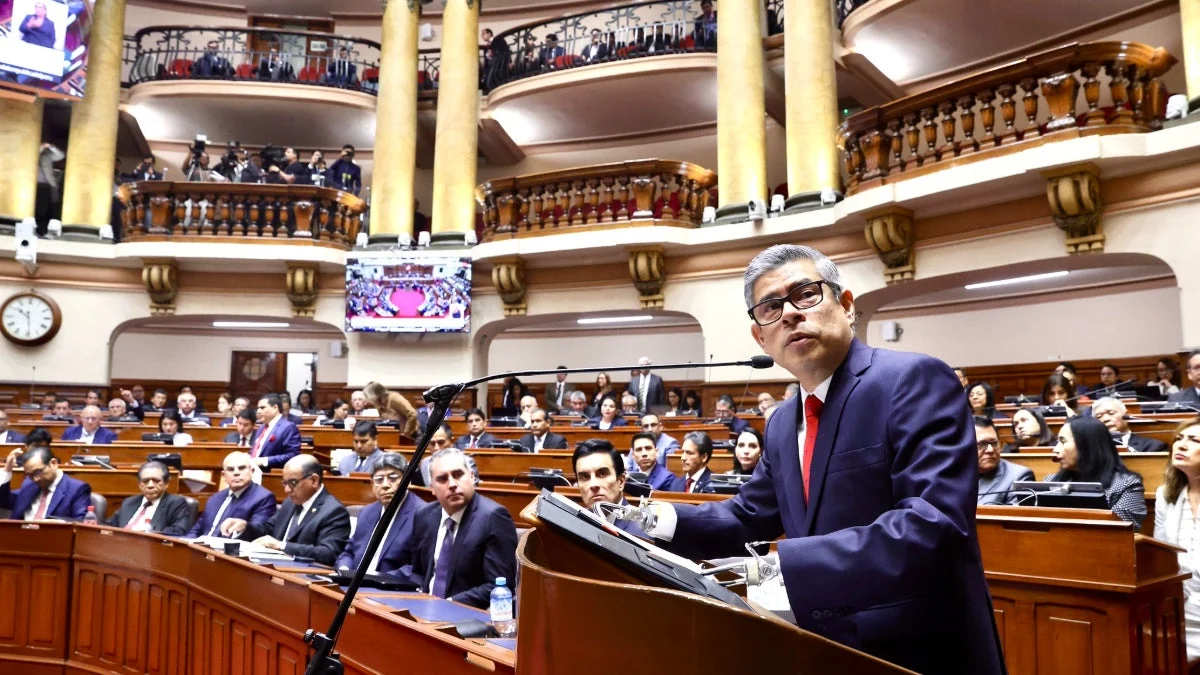
In a significant policy shift, the President of the Council of Ministers, Luis Galarreta, has formally announced the government’s intent to present a comprehensive tax reform agenda to the Congress. The primary objective of this legislative initiative is to simplify the existing tax regimes for small and medium-sized enterprises (SMEs) while conducting a rigorous audit of current tax expenditures and exemptions. This move marks a pivotal moment in the administration’s economic strategy, aiming to bolster the state’s permanent revenue streams and curb the persistent trend of tax fragmentation.
The Core Objective: Simplifying the Corporate Tax Landscape
During his presentation of the government’s general policy before the Chamber of Deputies, Prime Minister Luis Galarreta underscored the need for a structural transformation of the current tax system. The government intends to request a delegation of legislative powers from Congress to implement a new framework for smaller firms.
"The goal is not to distribute tax breaks or weaken revenue collection," Galarreta stated. "It is about building a sustainable path for a small business to grow into a medium or large enterprise without the system forcing it to fragment or remain in the shadows."
The administration believes that the current proliferation of tax regimes acts as an artificial ceiling for growth. Many enterprises, fearing the tax burden that comes with scaling, choose to remain small or operate informally to avoid higher tax brackets. By simplifying the system, the government hopes to create a "predictable and simple" environment that incentivizes formalization rather than penalizing growth. The proposed reforms seek to harmonize the tax structure, ensuring that the transition from a micro-enterprise to a large corporation is seamless and economically logical.
A Chronology of Fiscal Erosion
The announcement comes against a backdrop of mounting concern regarding the country’s fiscal health. Over the past five years, the Peruvian tax landscape has been characterized by a steady increase in "tax expenditures"—revenues the state relinquishes through exemptions, deductions, and preferential treatments.
- 2021-2023: A period marked by legislative activism. During these years, a significant number of private-sector-friendly bills were introduced in Congress, many of which sought to create new tax niches or extend existing ones.
- 2024: The National Superintendency of Tax Administration (SUNAT) reported that tax non-compliance reached 9.3% of the GDP, highlighting the massive gap in state revenue collection.
- 2025: The government identified a burgeoning cost in tax expenditures, estimated at S/ 24,010 million.
- 2026 (Projections): The Macroeconomic Projections Update (IAPM) for 2026-2029 suggests that tax expenditures will rise to S/ 26,350 million, representing approximately 2.2% of the national GDP.
The timeline reflects a clear trend: while the economy has attempted to recover, the legislative branch has consistently eroded the tax base, creating a widening structural deficit that threatens the state’s ability to fund essential public services.
Supporting Data: The Magnitude of Tax Expenditures
The data provided by the Ministry of Economy and Finance (MEF) paints a sobering picture. The total cost of tax exemptions and preferential treatments is projected to grow by S/ 2,340 million in just one year.
The Dominance of the IGV (Value Added Tax)
The General Sales Tax (IGV) accounts for the lion’s share of the state’s foregone revenue. Specifically, 76.8% of all tax expenditures projected for 2026 are linked to the IGV, totaling S/ 20,233 million. Within this category, two major exemptions stand out:
- Agricultural Products: These account for S/ 4,645 million in lost revenue.
- Amazon Region Exemption: This regional incentive costs the state an estimated S/ 3,709 million.
Furthermore, the in-taxability of educational services, which serves as a significant social benefit, carries an estimated cost of S/ 1,428 million. After the IGV, the Income Tax (IR) represents the second-largest category of tax expenditures, accounting for 16.6% of the total, or S/ 4,382 million.
Legislative Overreach
The IAPM report highlights that the increase in these expenditures is not merely economic but legislative in origin. Between 2021 and 2025, over 150 projects were proposed that would have negatively impacted tax revenue. Of those, 30 were successfully signed into law, resulting in an annual loss of over S/ 15,000 million. A prime example is Law No. 31556, which reduced the IGV from 18% to 10% for the tourism sector—a measure projected to cost the state S/ 596 million in 2026 alone.
Official Responses and Strategic Rationale
The government’s stance, articulated by Prime Minister Galarreta, is that the current fiscal model is unsustainable. The "low tax pressure" environment—where tax revenue stands at roughly 14.6% of GDP—places the country well below the averages seen in other Latin American nations and OECD member states.
The administration’s argument for reform rests on three pillars:
- Broadening the Base: By simplifying the regimes, the government aims to bring a larger segment of the informal economy into the tax net, thereby increasing the number of active taxpayers.
- Combating Non-Compliance: Rather than raising taxes on existing compliant firms, the strategy focuses on reducing the 9.3% of GDP gap in tax evasion and avoidance.
- Fiscal Responsibility: The government asserts that every tax exemption must be scrutinized for its social and economic return on investment. If a tax break does not demonstrably stimulate growth or provide essential social equity, it should be subject to revision or elimination.
Implications for the Future
The implications of this proposed reform are profound for both the private sector and the state’s fiscal future.
For the Business Community
The business sector has long complained about the complexity of the tax code. If the government succeeds in creating a single, streamlined, and predictable system, it could lead to a surge in formalization. Companies would no longer be incentivized to "hide" their growth, potentially leading to increased investment and higher productivity. However, there is underlying anxiety regarding which specific exemptions will be cut. Sectors that rely heavily on current tax breaks, such as agriculture and regional Amazonian businesses, are likely to lobby aggressively against any reduction in benefits.
For Public Policy
The government is effectively signaling that the era of easy tax concessions is over. By initiating a review of the S/ 26,000 million in annual tax expenditures, the administration is reclaiming its fiscal space. This space is vital to finance infrastructure, education, and healthcare—sectors that have historically suffered from limited budget availability.
The Political Challenge
The success of this initiative rests entirely on the relationship between the Executive and the Legislative branches. The government is asking Congress to grant it the power to reform a system that the Congress itself has been instrumental in complicating through the passage of various tax-exemption laws. This sets the stage for a intense political debate. The administration must prove that its reforms will foster economic growth without placing an undue burden on the most vulnerable sectors of the economy.
Conclusion: A Delicate Balancing Act
The government’s proposed tax reform is a necessary, albeit politically sensitive, endeavor. By acknowledging the structural flaws in the current tax system and the alarming rise in tax expenditures, Prime Minister Galarreta has identified the key bottlenecks hindering the country’s fiscal health.
The path forward requires a delicate balancing act: maintaining the competitiveness of the private sector while ensuring the state possesses the necessary resources to function effectively. As the debate moves into the halls of Congress, the focus will remain on whether the government can truly deliver a system that is "simple, predecible, and fiscally responsible." The outcome will not only determine the government’s ability to manage the economy in the coming years but will also define the future of tax policy in the country for a generation.