By María Alejandra Delgado
Illegal mining in Peru has transcended its traditional classification as a mere environmental or economic concern. It has evolved into a systemic threat that directly challenges the rule of law, compromises national security, undermines citizen safety, and erodes the country’s global competitiveness. At its core, the unchecked expansion of this activity represents a direct assault on the sovereign right of the Peruvian people to manage their natural resources in a responsible, sustainable, and legal manner.
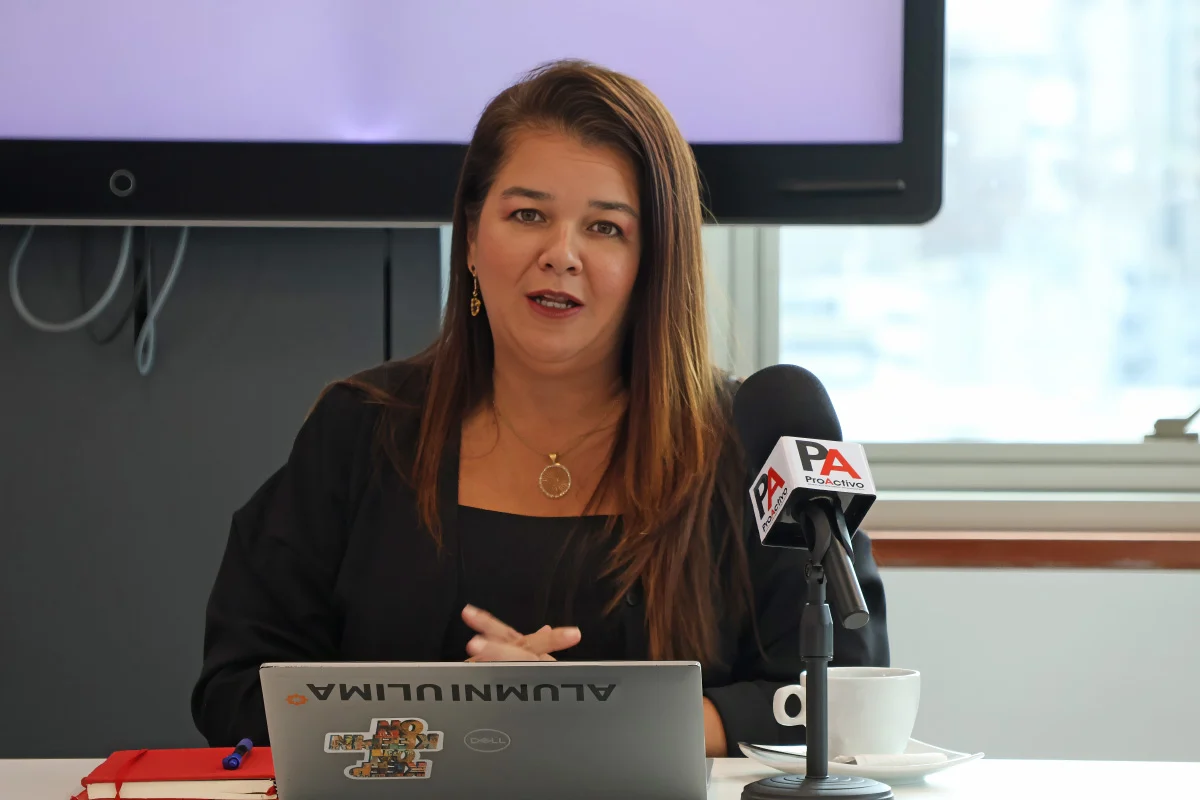
During the IX National Awards Gala of ProActivo, the findings of a specialized roundtable discussion—co-organized by Mónica Belling, the ProActivo team, and this author—were presented under the "Legal Analysis of Illegal Mining." The objective was to facilitate a high-level technical dialogue concerning the regulatory architecture of formal mining and the juridical-institutional conditions that currently dictate the State’s response to the encroachment of illicit extractive practices.
Main Facts: A Challenge to State Sovereignty
The premise of the discussion was clear: Formal mining has been, is, and must continue to be a primary catalyst for Peru’s socioeconomic development. However, for this potential to be realized, the country requires a technical, stable, and coherent regulatory framework aligned with a long-term national mining strategy.

A critical observation from the experts is that Peru’s competitiveness cannot be built on a legal scaffolding weakened by reactive, isolated, or politically expedient regulations. The current landscape suffers from a blurred distinction between formal, artisanal, and illegal mining. This conceptual confusion distorts public debate and cripples the State’s ability to respond to activities that flagrantly violate fundamental rights and national economic interests.
Chronology and Evolution: From Regulatory Strength to Fragmentation
During the 1990s, Peru established one of the most robust and competitive mining regulatory frameworks in Latin America. This system was designed to attract Foreign Direct Investment (FDI) through a transparent, objective system of concessions. By providing predictability and legal security, the framework spurred a historic cycle of industrialization and growth.
The Peruvian Constitution mandates that natural resources are the heritage of the Nation, with the State holding sovereign authority over their exploitation. Under this principle, a mining concession provides a real right to explore and exploit, subject to strict compliance with environmental, social, and tax obligations.
However, in recent years, this coherence has been compromised. The proliferation of fragmented legislation has moved away from a systemic vision, creating an environment where the "informal" and the "illegal" are increasingly difficult to distinguish for law enforcement agencies, leading to a erosion of the rule of law.

Supporting Data and Multidisciplinary Analysis
The ProActivo roundtable integrated perspectives from specialists in mining law, tax law, criminal law, labor relations, environmental science, and corporate operations. Their findings provide a sobering assessment:
- The "REINFO" Trap: The Registro Integral de Formalización Minera (REINFO), originally conceived as a temporary tool to bring miners into the formal sector, has failed to achieve its objective. Due to repeated extensions, it has effectively become a shield for impunity. Many operators use this registration as a legal loophole to avoid prosecution, effectively "laundering" illegal mining activities under a veneer of administrative legitimacy.
- Economic Distortion: Illegal mining fosters a parallel economy that avoids income tax, royalties, and canon payments. This creates an environment of unfair competition that punishes companies adhering to the rigorous health, safety, and environmental standards required for formal operation.
- Human Rights Violations: The humanitarian cost is staggering. Workers in illegal mining operations exist outside the scope of the General Law on Labor Inspection. They are exposed to toxic substances—mercury, cyanide, and heavy metals—without personal protective equipment (PPE) or mandatory insurance. Furthermore, these environments are hotbeds for human trafficking, child labor, and forced labor.
- Criminal Disruption: The criminal justice system must act as an ultima ratio. The consensus among legal experts is that the focus should not merely be on the physical extraction but on dismantling the financial and logistical supply chains that sustain illegal mining. The lack of institutional presence in border regions and the high jungle makes this task particularly difficult.
Official Responses and the Need for Institutional Reform
The experts highlighted that the mere existence of a "Small-Scale Mining Law" (MAPE) is insufficient if it is not accompanied by mechanisms to close paths to illegality. A truly effective policy requires:
- Territorial Presence: Providing authorities with the technical, logistical, and technological capabilities required to enforce the law in remote regions.
- Decoupling Illegal from Formal: A rigid separation of definitions is required to prevent the exploitation of "grey zones" by criminal syndicates.
- Fiscal and Criminal Coordination: Strengthening the capacity of the Public Prosecutor’s Office to follow the money, rather than just the equipment, is essential to breaking the cycle of impunity.
Implications for the Future of Peru
The expansion of illegal mining is not just an environmental catastrophe—it is a direct threat to the integrity of the Peruvian state. When illegal operations expand, they destroy fragile ecosystems, poison water tables, and degrade the social fabric of local communities.
The defense of formal mining is, therefore, not merely a corporate or trade-union interest; it is a necessity for national security. A formal mining operation acts as a pillar of development, providing the tax revenue necessary for infrastructure, education, and healthcare. Conversely, illegal mining creates a vacuum of power, where local institutions are replaced by criminal organizations that do not serve the public interest.

Toward a Comprehensive State Policy
To eradicate the scourge of illegal mining, the roundtable proposed a six-point strategy:
- Administrative Reform: Streamlining the formalization process while simultaneously closing loopholes that allow illegal actors to hide behind administrative status.
- Inter-institutional Cooperation: Establishing a task force that coordinates the Ministries of Energy and Mines, Environment, Labor, and the Interior to ensure a unified approach to enforcement.
- Technological Integration: Utilizing satellite imagery and blockchain technology to track the supply chain of minerals, ensuring that only legally extracted products enter the formal market.
- Strengthening the Rule of Law: Increasing the budget and personnel for environmental and mining police units in high-risk areas.
- Social and Economic Integration: Offering viable, legal alternatives for artisanal miners through cooperatives, provided they commit to strict compliance with environmental and labor standards.
- Diplomatic and International Collaboration: Working with neighboring countries to curb the cross-border flow of illicit minerals, particularly in the Amazon basin.
Conclusion
The resources contained within Peru’s subsoil belong to the Nation. The regime of concessions serves as the constitutional bridge between these resources and tangible national development. When this bridge is sabotaged by illegal activities, it is the future of all Peruvians that is at risk.
The conclusions reached at the ProActivo roundtable serve as a call to action for policymakers to reclaim the authority of the State. By reinforcing the legal framework, ensuring strict fiscal compliance, and prioritizing the dignity of the human worker, Peru can ensure that its natural wealth remains a blessing for its people rather than a source of instability and destruction.
We extend our sincere gratitude to the experts who contributed to this vital discussion: Gerardo López, María del Carmen Miniza, Jorge Villegas, Raúl Ferreyra, and Rafael Melgarejo. Special recognition is also due to the Ambassador of the Kingdom of the Netherlands, Alexander Kofman, for his continued support in facilitating these high-level dialogues on sustainable development.

() María Alejandra Delgado is a specialist in legal and regulatory affairs, focused on the intersection of mining, environmental protection, and public policy.*