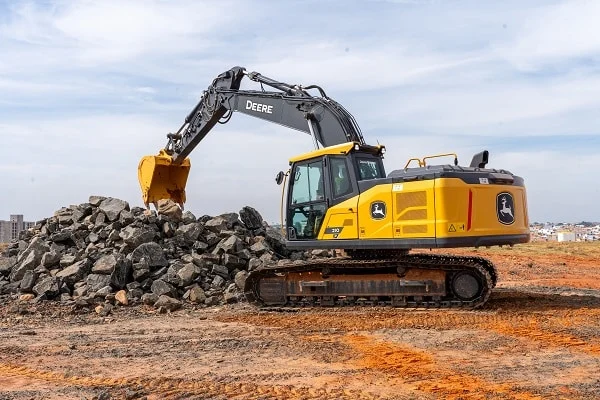
John Deere has officially redefined its position in the global heavy equipment market with the launch of the DEX (Deere Excavators) series. This new generation of machinery, comprising the 210 P, 230 P, and 260 P models, represents the first line of excavators designed and developed entirely through the company’s proprietary engineering ecosystem. Manufactured in Indaiatuba, Brazil, the DEX series is set to transform the construction and mining landscapes across Latin America, bringing a unprecedented level of technological integration, operational precision, and rugged durability to the job site.
The Genesis of Innovation: Main Facts and Strategic Shift
The introduction of the DEX series is not merely a product refresh; it marks a strategic pivot for John Deere. By shifting to a model where the core technology is developed in-house by the company’s global engineering teams, John Deere has moved away from external reliance to a vertically integrated approach. This allows for seamless compatibility between the hardware—the iron itself—and the software—the intelligent systems that drive productivity.
The three initial models—the 210 P, 230 P, and 260 P—are engineered to serve as the backbone of modern infrastructure projects. They are built to handle the most demanding conditions, from massive earth-moving operations in mining to precision grading in urban development. The choice of the Indaiatuba facility in Brazil as the primary manufacturing hub highlights the company’s commitment to the Latin American market, positioning itself to provide faster localized support and specialized engineering solutions tailored to regional topography and project requirements.
A Chronology of Development: From Concept to Field
The path to the DEX series was paved with rigorous, real-world validation. John Deere’s engineering philosophy relies heavily on the "data-first" approach, and the DEX series is no exception. Before the official commercial launch scheduled for September, the machines underwent a grueling testing regimen.

- Initial Design Phase: Leveraging global expertise, engineers focused on "operator-centric" design, analyzing thousands of hours of field data to identify pain points in previous models.
- Prototype Testing: The machines were subjected to extreme environmental stress tests, ensuring the hydraulic systems and structural integrity could withstand varying climates and terrain types.
- Global Validation: The fleet accumulated over 165,000 hours of testing across diverse global applications. This extensive trial period ensured that when the DEX series reached the market, it would offer the reliability synonymous with the John Deere name while introducing entirely new automated capabilities.
- Commercial Debut: Following the successful validation phase, the series entered mass production, culminating in the official announcement for the Latin American market, setting a new benchmark for regional heavy machinery standards.
Intelligent Operations: Supporting Data and Technological Integration
The hallmark of the DEX series is the integration of "Smart" technologies designed to minimize waste and maximize efficiency. In the modern construction industry, where profit margins are often dictated by the accuracy of excavation, these tools provide a competitive edge.
SmartGrade™ and SmartWeigh™
The DEX excavators can be equipped from the factory with the SmartGrade 2D leveling system. This technology utilizes digital terrain models to assist the operator in real-time, effectively automating the grading process. By reducing the reliance on manual measurement and minimizing the risk of over-excavation, SmartGrade 2D drastically reduces material waste and project timelines.
Complementing this is the SmartWeigh™ system, which provides real-time weight data of the material being moved. For project managers, this is invaluable; it allows for precise monitoring of haulage volumes, ensuring that trucks are loaded to optimal capacity without overloading, which saves on fuel costs and vehicle wear and tear.
The Ecosystem of Connectivity
Every DEX excavator is natively connected to the John Deere Operations Center™. This cloud-based platform allows for:

- Remote Diagnostics: Technical teams can identify potential mechanical failures before they result in downtime.
- Performance Analytics: Managers can track fuel consumption, engine load, and idle time, allowing for a granular understanding of operational costs.
- Software Updates: Rather than requiring on-site technicians for minor tweaks, the machines can receive over-the-air updates, ensuring the fleet is always running the latest software version.
Official Perspectives: The Vision Behind the Machines
Thomas Spana, Marketing Manager for John Deere’s Construction Division in Latin America, emphasizes that the DEX series is about more than just hydraulic power. "The new generation of excavators represents a turning point for John Deere in the segment," Spana stated. "We are bringing to the market equipment that incorporates the technology, engineering, and the ecosystem of the brand. This is a key step in the evolution of our construction business and in the development of new products aligned with the current needs of the market."
Spana further highlights the user experience, noting that the goal was to "simplify operations on the job site." By making advanced technology accessible and intuitive, John Deere aims to bridge the gap between high-tech machinery and operator efficiency. "These solutions are intuitive and allow any operator to improve precision, safety, and productivity from day one," he added.
Implications for the Industry: Safety and Durability
The impact of the DEX series extends beyond mere productivity; it introduces a heightened focus on site safety and long-term equipment viability.
Safety Features
The "Intelligent Control" system manages the movement of the arm, boom, and bucket to ensure precision, but it also includes "Virtual Fencing." This allows operators to set boundaries for the machine’s movement, preventing collisions with nearby structures, overhead power lines, or restricted zones. Additionally, the inclusion of panoramic vision systems and LED lighting provides near-daylight visibility, significantly reducing the risks associated with nighttime or low-light operations.

Structural Longevity
John Deere has engineered the DEX series for a lower Total Cost of Ownership (TCO). By utilizing high-strength structural steel and an advanced pinning and bushing system, the company claims a potential fivefold increase in component lifespan. The undercarriage, a notorious point of failure in heavy excavators, has seen a 20% increase in durability, while the newly designed buckets are 12% more resistant to wear.
The Command Center: Redesigning the Cab
The operator’s environment has been completely overhauled. The cab now serves as a high-tech command center, featuring G5 10-inch or 12-inch touchscreens and the ergonomic CommandArm™. The electrohydraulic (EH) joysticks are fully programmable, allowing operators to map commands to their specific preferences. This level of customization ensures that whether the operator is performing delicate utility work or mass excavation, the machine responds with surgical precision.
The Future of Infrastructure
With the backing of the largest construction equipment distribution network in Brazil and over 140 points of service, John Deere is positioning the DEX series as a comprehensive lifecycle solution. The integration of "Connected Solution Centers" across the dealer network means that operators are never truly alone on the job site. The combination of remote monitoring, predictive maintenance, and local technical support ensures that these machines remain productive for years, if not decades.
As the construction and mining sectors continue to face pressure to deliver faster, safer, and more cost-effective results, the John Deere DEX series arrives as a timely solution. By synthesizing the brute force of traditional heavy equipment with the precision of digital technology, John Deere has not only upgraded its own portfolio but has arguably set a new standard for what contractors should expect from their machinery. The DEX series represents a commitment to the idea that the future of infrastructure is not just built with steel, but with data, connectivity, and a deep understanding of the human element in the operator’s seat.