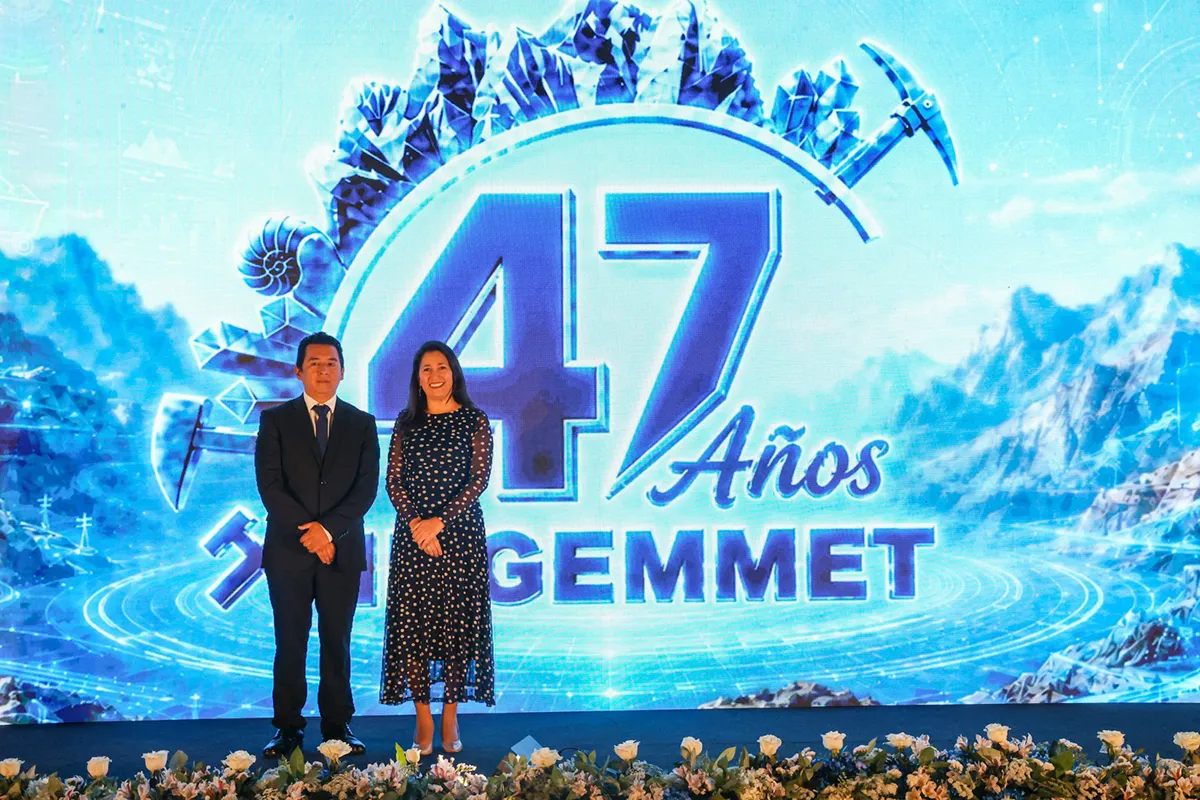
The Instituto Geológico, Minero y Metalúrgico (INGEMMET) recently celebrated its 47th anniversary, marking nearly five decades of fundamental contributions to the Peruvian state. Held at the Lima Convention Center in San Borja, the event served not only as a commemorative milestone but as a platform to reaffirm the institution’s pivotal role in the nation’s economic and scientific landscape. As Peru navigates the complexities of global market demands and the urgent need for sustainable resource development, INGEMMET stands as the primary custodian of the country’s subterranean wealth and geological safety.
A Legacy of Excellence: The Foundation of Peruvian Mining
INGEMMET has long served as the “cornerstone” of Peru’s extractivist development. Its mandate encompasses a dual responsibility: the management of the national mining cadastre and the advancement of geoscientific research. By providing the objective, data-driven foundation required for both exploration and safety, the institute has become indispensable to the Ministry of Energy and Mines (MINEM).
During the anniversary proceedings, Viceminister of Mines Mayra Figueroa delivered a keynote address that underscored the symbiotic relationship between INGEMMET’s research and the national interest. "To speak of INGEMMET is to speak of the pillar upon which the extractive, scientific, and economic development of our country rests," Figueroa stated. "In this crucial moment, where reactivation and predictability are national urgencies, the institute provides the clarity necessary to move forward."
Chronology: Four Decades of Geological Stewardship
Since its inception in the late 1970s, INGEMMET has evolved from a traditional geological survey organization into a sophisticated digital powerhouse.
- The Formative Years (1979–1990s): Establishing the early maps of the National Geological Chart and setting the foundations for a centralized, transparent system of mining rights.
- The Digital Transformation (2000s–2015): Transitioning from paper-based records to the Mining Cadastre System, which allowed for the first major wave of transparency in concession management.
- The Era of Modernization (2016–2024): Implementing the Ventanilla Única Digital (Digital One-Stop Shop) for the mining sector, drastically reducing administrative bottlenecks.
- The Current Frontier (2025–Present): Focusing on real-time monitoring of geological risks, including volcanic activity and mass movement hazards, alongside active support for the $64 billion mining portfolio.
Supporting Data: Economic Implications and Investment Security
The significance of INGEMMET’s work is best understood through the lens of the current investment climate. Peru possesses a massive mining project pipeline—valued at over $64 billion—that is essential for the country’s long-term economic stability. However, investment is only as strong as the legal and geological certainty backing it.

The Role of the Mining Cadastre
INGEMMET’s management of the national mining cadastre ensures that investors have access to secure, transparent, and legally binding information. This prevents overlapping claims and provides the jurisdictional bedrock required for global companies to commit capital to Peru. By maintaining the integrity of these rights, INGEMMET directly mitigates the risks associated with exploration and production.
Scientific Rigor as an Efficiency Tool
A recurring theme of the 47th-anniversary event was the intersection of scientific accuracy and bureaucratic efficiency. The Viceminister of Mines highlighted the institute’s leadership in the Digital One-Stop Shop for the Mining Sector. Through interoperability and real-time document processing, INGEMMET is successfully dismantling the "sequential permit" system—a traditional hurdle for mining operations.
"We are proving that scientific rigor does not have to be at odds with bureaucratic efficiency," Figueroa noted. "The contribution of INGEMMET goes far beyond simply facilitating tax revenue and mining royalties; it is about creating a predictable environment for growth."
Official Responses and Strategic Vision
The anniversary ceremony was led by INGEMMET President Denis Tapia Rodríguez, who hosted an assembly of high-ranking officials, including members of the diplomatic corps, legislators, and representatives from the energy and mining sectors.
The official message from the Ministry of Energy and Mines, delivered by Viceminister Figueroa on behalf of Minister Guillermo Shinno, was one of high praise. The ministry expressed its confidence in the institute’s workforce, citing their “mystique of work” and “professional excellence” as a source of pride for the entire sector. The government’s directive to INGEMMET remains clear: continue research with transparency and rigor, as these qualities are the best tools for navigating the volatile global economic landscape.

Implications for Public Safety: Beyond the Mines
While mining remains its most visible function, INGEMMET’s contributions to public safety are perhaps its most vital. The institution is responsible for the ongoing monitoring of Peru’s volcanic systems and the mapping of geological hazards across the country.
"The Carta Geológica Nacional (National Geological Chart) is not just a scientific document; it is a critical tool for territorial planning," Figueroa explained. Furthermore, the institute’s work in monitoring seismic and volcanic activity serves as a "lifeline for thousands of Peruvian families." By providing early warnings and hazard assessments, INGEMMET empowers local and regional governments to make informed decisions regarding infrastructure and urban development, effectively saving lives through data.
Challenges and Future Outlook
As INGEMMET moves toward its 50th anniversary, the institution faces a new set of challenges:
- Climate Change and Geological Stability: As extreme weather events become more frequent, the demand for INGEMMET’s geological hazard assessments will grow, requiring more sophisticated, real-time monitoring technologies.
- Sustainability and ESG Standards: The global demand for "green" minerals (copper, lithium, etc.) places an even higher premium on INGEMMET’s ability to map potential resources while adhering to increasingly strict Environmental, Social, and Governance (ESG) standards.
- Digital Leadership: The institute must continue to lead the digital transformation of the Peruvian state, ensuring that its interoperable systems are resistant to cyber-threats and capable of handling the increasing volume of digital mining applications.
Conclusion: A Partner for Progress
The 47th anniversary of INGEMMET is more than a celebration of the past; it is a statement of intent for the future. By bridging the gap between raw scientific discovery and the practical requirements of the mining industry and public safety, the institute has solidified its position as a cornerstone of the Peruvian state.
As the country seeks to unlock its $64 billion mining potential, the role of INGEMMET as a provider of "predictability" will become even more pronounced. With a mandate that combines scientific excellence with a commitment to administrative modernization, the institution is well-equipped to support Peru’s development in the decades to come. The message from the anniversary was unequivocal: INGEMMET is not merely a regulator, but a strategic partner whose work is fundamental to the prosperity and safety of all Peruvians.