Executive Summary: A Stand for Water Sovereignty
In a significant escalation of environmental advocacy in Northern Peru, rural communities and ronderos (peasant patrols) from the province of San Pablo and four major watersheds of Cajamarca have mobilized to protect the fragile ecosystem of Alto Perú. Faced with the encroaching threat of mining operations by Yanacocha, local organizations have officially inaugurated the "Guardians of the 284 Lagoons of Alto Perú." This move marks a strategic expansion of the grassroots defense model previously employed during the Conga conflict, signaling that the battle for water in the Andes remains a central pillar of regional social identity and political resistance.
1. Main Facts: The Juramentación of the Guardians
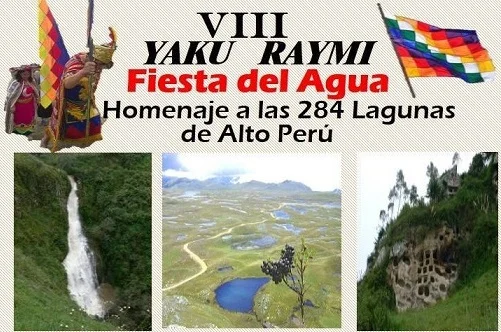
The movement culminated during the eighth iteration of the Yaku Raymi (Water Festival), held in early June 2017. Representatives from the watersheds of the Llaucano, Marañón, Cajamarquino, and Jequetepeque rivers gathered to swear an oath of protection over the 284 lagoons that comprise the Alto Perú wetlands.
The "Guardians" are tasked with specific mandates: rigorous fiscalization of the territory, environmental monitoring, and the preservation of the wetlands against industrial intrusion. Led by the Federation of Rondas of the Cajamarca Region, these brigades function as a decentralized oversight mechanism, effectively filling the vacuum left by state environmental agencies that local populations perceive as compromised. The mandate is clear: to prevent Yanacocha from initiating extraction activities that threaten the hydrological integrity of the region.
2. Chronology: The Road to Conflict
To understand the formation of these brigades, one must view the timeline of escalating tensions between the mining giant and the local community:
- Pre-2017: Years of persistent, low-level conflict regarding water usage rights and land tenure in the high-altitude Andean zones of San Pablo.
- April 2017: Reports emerge regarding a controversial case before the Constitutional Tribunal (TC). Allegations of institutional bias surfaced, suggesting that the court might rule in favor of Yanacocha, effectively overriding local protective ordinances.
- Late May 2017: The Comité Interinstitucional para la Conservación y Turismo Lagunas de Alto Perú and Anexos intensifies its outreach, calling for a regional mobilization.
- June 2, 2017: Launch of the VIII Yaku Raymi, serving as both a cultural celebration and a strategic assembly for activists.
- June 3, 2017: Official swearing-in of the "Guardians of the 284 Lagoons," formally establishing the defense brigades.
3. The Judicial Controversy: Conflicts of Interest
At the heart of the standoff is the role of the Constitutional Tribunal (TC). The protesters’ distrust stems from the involvement of Magistrate José Luis Sardón. Investigations by civil society groups revealed that Sardón had spent a decade working for "Reflexión Democrática," an NGO previously presided over by Roque Benavides, who also serves as a key executive figure associated with Yanacocha.
For the Comité Interinstitucional, this link represents a systemic conflict of interest. The perception is that the judicial system has been "captured" by mining interests. As a result, the community has explicitly stated that if the TC rules in favor of the mining company, the President of the Tribunal will be declared persona non grata. This threat highlights the depth of the crisis in legitimacy currently facing Peru’s high-level judicial institutions in the eyes of rural citizens.
4. Supporting Data: The Ecological and Social Stakes
The importance of the Alto Perú region cannot be overstated. It is a critical source of headwaters that sustains downstream agriculture, livestock, and urban centers in the Cajamarca region.
The Hydrological Value
The 284 lagoons serve as natural sponges and reservoirs. In a climate-vulnerable region where the primary grievance of the last decade has been water scarcity and contamination, these wetlands are viewed as the "lifeblood" of the department. Any disruption to the hydrological cycle—through dredging, contamination, or altered runoff patterns—could permanently impair the ability of the basin to support life.

The "Conga" Precedent
The decision to adopt the structure of the "Conga Guardians" is a deliberate tactical choice. The Conga project, also led by Yanacocha, became a flashpoint for national protest due to its plan to destroy high-altitude lagoons. By mirroring the defense tactics that successfully stalled Conga, the Alto Perú committees are signaling to the government that they are prepared for a prolonged, multi-front struggle.
5. Official Responses and Demands
The protesters have moved beyond simple negation. Their movement is backed by specific policy demands and institutional proposals:
- Ramsar Designation: The committees are demanding that the lagoons of Alto Perú be declared a site under the Ramsar Convention on Wetlands of International Importance. Such a designation would provide international legal protections and prevent industrial activity.
- Global Water Observatory: The groups are pushing for the implementation of a project developed by Cajamarquino students in Lima, which seeks to transform the region into a "World Water Observatory." This would integrate academic, international, and local oversight to monitor water quality and climate impact.
The Comité Interinstitucional has been unequivocal in its warnings: a pro-mining verdict from the TC will trigger a "second regional or provincial strike." They warn that the government’s failure to prioritize water security over extraction will lead to "terrible social conflict," a phrase often used by local leaders to describe the total breakdown of public order and civil peace.
6. Implications: The Future of Andean Resistance
The mobilization in Alto Perú represents a broader trend in Latin American environmentalism: the "territorialization of politics." When national institutions are viewed as inaccessible or biased, local populations shift their focus to direct territorial control.
Impact on the Mining Industry
The stance of the ronderos creates an environment of extreme operational risk for companies like Yanacocha. Even with a favorable judicial ruling, the social "license to operate" in Cajamarca is virtually non-existent. Without the support of the local population, the economic costs of security, potential blockades, and reputational damage render such projects increasingly unattractive to investors.
The Role of the State
The state faces a dilemma. If it enforces a pro-mining court ruling, it risks reigniting the widespread protests that paralyzed Cajamarca in the early 2010s. If it allows the community to self-regulate, it risks being seen as failing to assert its authority over national mineral resources. The demand for the "World Water Observatory" suggests a third way—an attempt to integrate local, scientific, and global interests—but one that necessitates a fundamental shift in how the Peruvian government views resource management.
Final Outlook
As the "Guardians of the 284 Lagoons" take up their posts, the situation in San Pablo serves as a bellwether for the rest of Peru. It is a reminder that in the Andes, water is not merely a commodity; it is a fundamental human right and a core component of the peasant identity. The standoff is far from over, and the outcome will likely define the parameters of the mining-community relationship for the next decade. The eyes of the nation remain fixed on the highlands, where the sound of the Yaku Raymi still echoes—a solemn promise that the water will not be surrendered without a fight.