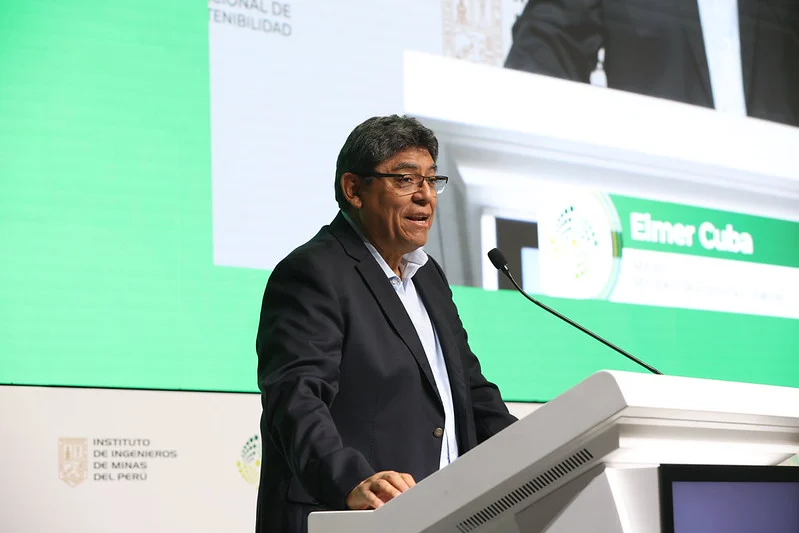
Lima, Peru – Minister of Economy and Finance, Elmer Cuba, has issued a compelling call to action, emphasizing that Peru’s hard-won reputation for macroeconomic stability and confidence, a beacon in the region, will only prove sustainable if it translates into tangible projects that actively reduce inequality in historically marginalized territories. Speaking at the International Meeting on Social Management and Sustainability (GESS 2026), Cuba articulated a vision where economic prosperity is not merely an abstract national indicator, but a lived reality for all Peruvians, particularly those in regions long excluded from the benefits of development.
Cuba’s address underscored a critical paradox: while Peru boasts impressive macroeconomic indicators, including consistently low inflation and accessible credit, this strength must be actively leveraged to create concrete opportunities for its most vulnerable populations. The Minister’s message resonated deeply, highlighting the imperative to move beyond statistical achievements and foster inclusive growth that addresses the deep-seated disparities within the country.
The Pillars of Peruvian Economic Confidence: A Statistical Overview
The foundation of Cuba’s argument rests on Peru’s remarkable economic resilience over the past quarter-century. He pointed to a sustained average inflation rate of approximately 2% annually, a testament to prudent fiscal and monetary policies. "When we have low inflation, averaging 2% annually for 25 years, that is confidence," Minister Cuba stated. "The dollar in Peru today is worth the same as it was a quarter of a century ago." This stability in currency value provides a predictable economic environment, crucial for both domestic planning and foreign investment.
Furthermore, the Minister highlighted the competitive landscape of mortgage interest rates as a direct consequence of this economic fortitude. "Today, in Peru, the mortgage interest rate in soles is between 7.5% and 8% per year. That is confidence," he affirmed. Such accessible credit facilities are vital for enabling citizens to invest in housing, education, and small businesses, contributing to overall economic upliftment. This sustained macroeconomic stability has been meticulously cultivated through disciplined fiscal management and a strong currency, creating an environment conducive to investment and long-term planning.
The Double-Edged Sword of Investment: Addressing Localized Inequality
However, Minister Cuba did not shy away from the potential downsides of large-scale investments, particularly in regions already grappling with significant socio-economic challenges. He cautioned that while such investments can demonstrably improve aggregate social indicators in the districts where they are implemented, they also risk exacerbating local inequalities if their benefits do not sufficiently reach the most vulnerable segments of the population.

"When a significant investment arrives in a poor district, that district improves. All the averages, such as electricity, potable water, schooling, and reading comprehension, are higher than in other districts," the economist explained. This statement acknowledges the undeniable positive ripple effects that major projects can have, bringing much-needed infrastructure and services.
Yet, the Minister elaborated on a more nuanced and concerning reality: "But the distribution of income can worsen, because those who benefit most quickly are the owner of the hotel, the restaurant, the notary, the one with more education. Young people with less education do not see these benefits immediately," he admitted. This candid observation points to a critical challenge: ensuring that the economic gains generated by large investments are not concentrated in the hands of a select few, but are broadly distributed to uplift the entire community, especially those with fewer educational and economic advantages. The current model, he suggested, can inadvertently widen the gap between those who are already positioned to capitalize on new opportunities and those who are not.
Confidence as the Bedrock for Sustainable Development: A Call for Territorial Equity
Minister Cuba’s core message underscored that true economic confidence cannot be solely measured by national variables or dictated from the capital. It must be actively cultivated within each territory and genuinely felt by individuals who have historically been marginalized from the benefits of development. He specifically highlighted the complex situation in mining regions, where the potential for economic transformation is significant, but the historical context of neglect and exploitation creates deep-seated skepticism.
"It is difficult to ask for confidence in the Peruvian Andes, which have been forgotten before the colony and during the Republic," Cuba stated, drawing attention to the long-standing grievances and unmet expectations in these areas. This historical perspective is crucial; it explains why abstract economic figures may not translate into tangible trust or optimism for communities that have endured generations of marginalization.
The Minister asserted that the responsibility to alter this narrative rests squarely on the shoulders of those who have benefited from access to education and formal employment. "That handful of educated Peruvians has a responsibility to their compatriots," he declared. This is a powerful call to the educated elite to actively engage in designing and implementing public instruments that ensure large investments generate equitable benefits within their respective territories. "That is confidence, pure and simple," he concluded, framing genuine, inclusive economic impact as the ultimate measure of confidence.

Institutional Commitment and Civil Society’s Role in Sustaining Progress
Jimena Sologuren, co-president of GESS 2026, echoed Minister Cuba’s sentiments, emphasizing the crucial need to maintain collective commitment during periods of institutional transition. She underscored that sustained confidence between various sectors and the active participation of civil society are fundamental pillars for achieving national sustainability and social development.
"We are aware that we must not only improve institutions, but also the truth for which we fight and the reasons why we are here," Sologuren remarked. This statement highlights the importance of aligning institutional reforms with a clear and shared vision for the nation’s future, ensuring that progress is not just about structural changes but also about fostering a deeper understanding and commitment to the underlying values and goals. Her words reinforced the idea that true sustainability requires more than just economic policy; it demands a societal consensus and a shared commitment to inclusive progress.
Implications for Future Policy and Development
Minister Cuba’s address at GESS 2026 signals a significant shift in the discourse surrounding Peru’s economic success. The emphasis has moved beyond celebrating macroeconomic stability as an end in itself, to recognizing it as a crucial, yet insufficient, prerequisite for achieving broader social equity and inclusive development. The implications of his message are far-reaching:
- Policy Reorientation: There is a clear imperative to reorient economic policies to actively address regional disparities. This may involve targeted investments in infrastructure, education, and healthcare in underserved areas, as well as fiscal mechanisms that ensure a fairer distribution of wealth generated by national economic activities.
- Strengthening Local Governance: Empowering local governments and communities with the resources and autonomy to identify and implement development projects tailored to their specific needs will be critical. This bottom-up approach is essential for fostering genuine local ownership and ensuring that interventions are relevant and effective.
- Promoting Inclusive Business Practices: The government may need to incentivize or mandate more inclusive business practices from large corporations operating in Peru, particularly those involved in extractive industries. This could include requirements for local employment, procurement from local suppliers, and investments in community development projects that go beyond basic corporate social responsibility.
- Bridging the Education and Skills Gap: Addressing the disparity in educational attainment and skills development is paramount. Investments in vocational training and accessible higher education, especially for young people in marginalized communities, are crucial to ensure they can benefit from economic opportunities.
- Enhanced Transparency and Accountability: To build trust and ensure equitable distribution of benefits, greater transparency in investment processes and resource allocation will be necessary. Robust accountability mechanisms will help ensure that public funds and private investments are used effectively and ethically.
- Fostering Dialogue and Collaboration: Continued dialogue between government, the private sector, civil society, and local communities is essential. GESS 2026 serves as a vital platform for this ongoing conversation, fostering collaboration and a shared understanding of the challenges and opportunities ahead.
Minister Cuba’s call for a more inclusive approach to economic development is not merely a rhetorical flourish; it is a strategic imperative for Peru to solidify its regional standing and ensure that its economic progress translates into tangible improvements in the lives of all its citizens. The journey from macroeconomic stability to genuine social sustainability is complex, but by acknowledging the challenges and committing to concrete actions, Peru can forge a future where prosperity is truly shared.