The Peruvian legislative landscape is currently embroiled in a heated debate concerning the operational future of the Congress. At the heart of the controversy is a fundamental disagreement regarding the necessity of physical presence versus the flexibility of remote work, a topic reignited by recent moves within various parliamentary commissions to restrict virtual participation. Simultaneously, friction between government allies and the opposition has reached a boiling point over the use of interpellation as a tool for political oversight.
The Push for Hybrid Functionality: Jaime Abensur’s Stance
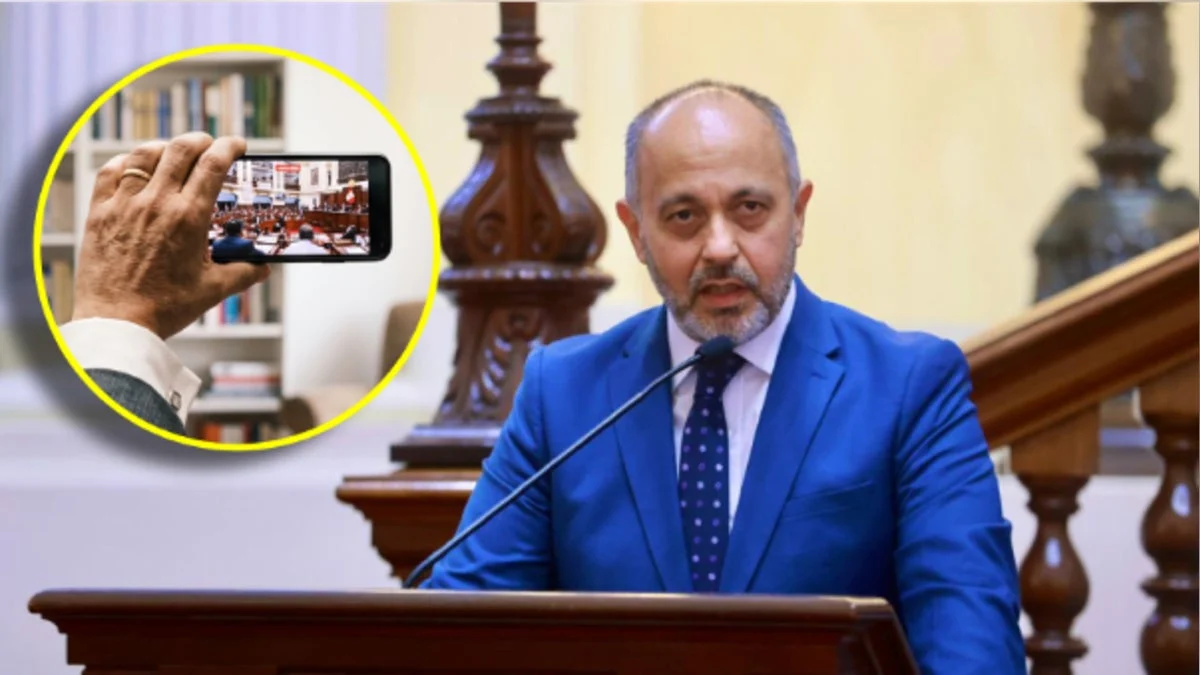
Jaime Abensur, a prominent deputy from the Fuerza Popular party, has emerged as a vocal defender of hybrid legislative sessions. In a recent dialogue with RPP, Abensur rejected the characterization of remote participation as a "privilege" or "luxury" (referred to locally as gollería). Instead, he argued that virtuality has been the lifeline that allowed the legislative body to function during periods of crisis and logistical strain.
"I do not believe this is a privilege," Abensur asserted. "The virtual modality has permitted the continued operation of Congress in many instances. When it comes to decision-making, remote connectivity has proven to be an essential tool."
Abensur’s argument centers on the concept of individual legislative accountability. He posited that the quality of a parliamentarian’s work should be judged by their output and their responsiveness to their constituents, rather than their physical presence in a specific office. "The responsibility lies with each individual parliamentarian," he noted. "Whether they attend or not is a matter of their personal commitment to their duties. If they fail to perform, they will have to answer to their electors."
Challenging the Definition of a ‘Workplace’
Perhaps the most provocative element of Abensur’s recent public statements is his questioning of the traditional concept of the "workplace" for a representative of the nation. When challenged on the necessity of in-person attendance, Abensur deflected, asking, "Is a congressperson merely someone who attends a traditional center of work?"
His argument rests on the constitutional role of the legislator as a representative of the nation rather than an employee clocking into a factory or a corporate office. By shifting the focus from attendance to representation, Abensur seeks to normalize the use of digital tools in modern governance.
However, this stance is not without its detractors. Public perception of virtual Congress has been marred by high-profile scandals, most notably instances where parliamentarians were caught connecting to crucial legislative sessions while lounging on beaches or attending to personal errands. When confronted with these occurrences, Abensur dismissed them as "anecdotes"—unfortunate, isolated incidents that, while regrettable, should not dictate the rules for the entire institution.
Chronology of a Controversial Modality
The evolution of virtual sessions in the Peruvian Congress follows a distinct timeline that tracks the country’s broader societal shifts:
- 2020: The Mandatory Shift: Following the onset of the COVID-19 pandemic, the Congress adopted virtual and hybrid sessions as a matter of necessity to prevent a complete collapse of the legislative branch.
- 2021-2022: Normalization: As the health crisis eased, the reliance on virtuality continued, occasionally drawing criticism as observers noted a lack of focus among some members during remote proceedings.
- 2023: The ‘Beach Session’ Scandal: A viral incident involving a legislator attending a session from a beach resort significantly damaged the credibility of remote participation, sparking calls for a return to full in-person attendance.
- 2024: The Crackdown: Several key commissions, responding to public pressure and internal calls for "institutional dignity," began passing motions to strictly limit virtual attendance to exceptional circumstances only.
- Current Period: The ongoing debate between proponents of "modern flexibility" (led by figures like Abensur) and "traditional presence" (backed by various opposition members and public ethics watchdogs).
Political Friction: The Interpellation of the Defense Minister
Beyond the operational debate, Abensur’s public intervention also targeted the increasing use of interpellations—a formal constitutional process used by Congress to call ministers to account. Specifically, he criticized the recent move by the opposition bloc, Juntos por el Perú, to interpellate the newly appointed Minister of Defense, Rafael Belaunde.
Abensur characterized the motion as premature and politically motivated. "My concern is that, only 16 days after the minister assumed his post, the interpellation list contains questions that could easily have been resolved through simple requests for information or by waiting for the Defense Commission to install itself," he explained.
He pointed to specific questions in the document, such as an inquiry regarding the "Pope’s travel route," as evidence that the interpellation is being used as a performative political weapon rather than a serious mechanism of fiscalization. According to Abensur, such tactics dilute the power of the interpellation process, which should be reserved for cases of ministerial misconduct or significant policy failures.
"First, we should allow the minister to actually perform his job," Abensur urged. "If, after he has had the time to implement his policies, he fails to satisfy the legislature, then by all means, interpellate him. But let us not engage in a performative circus before the work has even begun."
Institutional Implications and Public Trust
The dual crises of legislative attendance and the politicization of oversight mechanisms have profound implications for Peru’s democratic stability.
The Erosion of Public Confidence
The debate over virtuality highlights a growing disconnect between the legislative branch and the citizenry. When citizens see their representatives participating in high-stakes decisions from leisure locations, the perceived legitimacy of the laws being passed is weakened. The argument for "modernity" often falls on deaf ears when the public feels the institution is neglecting its duties.
The Weaponization of Oversight
The criticism leveled against the interpellation of the Defense Minister reflects a broader trend of "governance by obstacle." When opposition parties use constitutional tools to harass ministers shortly after they take office, it hampers the government’s ability to execute its agenda. Conversely, the government’s supporters—like Abensur—are often accused of shielding ineptitude under the guise of "allowing them to work."
Data and Constitutional Requirements
While the Constitution of Peru grants the Congress oversight powers, it does not specify the efficiency of these tools. Legal scholars often point out that while interpellations are a right, they are intended to be an ultima ratio (a last resort). When they become the prima ratio (the first resort), the legislative branch risks becoming a roadblock to national stability.
Expert Analysis: The Path Forward
Political analysts suggest that the solution lies in a middle-ground approach. To restore credibility, Congress could implement a robust "Code of Conduct" for virtual sessions, requiring high-definition video, professional backdrops, and strict participation standards, rather than an outright ban.
Regarding the use of interpellations, there is a growing consensus among observers that the legislative leadership needs to act as a gatekeeper, ensuring that these motions are based on substantive policy issues rather than administrative trivialities. By streamlining the request-for-information process, the Congress could potentially satisfy the need for oversight without resorting to the time-consuming and often polarized interpellation process.
Conclusion
The debate within the Peruvian Congress is a microcosm of a larger global struggle: how to modernize democratic institutions without sacrificing the gravity and decorum required to govern effectively. Jaime Abensur’s defense of virtuality highlights a pragmatic view of legislative efficiency, yet it struggles to overcome the weight of public optics and the potential for abuse.
As the Congress moves forward, the challenge will be to find a balance where technology serves the democratic process rather than undermining it. Whether through stricter regulations on remote work or a more disciplined application of political oversight, the institution faces an urgent need to redefine its professional standards to regain the trust of the Peruvian people. The tension between the desire for flexible modern governance and the necessity of traditional accountability will likely define the legislative agenda for the remainder of the session.