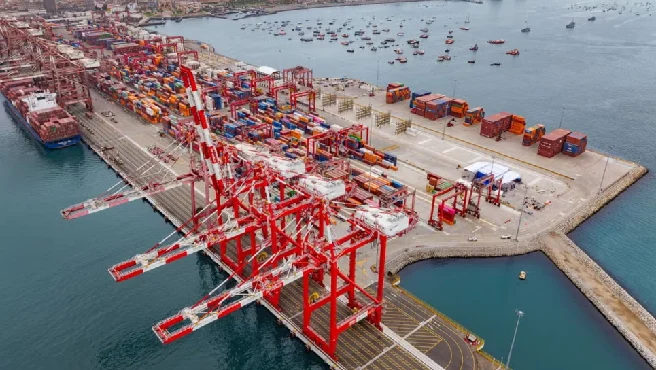
The Peruvian maritime logistics sector has reaffirmed its role as the backbone of the national economy. According to the latest data released by the Ministry of Transport and Communications (MTC) and the National Port Authority (APN), Peru’s public-use port infrastructure experienced a period of significant growth during the first half of the year. By handling 35.1 million metric tons of cargo between January and June, the sector has not only weathered global economic headwinds but has emerged as a powerhouse for regional trade.
This 6.5% growth compared to the same period in the previous year serves as a barometer for Peru’s strengthening export capacity and its deepening integration into global supply chains. As global trade dynamics shift, the efficiency of Peruvian ports has become a focal point for investors and policy planners alike.
Main Facts: The Numbers Behind the Growth
The surge in port activity is not merely a statistical anomaly but a reflection of systemic upgrades and increased throughput across the nation’s primary maritime gateways. The 35.1 million metric tons processed in the first semester underscores a robust demand for both essential commodities and consumer goods.
A Breakdown of Cargo Modalities
The composition of the cargo highlights the diversified nature of the Peruvian economy:
- Containerized General Cargo: Leading the charge, this segment accounted for 18.8 million metric tons, representing 53.6% of the total volume. This category is vital for the import of consumer electronics, machinery, and manufactured goods, as well as the export of high-value agricultural products.
- Solid Bulk: Contributing 17.8% of the total, or 6.2 million metric tons, this segment remains a pillar for domestic agricultural and industrial supplies.
- Mineral Bulk: Accounting for 17.3% (6 million metric tons), this category remains intrinsically linked to Peru’s status as a global mining powerhouse. The ability to move mineral wealth efficiently remains the lifeblood of the nation’s trade balance.
Chronology: The First Half of the Year in Review
The performance of the ports was consistent throughout the first six months, demonstrating operational stability despite logistical challenges.
- Q1 Initialization: January through March saw a steady inflow of investment and operational scaling. The focus during this period was on streamlining customs procedures and enhancing the "digital window" for port operations, which set the stage for the volume surge.
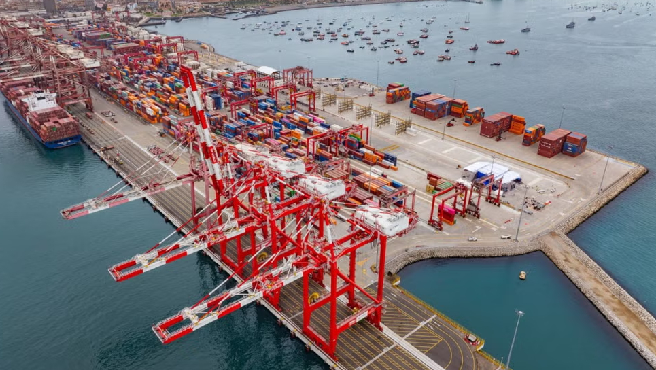
- April-May Acceleration: The mid-semester period saw the highest spikes in activity, particularly in the Callao terminals, where vessel turnaround times were optimized through the implementation of advanced crane technologies and automated terminal operating systems (TOS).
- June Conclusion: The semester closed on a high note, with the APN confirming that capacity utilization rates remained within optimal ranges, ensuring that no bottlenecks hindered the flow of essential goods during the peak export months for seasonal agricultural products.
Supporting Data: The Pillars of Connectivity
The geographic distribution of this growth reveals a clear trend: the centralization of logistics in the Callao hub, balanced by the strategic rise of the southern and northern corridors.
Top Performing Terminals
- Terminal Zona Sur (DP World Callao): Moving 11 million metric tons, this facility remains the country’s most active terminal. Its aggressive expansion strategy and heavy investment in infrastructure have made it a benchmark for efficiency in the South Pacific.
- Terminal Portuario Multipropósito del Callao (APM Terminals): Processing 9.4 million metric tons, this terminal continues to be a critical partner in the handling of mixed cargo, supporting the industrial needs of the capital.
- Terminal Portuario de Matarani (Tisur): Serving as the gateway to the south, Matarani handled 4 million metric tons, acting as the primary exit point for copper and other minerals sourced from the Arequipa, Moquegua, and Cusco regions.
- Terminal Portuario Multipropósito de Chancay (Cosco Shipping): With 2.8 million metric tons, Chancay is signaling its future as a regional "mega-hub." Its strategic location and deep-water capacity are already making a significant impact on logistical planning.
- Terminal General San Martín (Puerto de Paracas): Recording 2.1 million metric tons, this terminal has proven essential for the Pisco region’s agro-export boom.
- Terminal Portuario de Paita: Handling 1.6 million metric tons, this northern hub remains the primary conduit for the northern agricultural export sector, particularly for mangoes and grapes.
Official Perspectives: The Role of the MTC and APN
The Ministry of Transport and Communications, in conjunction with the National Port Authority, has emphasized that this growth is not accidental. It is the result of a concerted effort to foster public-private partnerships (PPPs) that incentivize long-term infrastructure investment.
"The modernization of our ports is a priority for the government," stated an MTC representative during the release of the figures. "By providing a stable regulatory framework and encouraging competitive terminal operations, we are effectively lowering the cost of logistics for all Peruvians."
The APN has further noted that the digitalization of port processes—moving away from paper-based manifests to integrated electronic systems—has been the "silent engine" behind the 6.5% growth. By reducing the time ships spend at anchorage, the authority has successfully increased the "per-hour" throughput of every major terminal in the country.
Implications: What This Means for Peru’s Future
The performance of the maritime sector during this semester carries significant weight for the nation’s economic trajectory.
1. Strengthening Global Competitiveness
As Peru continues to negotiate and implement free trade agreements, the reliability of its port infrastructure is a key selling point for foreign investors. A port system that can handle 35 million tons in six months with minimal friction is an attractive destination for global shipping lines, which in turn reduces freight costs for domestic exporters.
2. Mining and Agricultural Synergy
The fact that mineral bulk and general containerized cargo are growing in tandem shows that Peru is successfully managing the "dual-track" economy. While mining provides the bulk capital, the containerized growth suggests a healthy expansion in value-added manufacturing and specialized agriculture.
3. Regional Decentralization
The continued success of Matarani, Paita, and the emergence of Chancay suggest that Peru is moving away from an "everything-in-Callao" model. This decentralization is crucial for local economic development in the provinces, creating thousands of indirect jobs in trucking, warehousing, and customs brokerage across the country.
4. Future Outlook
Looking ahead, the focus for the second half of the year and into the next will be on sustainability. Environmental compliance and the transition toward "Green Ports"—which utilize electric machinery and implement carbon-neutral waste management—will be the next hurdle. The government is expected to continue its policy of incentivizing green tech within port concessions, ensuring that growth does not come at the cost of the environment.
Conclusion
The first semester of the year has proven that Peru’s port infrastructure is not just a collection of terminals, but a sophisticated network that facilitates the nation’s participation in the global market. With 35.1 million metric tons moved, the sector has demonstrated resilience, operational maturity, and significant growth potential. As the country looks toward the remainder of the year, the continued coordination between the MTC, the APN, and private operators will be essential to maintaining this momentum and securing Peru’s position as a premier logistics hub in Latin America.