The Municipality of Lima has found itself at the center of a heated public debate regarding the acquisition of retired rolling stock from the California-based commuter rail operator, Caltrain. As the city attempts to move forward with the ambitious "Lima-Chosica Train" project—a critical initiative designed to alleviate the chronic traffic congestion plaguing the Peruvian capital—the nature of this transaction has come under intense scrutiny.
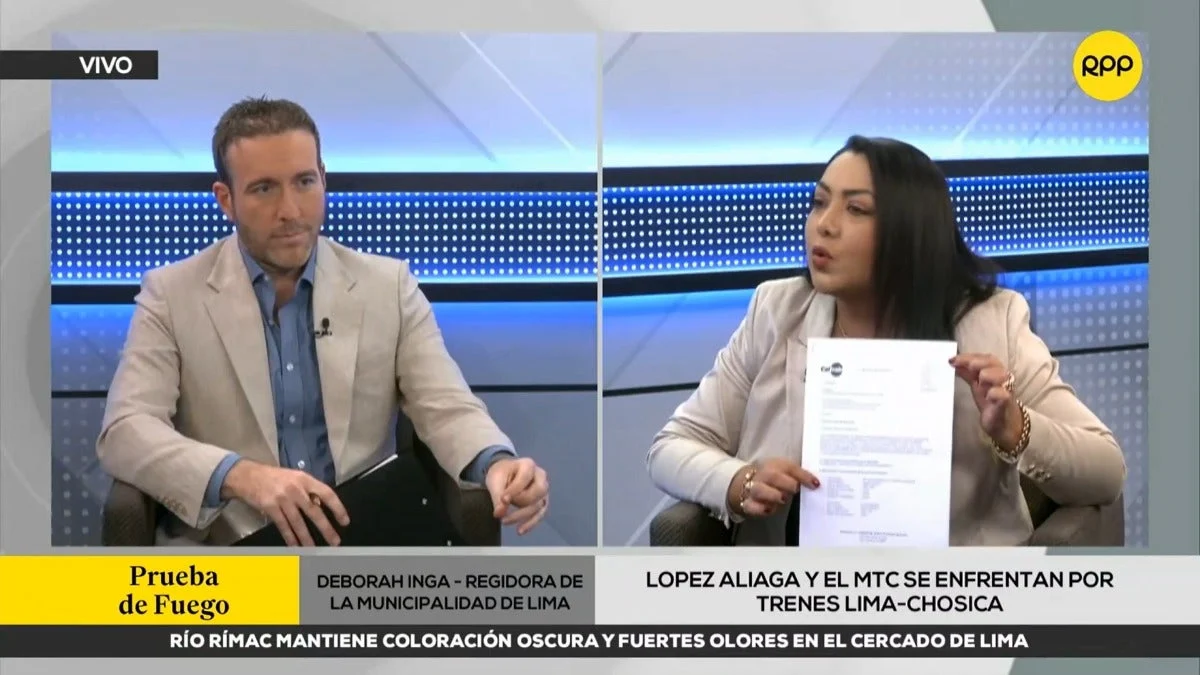
Deborah Inga, a councilwoman representing the Renovación Popular party, has stepped forward to defend the administration’s handling of the deal. At the heart of the controversy is a fundamental disagreement over terminology and financial transparency: while critics allege that the municipal government effectively purchased the train cars under the guise of a donation, Inga maintains that the city only covered logistics and transport costs, strictly adhering to the terms of a legitimate international philanthropic agreement.
The Core Dispute: Donation or Procurement?
The skepticism surrounding the arrival of the Caltrain units stems from the significant financial outlays associated with the project. Critics argue that the payment of over $6 million USD is inconsistent with the definition of a "donation." In administrative law and public procurement, the distinction between receiving a free asset and paying for a "transfer of services" can be legally significant.
During a recent appearance on the RPP program Prueba de Fuego, Councilwoman Inga faced pointed questions regarding whether the "donation" label was merely a bureaucratic veil designed to circumvent standard procurement regulations. Opponents suggest that because the Municipality of Lima does not have the primary statutory mandate to acquire trains, labeling the transaction as a donation allowed the administration to bypass complex bidding processes.
Inga vehemently rejected this characterization. To substantiate her position, she presented the official donation agreement signed between the Municipality of Lima and Caltrain. "I believe the government of the United States is serious in its actions and procedures," Inga stated, noting that the presence of the U.S. Secretary of State at the signing ceremony served as a guarantee of the operation’s legitimacy and transparency.
Chronology of the Agreement
The path to securing these rail assets was not instantaneous. It involved a series of diplomatic and logistical milestones that began with the identification of surplus rolling stock by Caltrain, which was undergoing a fleet modernization program.
- Initial Negotiation Phase: Preliminary discussions began between the Municipality of Lima and Caltrain officials regarding the potential transfer of retired rail cars to support the Lima-Chosica corridor project.
- Formalization of the Donation: An official act of donation was drafted, clearly outlining the transfer of assets from the U.S. operator to the Lima municipal government.
- Diplomatic Endorsement: The signing ceremony was elevated to a diplomatic level, with high-ranking U.S. officials present to witness the commitment, underscoring the intergovernmental nature of the deal.
- Logistical Execution: Following the signing, the Municipality of Lima initiated the complex process of securing maritime and land transport for the heavy rolling stock from California to Peru.
- Public Scrutiny: As the financial figures regarding the transport costs were publicized, public and political questions regarding the "true cost" of the acquisition emerged, leading to the current debate.
Financial Breakdown: Explaining the $6.3 Million
The most significant point of contention remains the payment of US$6,315,000. Critics have pointed to these figures, arguing that such a substantial sum confirms that the "donation" was, in reality, a commercial purchase.
Councilwoman Inga provided a detailed rebuttal to this claim, clarifying the accounting of these funds. According to Inga, the $6.3 million was not spent on the acquisition of the physical trains, but rather on the specialized logistics required to transport the material rodante (rolling stock) from the United States to Peru.
"There is no document anywhere that says we are paying for the wagons," Inga asserted. She drew a parallel to other forms of international aid, noting that while a government might donate an ambulance or a police vehicle, the recipient remains responsible for the "administrative costs" associated with shipping, insurance, customs, and inland transit.
In her view, these expenses are entirely independent of the donation itself. "You can be donated the good, but what they are not going to donate to you is the transport. You have to move the equipment, and those are administrative costs that are generated as a product of this act," she explained.
Institutional Implications and Legal Framework
The controversy has sparked a broader conversation about the institutional capacity of the Municipality of Lima. The Lima-Chosica train project is a vital piece of infrastructure for the city, intended to reduce travel times for thousands of commuters. However, the use of international donations for such high-stakes infrastructure raises questions about the long-term maintenance and technical compatibility of the equipment.
The Role of Municipal Functions
Critics argue that the Municipality of Lima may be overstepping its administrative boundaries. In a well-structured government, the procurement of rail infrastructure typically falls under the purview of national transport ministries or specialized transit authorities. By taking on this project directly, the Municipality of Lima faces a higher burden of proof regarding its operational and technical capabilities.
Transparency and Public Trust
The incident highlights the necessity for total transparency when dealing with international aid. When millions of dollars in public funds are utilized for "logistics," the public demands a line-item breakdown. If the municipal government fails to provide a clear audit trail distinguishing between transport, insurance, and potential refurbishment costs, the perception of "encubrimiento" (cover-up) will persist, regardless of the legal validity of the donation.
Expert Analysis: The Complexity of Infrastructure Transfers
Infrastructure experts observe that receiving donated rolling stock is common in developing nations looking to jumpstart transit projects, but it is rarely "free." The cost of retrofitting American rail equipment to meet the specific track gauges, electrical systems, and safety standards of Peru can often approach the cost of new equipment.
If the $6.3 million covers only the initial transport, the municipality may face significant additional costs in the future to ensure the trains are operational. This creates a risk where the city might end up with "donated" assets that require expensive, specialized parts that are no longer supported by the original manufacturer, Caltrain.
Conclusion: The Path Forward
The defense mounted by Councilwoman Deborah Inga is clear: the Municipality of Lima has acted as an intermediary to secure a valuable asset for the public good, and the funds spent represent necessary logistical investments, not a commercial purchase.
However, the political reality is that the burden of proof rests heavily on the municipal administration. To quell the ongoing criticism, the Municipality of Lima will likely need to move beyond simple verbal assurances. A full, public release of the detailed invoices and the logistical contracts associated with the $6.3 million expenditure would go a long way in clarifying the situation.
As the Lima-Chosica project progresses, the success of these rail cars—their ability to actually move passengers safely and efficiently—will ultimately serve as the final verdict on the wisdom and integrity of this transaction. For now, the debate serves as a reminder of the complexities inherent in public infrastructure projects and the critical importance of financial transparency in the eyes of the citizenry.