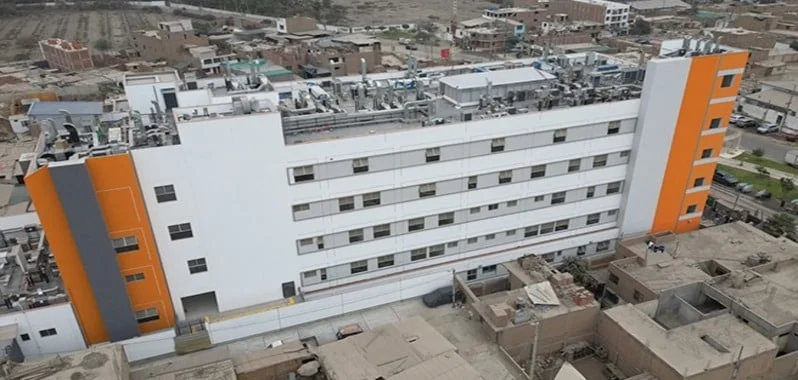
In a landmark decision aimed at bridging the deep-seated health inequality gap in the Peruvian highlands and jungle regions, the Regional Government of Cusco and the District Municipality of Kimbiri have officially inked a joint execution agreement. This partnership marks the launch of the "Improvement and Expansion of Health Services at the San Juan de Kimbiri Hospital" project, a massive infrastructure endeavor valued at over S/ 315.9 million. This project is set to become a cornerstone of public health in the Valley of the Apurímac, Ene, and Mantaro Rivers (VRAEM), promising to provide specialized medical care to over 60,000 residents, including vulnerable indigenous Asháninka and Machiguenga communities.
Main Facts: A Dual-Regional Effort
The initiative, identified under the National Public Investment System (Invierte.pe) as CUI N° 2563416, is a testament to decentralized cooperation. The financial burden is being shared strategically: the Cusco Regional Government will cover 64.12% of the project (S/ 205.5 million), while the District Municipality of Kimbiri will contribute 35.88% (S/ 115 million).
The project is not merely a construction of walls; it is a holistic approach to the regional healthcare crisis. By integrating the Kimbiri-Pichari Red (Cusco) and the Valle Esmeralda Micro Red (Junín), the hospital will act as a central hub for specialized medical services that were previously inaccessible to the local population without arduous, multi-hour journeys to Cusco or Lima.
Chronology of the Initiative
The road to this agreement reflects a multi-year effort to address the logistical and bureaucratic hurdles inherent in the VRAEM region.
- Initial Conceptualization: Recognizing the lack of adequate health facilities in the high-conflict and remote areas of the VRAEM, local leaders began lobbying for a modernized hospital capable of handling complex cases.
- Technical Feasibility and Budget Approval: Following extensive demographic studies, the project was officially registered and assigned the CUI N° 2563416.
- Inter-institutional Negotiations: The Cusco Regional Government, led by Governor Werner Salcedo Álvarez, entered into intensive negotiations with the Kimbiri Municipality to structure the financial framework, eventually opting for the "Works for Taxes" (Obras por Impuestos) mechanism.
- Formal Signing (August 2026): The signing of the joint execution agreement marks the transition from planning to active implementation, establishing a strict timeline for construction, management, and supervision.
Supporting Data: Infrastructure and Scope
The San Juan de Kimbiri Hospital is designed to be a comprehensive medical center. Unlike smaller rural clinics that offer only primary care, this facility will feature an extensive array of specialized services, ensuring that the VRAEM population receives dignified, high-standard care.

Clinical Specialties and Infrastructure
The planned hospital will host a wide range of departments, including but not limited to:
- General and Specialized Medicine: Internal medicine, infectious diseases, and pneumology.
- Women’s and Child Health: Full-scale gineco-obstetrics and pediatrics departments.
- Surgical Capabilities: General surgery, traumatology, orthopedics, and anesthesiology.
- Diagnostic and Supportive Care: Advanced dental services with oral radiology, clinical nutrition, and psychology.
- Specialized Clinics: Dedicated units for the control and treatment of HIV/AIDS and other sexually transmitted infections (STIs), addressing a specific epidemiological need in the region.
The infrastructure component includes not only the physical building but also the procurement of state-of-the-art medical equipment, ensuring that the hospital meets national health standards for secondary-level care.
Official Responses and Strategic Vision
Governor Werner Salcedo Álvarez, during the signing ceremony, emphasized that this project is a moral imperative rather than a political one.
"There is no true development if a family must travel for hours, or even days, just to access basic or specialized healthcare," the Governor stated. "Our responsibility is to direct investment where it is most desperately needed. We are not just pouring concrete; we are building infrastructure that reflects the reality and the dignity of our people in the VRAEM."
The agreement also outlines a clear transition of responsibility. Once the construction is complete and the infrastructure is handed over, the Ministry of Health (MINSA) will take charge of operations and maintenance. This ensures that the hospital remains functional, fully staffed, and adequately supplied with medications and medical inputs, preventing the "white elephant" syndrome that often plagues rural public infrastructure projects in Peru.

Implications: A New Era for the VRAEM
The impact of the San Juan de Kimbiri Hospital extends far beyond the immediate medical benefits.
Bridging the Rural-Urban Divide
For decades, the VRAEM has been characterized by geographic isolation and limited state presence. The construction of this hospital is a symbolic and practical step in state integration. By providing modern healthcare locally, the government reduces the economic strain on families who previously had to pay for transportation and lodging in distant cities to seek treatment.
Support for Indigenous Communities
The hospital is specifically designed to accommodate the cultural and demographic reality of the area. By serving the Asháninka and Machiguenga communities, the facility acknowledges the linguistic and cultural nuances required to deliver effective healthcare. Health programs within the hospital are expected to be sensitive to these indigenous populations, fostering trust between the state and communities that have historically been sidelined.
The Mechanism of "Works for Taxes"
The use of the "Works for Taxes" mechanism is a strategic choice. It allows the private sector to participate in public investment, ensuring that the projects are completed more efficiently than traditional public works contracts. By delegating the execution and supervision to clear, pre-defined technical and financial frameworks, the Regional Government of Cusco hopes to avoid the delays and cost overruns that often hinder public health infrastructure.
Economic and Social Stability
Improved health outcomes are directly linked to economic productivity. By reducing the burden of disease and maternal-infant mortality, the hospital will contribute to the overall stability of the VRAEM. A healthier population is better equipped to participate in the local agricultural and commercial economies, thereby fostering regional growth.

Conclusion: A Model for Future Cooperation
The San Juan de Kimbiri Hospital project stands as a model of how inter-governmental cooperation—between regional governments and district municipalities—can bypass traditional bureaucratic bottlenecks to deliver results. With a total investment of S/ 315.9 million, this project represents one of the most significant healthcare commitments in the recent history of the Cusco region.
As the construction phase approaches, all eyes will be on the execution and transparency of the project. If successful, the hospital will serve as a template for other remote regions in Peru, proving that with political will and strategic financial planning, the state can indeed bring quality, life-saving healthcare to the most isolated corners of the nation. The people of Kimbiri, and indeed the broader VRAEM, now look toward a future where "access to health" is no longer a privilege defined by geography, but a fundamental right secured by modern infrastructure.