Executive Summary
The political landscape of Peru remains deeply affected by the protracted legal saga of Vladimir Cerrón Rojas, the founder and leader of the political party Perú Libre. After more than two and a half years in clandestinity, the former regional governor of Junín finds himself at the center of a pivotal judicial battle. His defense team, led by attorney Humberto Abanto, has pinned its hopes on a pending ruling from the Constitutional Court (TC). Should the court rule in his favor, it could result in the revocation of his pretrial detention order, effectively ending his status as a fugitive. Congressional allies, notably Américo Gonza, argue that this potential judicial pivot is not only necessary but would mark the formal return of Cerrón to the national political arena.
The Legal Tug-of-War: A Chronology of Clandestinity
The case of Vladimir Cerrón is characterized by a complex intersection of high-stakes criminal investigation and constitutional maneuvering.
February 2024: The Constitutional Appeal
After spending years evading authorities, Cerrón filed a habeas corpus petition with the Constitutional Court. This legal move was specifically designed to challenge the legitimacy of the pretrial detention orders issued against him in connection with the "Dinámicos del Centro" case—a massive corruption investigation involving money laundering and the alleged misuse of party funds.
The Prosecution’s Stance
For the Public Ministry, the case against Cerrón is a cornerstone of its anti-corruption efforts. Prosecutors allege that the party Perú Libre functioned, in part, as a mechanism for laundering illicit assets. The pretrial detention was deemed necessary by the judiciary due to the high risk of flight and the potential for obstruction of justice.
The Current Impasse
As of mid-2024, the legal community and the Peruvian public are awaiting the final resolution of the TC. While rumors have circulated regarding a potential favorable outcome for the leader of Perú Libre, the court has maintained a formal silence. Defense attorney Humberto Abanto has insisted that, should the resolution materialize, the defense will immediately move to petition the lower courts to vacate all active capture warrants.
Political Defense: The Narrative of "Persecution"
The defense of Vladimir Cerrón has not been limited to the courtroom. It has taken on a distinctly political dimension, spearheaded by members of his own party in the national legislature.
Américo Gonza’s Defense
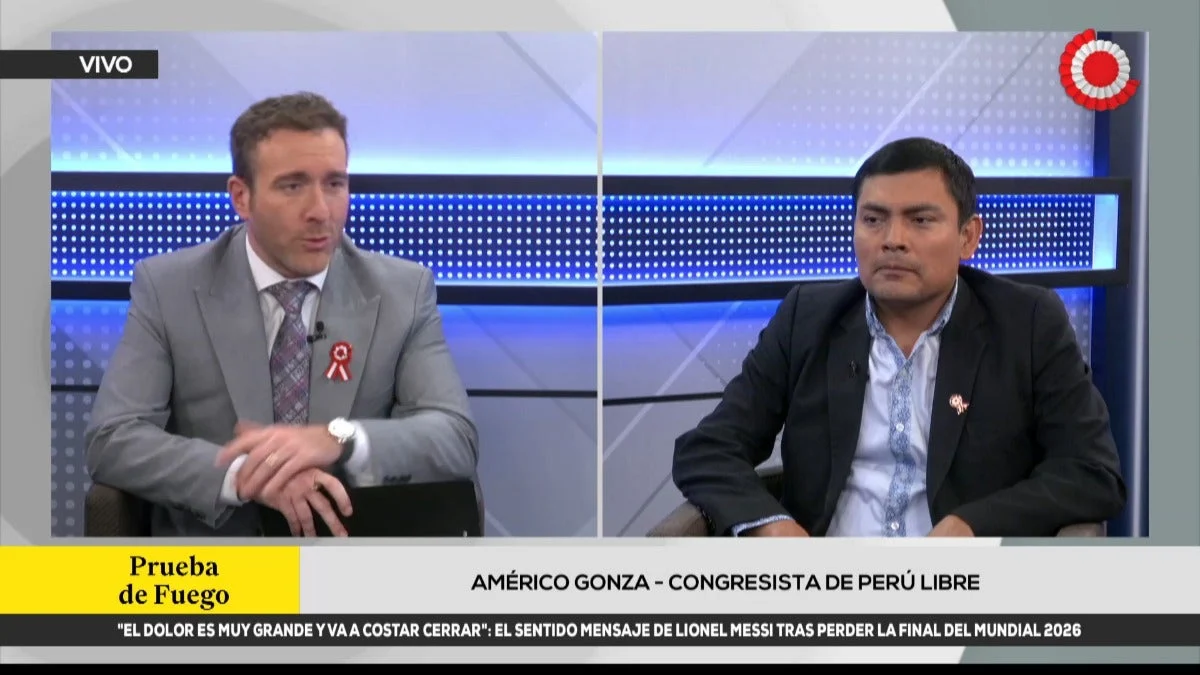
In a recent interview on the Prueba de Fuego program, Congressman Américo Gonza offered a spirited defense of his party leader. Gonza characterized the judiciary’s actions not as a legitimate exercise of law, but as a campaign of "persecution" driven by an "unjust system."
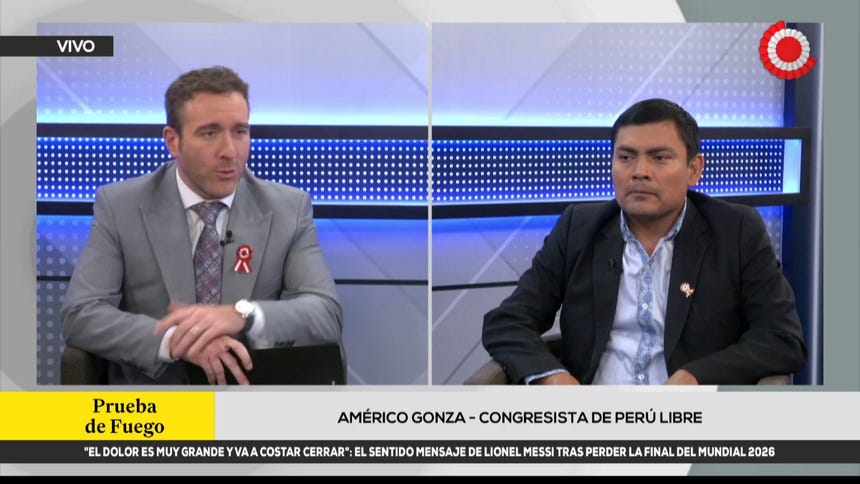
"Mr. Vladimir Cerrón is a politician," Gonza stated. "Those who carry politics in their blood do not simply walk away from it. Especially someone who has been hounded by this unjust judicial system."
Gonza’s rhetoric highlights a broader strategy within Perú Libre: to frame the leader’s flight not as an admission of guilt, but as a rational response to an unfair process. He argued that pretrial detention was an excessive measure and that there were "other mechanisms" available to the justice system to ensure his appearance without resorting to incarceration.
The Strategy of Non-Surrender
When questioned about why Cerrón does not surrender to clear his name, Gonza was dismissive of the premise. "It is easy to say, ‘Turn yourself in if you are innocent.’ How do you surrender to an injustice?" This rhetoric underscores a fundamental ideological divide in Peru: one side views the judiciary as an independent check on power, while the other—specifically the faction loyal to Cerrón—views the legal system as a political weapon used by "traditional elites" to marginalize their movement.
Implications of a Favorable Ruling
The potential for a Constitutional Court ruling in favor of Cerrón has triggered intense speculation regarding its impact on the 2026 electoral cycle and the stability of the current political order.
The Return to the Political Arena
Should the TC grant the petition, the immediate legal consequence would be the suspension of the arrest warrants. For supporters, this would be a triumphant return. As Gonza noted, Cerrón has already expressed, through digital channels, his intention to dedicate himself to "building the party." A physical return to public life would likely revitalize Perú Libre, which has struggled with internal fragmentation and declining public support during his absence.
Institutional Trust and the Rule of Law
Critics argue that any intervention by the Constitutional Court that favors a high-profile fugitive risks undermining public confidence in the judicial branch. If the TC is perceived as a political actor rather than a constitutional one, the "lawfare" narrative gains traction, potentially delegitimizing future legal proceedings against other political figures.
The "Antalsis" Case Context
Adding to the complexity is the recent development in the "Antalsis" case, where the Public Ministry has requested the archives of certain bribery charges against Cerrón. This development has provided further ammunition for his defenders, who cite these requests as evidence that the entire case against the leader of Perú Libre is built on shaky foundations.

Expert Analysis: The Constitutional Court’s Dilemma
Legal experts note that the TC finds itself in a delicate position. Its mandate is to ensure that the constitutional rights of individuals—such as due process and the right to liberty—are not violated. However, it must also respect the autonomy of the judiciary in managing criminal proceedings.
Constitutional Bounds
The TC is tasked with determining whether the lower courts’ decisions to impose pretrial detention were grounded in adequate legal justification or if they violated constitutional safeguards. If the court finds procedural flaws, it has the authority to order a retrial or the revocation of the detention order.
Public Perception
The court is currently operating under intense public scrutiny. With the political climate already polarized, any decision regarding Cerrón will be interpreted through a partisan lens. The challenge for the magistrates is to provide a ruling that is legally robust enough to withstand international scrutiny while navigating the domestic political storm.
Supporting Data and Future Outlook
As of the latest updates from the Judiciary, the investigations into Perú Libre continue to move through various stages of the criminal process. While the focus remains on the TC, the prosecution is continuing its work on the broader case files.
The Electoral Horizon
With the 2026 general elections on the horizon, the legal status of Vladimir Cerrón is not merely a judicial issue; it is an electoral variable. His presence in the political debate, whether in person or via digital platforms, significantly alters the dynamics of the left-wing vote in Peru.
Conclusion
The case of Vladimir Cerrón remains a litmus test for the Peruvian state. It raises profound questions about the limits of judicial power, the rights of the accused in a polarized political climate, and the resilience of the country’s democratic institutions. Whether the Constitutional Court upholds the lower court’s detention order or grants the habeas corpus, the decision will mark a turning point. If freed, Cerrón will undoubtedly seek to reclaim his position at the helm of Perú Libre, setting the stage for a contentious and high-stakes political comeback. If the order stands, the struggle between his movement and the judiciary will only intensify, further deepening the divide in Peru’s fractured political landscape.
Ultimately, the nation watches the Constitutional Court not just to see the fate of one man, but to understand the future direction of the rule of law in a country where the line between criminal justice and political persecution remains a subject of fierce and unresolved debate.