Introduction: The Anatomy of a Delayed Proclamation
As Peru prepares for its upcoming second-round presidential election, a familiar shadow looms over the democratic process: the specter of a prolonged vote count. While the technical process of counting ballots is a swift, streamlined operation, the road to an official winner is paved with legal hurdles.
Fernando Tuesta, former head of the National Office of Electoral Processes (ONPE), recently underscored a sobering reality for the Peruvian electorate: despite the simplicity of the second-round ballot, citizens should prepare for a potential month-long wait before the next president is officially proclaimed. This timeline, which mirrors the protracted wait experienced during the 2021 elections, highlights the friction between the need for speed and the rigid, "guarantist" nature of Peru’s electoral laws.
The Chronology of Uncertainty: Lessons from 2021
To understand the current anxiety surrounding the timeline, one must look back at the 2021 general election. That cycle became a benchmark for electoral turbulence, with the final 100% official result not declared until July 15, nearly two months after the polling stations had closed.
The delay in 2021 was not a failure of the ONPE’s technical infrastructure, but rather a direct consequence of a highly polarized political environment. In that instance, allegations of systemic fraud—despite a lack of verifiable evidence—triggered a wave of legal challenges. Political actors utilized every available mechanism to contest individual actas (polling records), effectively paralyzing the proclamation process while the Jurado Nacional de Elecciones (JNE) systematically addressed each complaint.
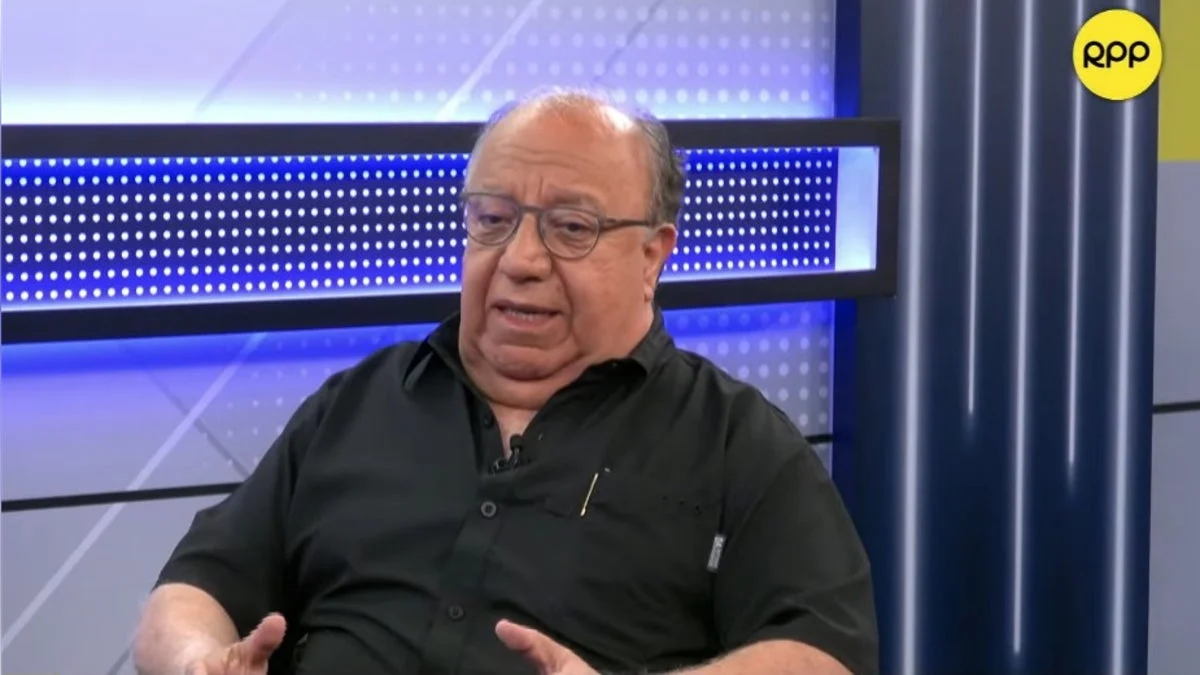
Tuesta, speaking on the RPP TV program Prueba de Fuego, clarified that the current projections by the JNE for a mid-July result are not a reflection of bureaucratic inefficiency, but a strategic anticipation of similar litigation. "It is not an operational issue," Tuesta explained. "It is not that they are doing it poorly or that it takes a long time because the second round is complex. It is a legal reality."
Official Responses: The JNE’s Perspective
The Jurado Nacional de Elecciones (JNE) has been transparent about the timeline, attempting to manage public expectations before the electoral heat rises. Grecia Rentería, spokesperson for the JNE, confirmed in a recent press conference that the official results of the second round are expected by mid-July.
According to Rentería, the delay is largely attributed to the robust procedural safeguards inherent in the Peruvian system. "For the second round, the results are expected in mid-July due to the entire new process of vote recounting, which is what essentially causes the proclamation to take longer," she stated.
The JNE’s calendar is distinct for different segments of the government. While the presidency remains in a state of extended deliberation, the JNE has indicated that the proclamation of newly elected senators, deputies, and Andean parliamentarians is slated for completion in June. This separation of timelines aims to ensure that the legislative branch can begin its mandate, even if the executive remains in a state of transition due to ongoing electoral litigation.
The "Guarantist" Framework: A Double-Edged Sword
Peru’s electoral system is constitutionally designed to be "garantista" (guarantist)—a term used to describe a system that prioritizes the absolute protection of every citizen’s right to challenge the process. While this ensures that no vote is suppressed and that every anomaly is investigated, it provides a vast toolkit for political parties to stall the final tally.
Tuesta emphasizes that the counting of votes occurs at the polling tables (mesas) on election day, which is an immediate and efficient process. However, the transmission of data to computing centers and the subsequent legal phase is where the system becomes susceptible to friction.
"Our regulations are designed to be protective," Tuesta noted. "They allow parties to interpose a series of legal maneuvers, such as challenges to individual actas. In a tight race, every contested record becomes a battlefield."
Key Stages of the Electoral Legal Process:
- Polling Day Processing: Immediate tallying at the mesas.
- Data Transmission: Digitization and transmission to ONPE computing centers.
- The Challenge Phase: Political parties review the actas and identify discrepancies to challenge.
- JNE Deliberation: The JNE must review each challenge, requiring the physical retrieval and inspection of documents.
- Proclamation: Once all legal remedies are exhausted, the JNE formally declares the winner.
Supporting Data: The Impact of Margin of Victory
The primary catalyst for the "July scenario" is the margin of victory. Tuesta suggests that the intensity of legal challenges is directly proportional to the narrowness of the lead.
If the final results show a margin of less than 1%—a scenario that has become increasingly common in polarized Latin American elections—the probability of a sustained legal campaign becomes nearly certain. Tuesta warned that in such an event, the losing party is almost guaranteed to invoke the narrative of "fraud" to buy time and mobilize supporters.
"If we are in a scenario with a 1% margin, I fear, and I believe I am not the only one, that the loser will speak of fraud. This is not new in Peru," Tuesta remarked. The history of Peruvian elections shows that when a candidate believes they can overcome a small deficit through legal maneuvers, they will utilize the "guarantist" system to the maximum, regardless of the impact on national stability.
Implications for Governance and Stability
The extended wait time carries significant risks for the nation. A two-month period of uncertainty creates a power vacuum, dampens economic investment, and fosters social tension.
1. Political Instability
During the period between the election and the official proclamation, the country enters a "lame duck" phase where the outgoing administration holds little authority, and the incoming president-elect lacks the legal standing to begin the transition process effectively. This gap in authority can lead to paralysis in public policy.
2. Economic Consequences
Markets dislike uncertainty. A prolonged delay in the official results often leads to currency volatility, a slowdown in private investment, and an overall lack of confidence in the continuity of national economic policy. Investors prefer a declared winner, even if they disagree with the candidate’s platform, over the instability of a contested outcome.
3. Social Polarization
The rhetoric of "fraud" serves to deepen existing societal divisions. By questioning the legitimacy of the institutions—namely the ONPE and the JNE—political actors can erode trust in democratic processes for years to come. Tuesta’s concern is that the system, while legally sound, is being weaponized to achieve political ends, turning a technical process into a source of national strife.
Conclusion: Preparing for the Long Haul
As Peru heads to the polls, the message from electoral experts and officials is clear: patience is a democratic necessity. While the logistical aspects of the election are expected to proceed without incident, the legal reality of the Peruvian electoral system dictates that the announcement of a new president may not come until mid-July.
Citizens are encouraged to remain vigilant but also to understand the procedural safeguards that cause these delays. Whether these safeguards continue to serve the cause of democracy or become a tool for destabilization remains the central question of the 2026 election cycle. For now, the nation must prepare for a transition period defined by legal scrutiny, intense public debate, and the slow, methodical march toward an official proclamation.