As the political atmosphere intensifies in Peru following the official confirmation of the candidates for the 2026 presidential runoff, the digital landscape has become a breeding ground for disinformation. Recently, a fabricated image purporting to be a legitimate voter simulation poll from the renowned firm Datum Internacional began circulating rapidly across social media platforms, particularly X (formerly Twitter). The doctored graphic claimed a massive lead for Fuerza Popular candidate Keiko Fujimori, placing her at 59% against the 27% assigned to her opponent, Roberto Sánchez of Juntos por el Perú.
However, after a rigorous investigation by the AmaLlulla fact-checking network—in coordination with official statements from the polling firm—it has been definitively concluded that this document is entirely fraudulent.
The Anatomy of the Deception: Main Facts
The viral image, which first appeared on May 17, 2026, presented a professional-looking graphic designed to mimic the aesthetic and branding of Datum Internacional. By leveraging the reputation of a trusted polling entity, the creators of this disinformation aimed to sway public perception regarding the momentum of the two candidates.
The fake poll suggested a landslide scenario, providing specific percentages that would imply an insurmountable lead for Fujimori. The image garnered significant traction, accumulating over 55,000 views in a matter of hours. The primary goal of such content is to create a "bandwagon effect," where voters are encouraged to support a candidate based on the perception that they are the inevitable winner, or to generate outrage and polarization among the opposing electorate.
While the original poster eventually deleted the tweet following the initial wave of scrutiny, the image had already been captured and reshared by multiple accounts, demonstrating the difficulty of "scrubbing" misinformation once it enters the digital ecosystem.

Chronology of the Viral Misinformation
To understand the scale of the disinformation campaign, it is essential to track the timeline of the events:
- May 17, 2026: The fraudulent image is uploaded to X. It quickly begins to circulate, amplified by accounts that do not disclose their affiliations or sources of data.
- May 18, 2026 (Morning): The disinformation reaches a peak in reach. Recognizing the damage to its professional integrity, Datum Internacional issues a formal clarification on its official X account, stating explicitly that the content did not originate from their offices.
- May 18, 2026 (Afternoon): Following the firm’s public denial, several independent fact-checking outlets, including La República and AmaLlulla, launch parallel investigations.
- May 18, 2026 (Evening): The primary source of the image deletes the original post, though the digital footprint remains in the form of screenshots and reposts.
- May 19, 2026: Official verification is completed, confirming that no such poll exists in the company’s internal archives or public release schedule.
Supporting Data: What Does the Record Show?
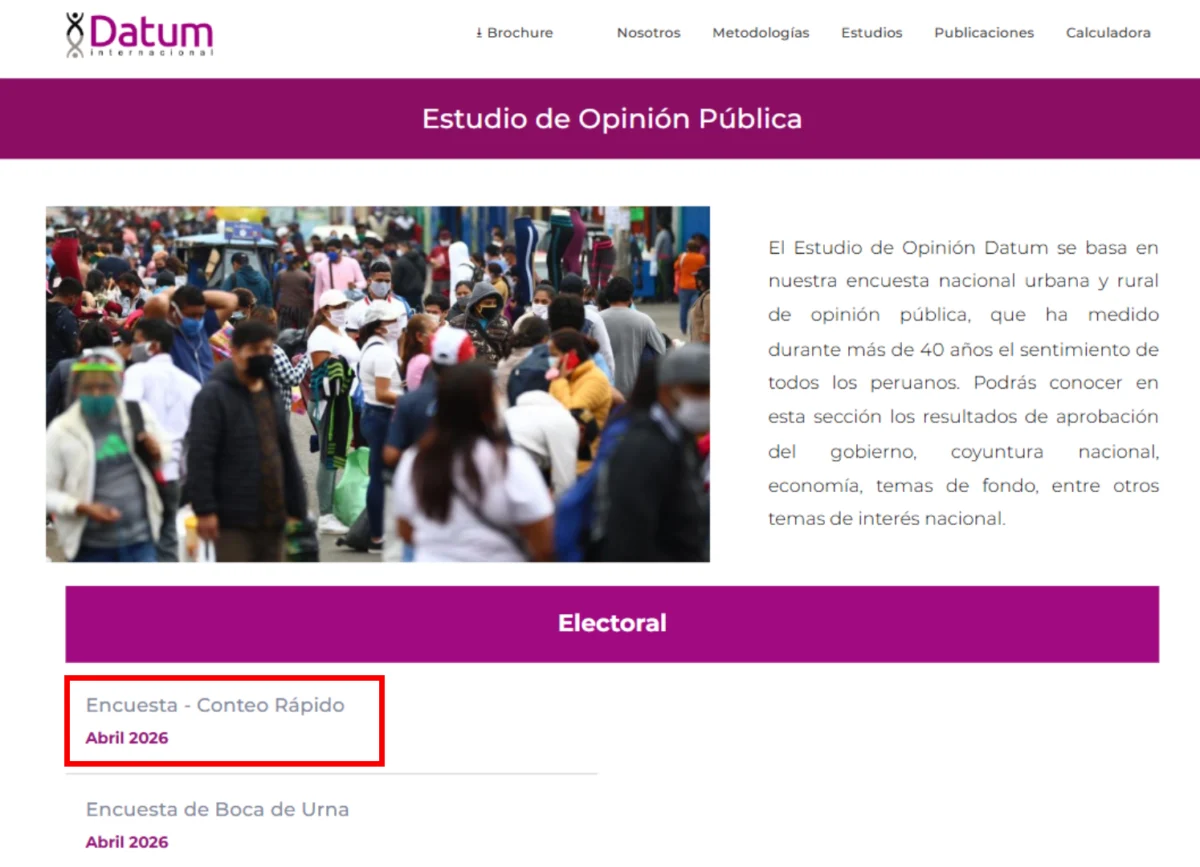
A comprehensive audit of Datum Internacional’s official communication channels—including their website and verified social media accounts—confirms that the firm has released no data regarding the 2026 runoff elections as of the date of the viral incident.
The last official public document released by Datum was the April 12, 2026, Quick Count (Conteo Rápido) report, which corresponded to the first round of the presidential elections. That report, which is publicly accessible, was meticulously designed to project the results of the presidential and congressional elections based on actual data recorded in electoral tally sheets (actas electorales).
The contrast between the professional rigor of the April 12 report and the fabricated image is stark. The fraudulent graphic lacks the methodological notes, the sample size, the margin of error, and the date of fieldwork—all of which are mandatory components for any legitimate polling publication in Peru.
Official Responses and Expert Testimony
The most damning evidence against the veracity of the poll came directly from the leadership of the polling agency. Urpi Torrado, CEO of Datum Internacional, was consulted by AmaLlulla to address the crisis.

"We are currently in the field, and we will be releasing the first publication for the second round in the coming days," Torrado stated, categorically dismissing the viral image as an apocryphal document. Her statement serves as the final word on the matter: the firm had not even concluded its field research for the runoff when the fake poll began to circulate.
By attempting to attribute this data to Datum, the perpetrators not only violated the principles of fair electioneering but also engaged in identity theft of a commercial entity. The speed at which Datum responded—using their verified channels to alert the public—highlights the necessity for polling firms to maintain a proactive stance in the age of viral disinformation.
The Broader Implications: Why Fake Polls Matter
The spread of fabricated polling data is not a victimless act. It poses a systemic threat to democratic processes for several reasons:
1. Erosion of Trust in Institutions
When voters are constantly bombarded with conflicting, fake data, they become cynical. This cynicism often leads to a general distrust of legitimate journalistic work and credible polling agencies. If a citizen cannot distinguish between a real poll and a fake one, they may begin to view all data as "bought" or "manipulated."
2. Market and Electoral Distortion
In the final weeks of a campaign, polls serve as a primary guide for undecided voters. Fabricated polls are designed to create a "false reality." If a significant portion of the electorate believes a candidate is winning by a massive margin, it can suppress voter turnout for the trailing party or create a false sense of complacency in the leading party’s camp.

3. The "Post-Truth" Campaign Cycle
The 2026 elections in Peru are occurring in a high-stakes environment. The use of sophisticated graphics to mimic legitimate brands shows that the actors behind this disinformation are becoming more technically proficient. This requires a higher level of "media literacy" from the average citizen, who must now act as their own fact-checker before hitting the "share" button.
4. The Responsibility of Social Media Platforms
While the author of the post deleted the tweet, the persistence of the image across other accounts highlights a failure in platform moderation. When a lie is corrected, the correction rarely reaches the same audience as the original lie. The "viral" nature of social media ensures that the damage is often done before the truth can catch up.
Conclusion: A Call for Vigilance
As Peru moves closer to the final showdown of the 2026 presidential election, the incident involving the fake Datum poll serves as a stark reminder of the dangers of digital disinformation. Political campaigns and their supporters are encouraged to rely solely on the official, verified channels of recognized polling firms and reputable news organizations.
The fact that the fake poll was so easily debunked by comparing it to the official record is a success for the journalistic community. However, the ease with which it was created and shared remains a warning. For the electorate, the lesson is clear: verify the source, check the date, and beware of any graphic that feels designed to confirm a specific political bias. In the face of democratic uncertainty, truth—verified and corroborated—is the most powerful tool available to the voter.