In a critical race against time, the upper echelons of Peru’s private sector, spearheaded by the National Society of Industries (SNI), have launched an unprecedented collaborative mission in the Piura region. The objective is clear and urgent: to establish a cohesive, rapid-response strategy between the public and private sectors to fortify the region’s defenses against the impending and potentially catastrophic impacts of the El Niño Phenomenon (FEN).
As climatic indicators point toward a significant weather event, the business community has signaled that the window for preventive action is rapidly closing. The mission, which convened in the capital of the Piura region, serves as the first of a series of strategic interventions aimed at safeguarding lives, protecting essential infrastructure, and ensuring the continuity of the national economy.
1. Main Facts: A Call for Urgent Intervention
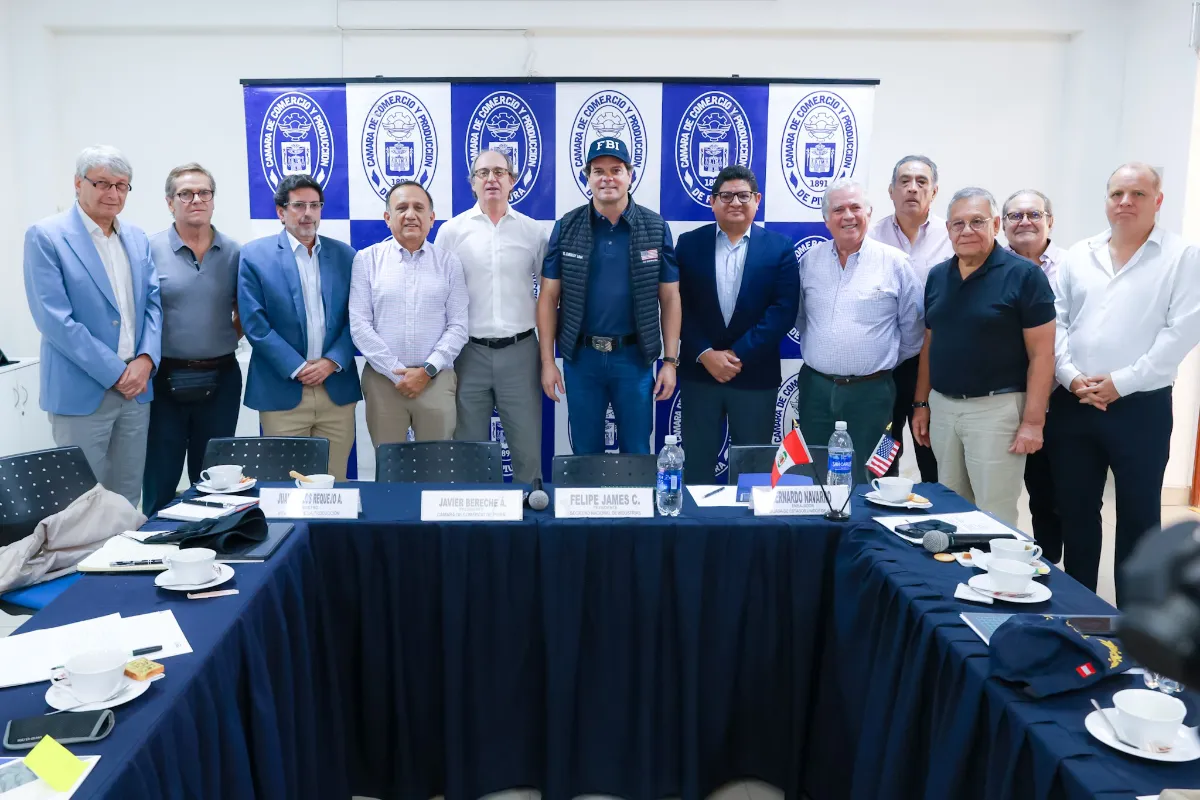
The delegation, comprised of the nation’s most influential trade unions, met at the Piura Chamber of Commerce and Production to assess the state of regional preparedness. The summit brought together high-level stakeholders, including the United States Ambassador, Bernie Navarro, and the Minister of Production, Juan Carlos Requejo.
The primary concern identified by the leadership is the current state of the Piura River. Experts warn that the river’s natural flow is significantly obstructed by sediment, particularly in the Chutuque sector. Without immediate intervention—specifically, controlled detonations and extensive desilting—the river is expected to overflow its banks, posing a direct threat to the city and surrounding populations.
Key participants included:

- Felipe James Callao, President of the SNI.
- César Tello Ramírez, President of the Association of Exporters (ADEX).
- Karsten Kunckel, President of the Automotive Association of Peru (AAP).
- Jorge Zapata, President of CONFIEP.
- Javier Bereche, President of the Piura Chamber of Commerce (Camco).
- Carlos Neuhaus, Leader of the Private Command against El Niño.
- Luis del Carpio, Executive President of ProInversión.
- Joanna Fischer, Head of the Environmental Evaluation and Enforcement Agency (OEFA).
2. Chronology of the Mission
The mission was structured as a multi-stage operational visit designed to provide a 360-degree view of the regional crisis:
- Initial Summit: The delegation convened at the Piura Chamber of Commerce to analyze the technical reports provided by regional authorities and discuss the integration of private sector resources.
- Industrial Site Assessment: The team traveled to Paita to visit the facilities of Seafrost, a pillar of the region’s fishing and aquaculture industry. Here, discussions focused on the survival of the Direct Human Consumption (CHD) sector and the protection of the supply chain.
- Field Inspection: The mission concluded with a site visit to the most vulnerable sections of the Piura River channel, where leaders witnessed firsthand the scale of the sediment buildup that threatens the regional economy.
- Upcoming Forum: The outreach continues with the "Fenómeno El Niño: Prevention, Infrastructure, and Defense of Regional Production" forum, hosted at the Technological University of Peru (UTP) in Piura, aimed at finalizing local action plans.
3. Supporting Data and Technical Challenges
The technical consensus among the leaders is that "we are already behind schedule." According to Felipe James Callao, the window for effective prevention is limited to the next two to three months before the peak of the rainy season in October.
The "Chutuque" Bottleneck
The Piura River’s inability to maintain its natural course is not a new phenomenon, but it is one that has reached a breaking point. The river is currently "clogged," as described by local experts. The technical proposal involves:
- Controlled Detonations: Utilizing mining sector expertise and equipment to clear high-density sediment.
- Strategic Dredging: Creating temporary outlets to redirect excess water into sandy lagunas, preventing the catastrophic flooding experienced in previous years.
- Infrastructure Reinforcement: Strengthening the levees (diques) to prevent the structural failures that led to urban inundation during the last major El Niño event.
Carlos Neuhaus, who oversaw the success of the Lima 2019 Pan American Games, noted that the current strategy is to replicate the "Command Center" model used during the pandemic. By creating a unified platform, the private sector intends to complement state efforts with the logistics, engineering, and financial resources that the government may lack in the short term.
4. Official Responses and International Cooperation
The presence of U.S. Ambassador Bernie Navarro underscores the international gravity of the situation. Drawing a parallel to the devastation of Hurricane Katrina in 2005, Ambassador Navarro warned that procrastination is the greatest enemy of disaster mitigation.

"We need a work plan now. We are prepared to offer significant resources, including the Army Corps of Engineers and technical inspection teams, to ensure that the infrastructure holds," the Ambassador stated. The U.S. commitment includes providing up to 300 personnel specialized in engineering and disaster assessment to assist local authorities.
Minister of Production Juan Carlos Requejo emphasized that the state’s role is to act as a bridge. "Our goal is to protect the continuity of productive activities. We are focusing on safeguarding the fishing, industrial, and MYPE (Micro and Small Enterprises) sectors, which form the backbone of the Piura economy," he said.
5. Strategic Implications for the Peruvian Economy
The implications of an unmitigated El Niño are severe. Piura is a vital node in Peru’s export economy, particularly in the agro-industrial and fishery sectors. A failure in infrastructure would result in:
- Disruption of Export Chains: The loss of port access and road connectivity would halt the flow of produce, impacting international trade agreements.
- Employment Crisis: Thousands of jobs in the fishing and processing industries are at risk if infrastructure is damaged. The private sector is explicitly prioritizing the preservation of these jobs through proactive maintenance.
- Regional Economic Contraction: If the city of Piura is flooded, the destruction of commercial centers and essential services would reverse years of regional development, leading to a massive demand for state reconstruction funds that could be avoided through current preventative spending.
Future Outlook
The mission in Piura is merely the start. The SNI has confirmed that these coordination efforts will be replicated in other high-risk zones, including Chiclayo, Trujillo, and Arequipa. By aligning the interests of the mining, fishing, commerce, and construction sectors with the government’s emergency response, the business community hopes to build a resilient shield against climate-driven volatility.
The message from the Piura summit is unequivocal: the time for bureaucratic delays has passed. The mobilization of private industry expertise, coupled with international technical support and government oversight, represents the last line of defense for a region that cannot afford another season of inaction. As October approaches, the success of this mission will be measured not in meetings held, but in the cubic meters of sediment removed and the resilience of the levees against the coming rains.