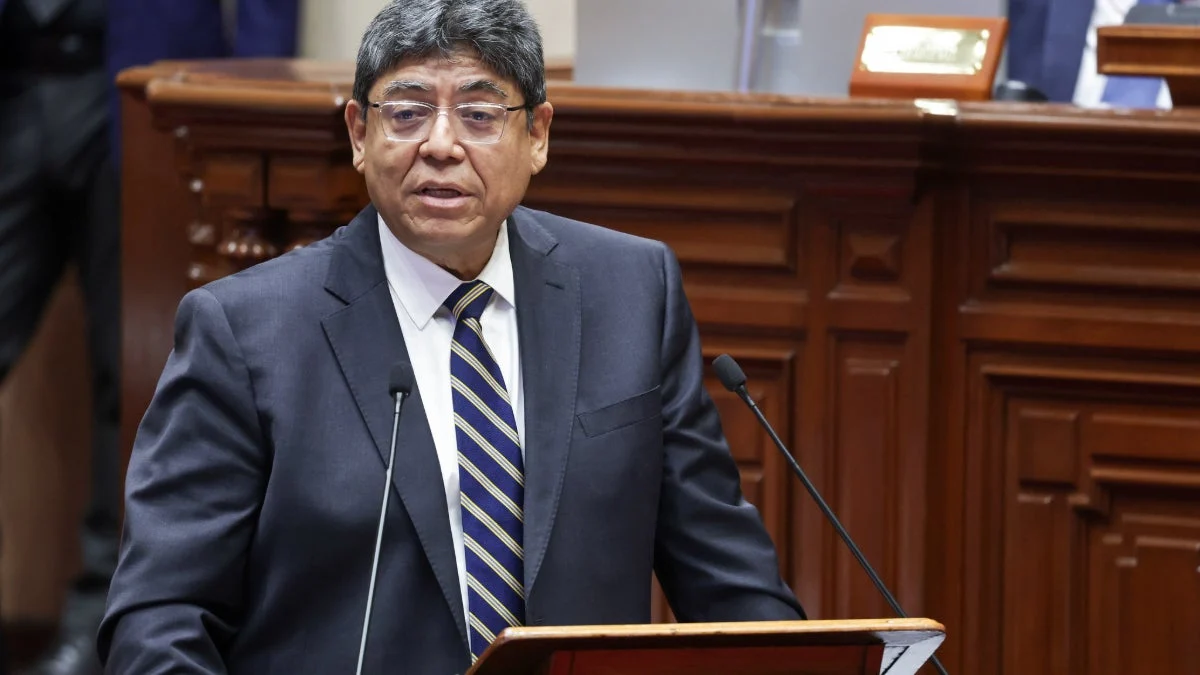
In a significant presentation before the Peruvian Congress during the budget deliberations for 2027, Minister of Economy and Finance Elmer Cuba unveiled a stark diagnostic of the nation’s fiscal landscape. While Peru continues to outperform much of the Latin American region in terms of macroeconomic growth, the country faces a systemic challenge that threatens to undermine long-term development: an aggressive and pervasive culture of tax non-compliance.
According to the Minister, tax evasion in Peru has climbed to 9% of the Gross Domestic Product (GDP). This figure significantly eclipses the regional average of 6.7%, placing Peru in a precarious position compared to its neighbors. Minister Cuba’s message to lawmakers was clear: the solution to the country’s budgetary constraints does not lie in increasing the tax burden on citizens, but rather in closing the substantial loopholes that currently bleed the national treasury.
The Anatomy of Evasion: Beyond Small Businesses
A prevailing narrative in many developing economies is that the informal sector—small street vendors or micro-entrepreneurs—is the primary driver of tax evasion. However, Minister Cuba challenged this perception, shifting the focus toward mid-sized and larger corporate entities that possess the capacity to pay but choose to bypass their obligations through sophisticated and illicit mechanisms.
"The primary evader in Peru is not the small entrepreneur; it is the medium-sized company that engages in the illicit trade of false invoicing," Cuba stated during his address. He went on to highlight the alarming normalization of these practices, noting that the trade of fraudulent receipts has become so brazen that it is openly advertised on social media platforms like TikTok.
This behavior, characterized by the creation of artificial costs to reduce taxable income, represents a structural drain on the economy. By prioritizing the collection of these lost revenues, the government believes it can stabilize the fiscal deficit and finance critical public services without resorting to the politically and economically sensitive option of raising the General Sales Tax (IGV) or the Income Tax.
Chronology of Fiscal Stagnation
To understand the current urgency, one must look at the trajectory of Peru’s fiscal policy over the last decade.
- 2015–2019 (Pre-Pandemic): Peru maintained a relatively stable, albeit sluggish, approach to tax reform. During this period, the focus was primarily on broadening the tax base through digital transformation within the national tax authority, SUNAT.
- 2020–2022 (The Pandemic Shock): The COVID-19 pandemic necessitated emergency spending, leading to a temporary expansion of the fiscal deficit. Tax collection plummeted as businesses shuttered and the economy contracted, highlighting the vulnerability of a system overly reliant on a small pool of formal taxpayers.
- 2023 (Recovery and Realignment): As the economy rebounded, the government faced increased pressure to address public infrastructure and social protection gaps. The need for a more robust tax collection system became the central theme of fiscal debates.
- 2024–2025 (The Current Mandate): The Ministry of Economy and Finance (MEF) began shifting its rhetoric from "broadening the base" (which often implies taxing the informal) to "increasing compliance" (targeting the formal evaders). This culminates in the current 2027 budget proposal, which explicitly rejects tax hikes.
- 2026 and Beyond: The government has solidified its stance, confirming that even with the expiration of certain tax exemptions in 2026, the strategy remains to protect household savings and consumer purchasing power by keeping tax rates frozen.
Supporting Data: The Cost of Inaction
The numbers provided by the Ministry of Economy are staggering. A reduction of two percentage points in tax evasion would yield approximately US$6 billion (roughly S/20 billion). To put this into perspective, such an injection of capital would be transformative for a country currently grappling with significant infrastructure deficits and social inequalities.
Comparative Analysis of Tax Evasion
| Region/Country | Tax Evasion (% of GDP) |
|---|---|
| Latin America (Average) | 6.7% |
| Peru | 9.0% |
| Regional Best Performers | 4.5% – 5.0% |
The disparity between Peru’s 9% and the regional average of 6.7% represents a "fiscal leakage" that prevents the state from investing in hospitals, schools, and transportation networks. The Minister argued that for a country that prides itself on economic growth, this leakage is a paradox that can no longer be ignored.
Official Responses and Strategic Shifts
Minister Cuba’s testimony before the Pleno del Congreso served as a direct rebuke to those advocating for tax increases. The Ministry’s position is that the current tax rates are sufficient if they are actually enforced.
"It is paradoxical that a country that grows more than the region collects less than the region," Cuba stated. "There is significant room to improve without touching a single rate, without moving the Income Tax or the IGV by even a millimeter."
The Ministry’s strategy for the coming years involves a two-pronged approach:
- Technological Enforcement: Leveraging artificial intelligence and real-time electronic invoicing to detect fraudulent tax credits and shell companies.
- Institutional Efficiency: Improving the quality of public spending. The Minister emphasized that gathering more revenue is pointless if the administrative machinery of the state remains inefficient.
Implications for the Future: Efficiency vs. Spending
The debate over tax evasion in Peru is inextricably linked to the quality of public investment. The Ministry of Economy acknowledges that the public’s skepticism regarding tax compliance is fueled by the government’s failure to translate taxes into tangible services.
The Quality-of-Spend Mandate
Minister Cuba’s warning that "it is useless to spend more than last year if the quality of service does not improve" highlights a critical shift in the government’s narrative. The administration is essentially entering a "social contract" with the public: the government will aggressively pursue corporate tax evaders to fill the coffers, but in return, the government must demonstrate a radical improvement in how those funds are deployed.
Macroeconomic Stability and Competitiveness
By avoiding tax hikes, the government hopes to maintain Peru’s competitive edge in the region. Increasing tax rates during a period of moderate growth could dampen investment and stifle consumer spending. Conversely, cracking down on the "informal formal sector"—those who operate formally but cheat on their taxes—creates a more level playing field for honest businesses.
Conclusion: A Path Forward
The path chosen by the Ministry of Economy and Finance is one of institutional discipline rather than fiscal expansion. By setting a target of reducing tax evasion by two percentage points, the government has created a measurable KPI for its own success.
If successful, the recovery of US$6 billion could fundamentally alter the trajectory of Peru’s social and economic development. However, the success of this plan rests entirely on the government’s ability to overcome the deep-seated structural and political barriers that have allowed tax evasion to flourish for years. As the 2027 budget cycle progresses, the focus will remain on whether the state can move from rhetoric to action, ultimately ensuring that those with the highest capacity to contribute to the nation’s growth are finally held accountable.