Executive Summary: A Structural Crisis
The labor market for young people in Lima and across Peru is currently navigating a period of unprecedented stagnation. A landmark study titled “Labor Situation and Aspirations of Young People in Lima,” conducted by economist and Central Reserve Bank (BCR) director Oswaldo Molina for Arcos Dorados Perú, has unveiled a stark disconnect between the demands of the private sector and the capabilities of the emerging workforce.
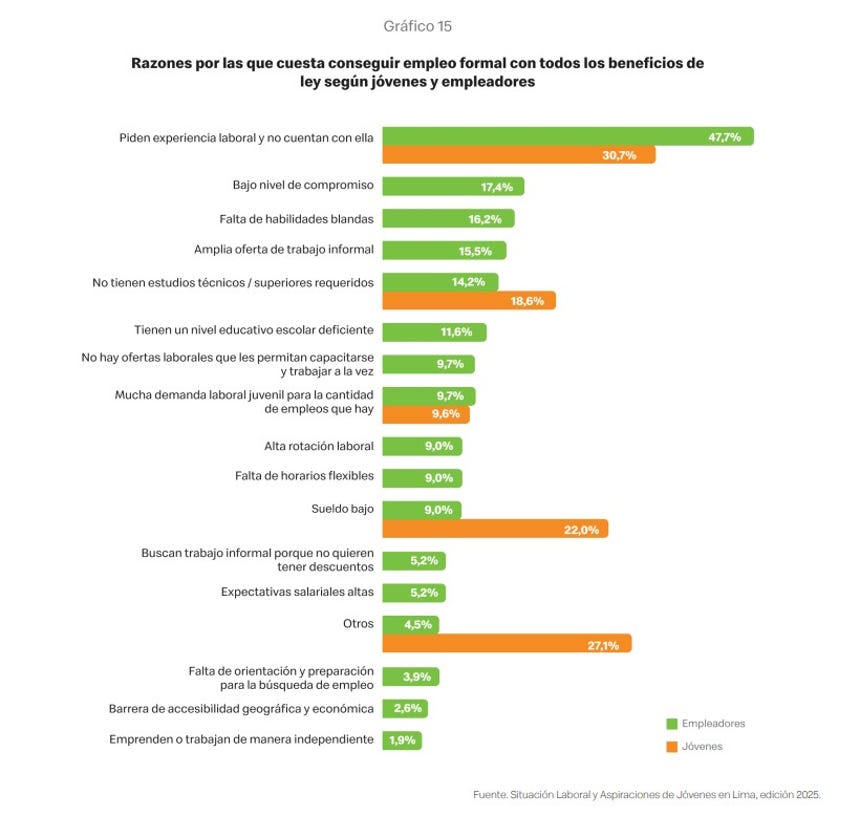
At the heart of this crisis is a "catch-22" scenario: 48% of employers identify a lack of prior experience as the primary barrier to hiring individuals under the age of 25. Meanwhile, young job seekers are trapped in a cycle of informality, unable to gain that very experience because they are systematically excluded from formal entry-level roles. With only one in ten workers in Lima currently under 25, the country faces a significant structural challenge that threatens to undermine the long-term productivity of its economy.
Chronology of the Crisis: From 2022 to the Present
To understand the current impasse, one must look at the recent trajectory of the Peruvian labor market:
- 2022: The youth population (ages 18-25) in the labor force stood at approximately 2.5 million. At this stage, while informal, there was a higher baseline of engagement.
- 2023-2024: Economic volatility, exacerbated by external factors such as the El Niño phenomenon, forced businesses to tighten recruitment budgets. The emphasis shifted toward "plug-and-play" talent—workers who require zero training.
- 2025: The national youth unemployment rate hovered around 12%. Despite a slight improvement in the macro-economy, youth remained disproportionately represented in the informal sector.
- 2026 (Current State): The youth labor force has shrunk to 2.1 million. While the unemployment rate has dipped to 10%, this statistic masks the reality of a shrinking labor pool, where many young people have simply stopped looking for formal work, opting for the informal sector or withdrawing from the market entirely.
Supporting Data: The Anatomy of Exclusion
The study provides a granular breakdown of why the bridge between education and the workplace remains broken.

Employer Perspectives
When businesses were asked to rank the difficulties in hiring young talent, the hierarchy of barriers was clear:
- Lack of Experience (48%): Employers view the onboarding of inexperienced staff as an investment risk.
- Low Commitment (17%): Companies report high turnover rates, fearing that the time spent training a new hire will be lost if the employee leaves prematurely.
- Lack of Soft Skills (16%): A notable gap in communication, teamwork, and interpersonal intelligence.
- Informal Alternatives (15%): Many employers note that young people often prioritize short-term informal earnings over the process of formal recruitment.
- Academic Mismatch (14%): A perceived failure of technical or higher education to align with current market demands.
Youth Perspectives
Conversely, the young workers surveyed present a different narrative. For them, the barrier is not a lack of interest, but a lack of accessibility:
- Salary Expectations (22%): A significant portion of young people cite low wages as a deterrent from seeking formal employment, which often involves heavy tax and pension deductions.
- Systemic Exclusion (19%): Young candidates feel that the requirement for "prior experience" for entry-level roles is a logical fallacy that effectively bans them from the formal economy.
Implications for the Peruvian Economy
The data paints a concerning picture for the future of Peru’s labor landscape. When 73% of young workers operate within the informal economy—a figure significantly higher than the 66% seen in the 26-44 age bracket—the implications for social security, tax revenue, and human capital development are severe.
The "Incomplete Transition"
The report highlights that the fundamental issue is not merely job creation, but a failed transition from the educational system to the labor market. Graduates are entering the workforce without the necessary practical skills or the professional orientation required to navigate formal recruitment processes. This creates a "lost generation" of workers whose potential remains untapped.
The Cost of Training
Employers are hesitant to hire because they bear the full burden of training costs. In a competitive market, firms are risk-averse; they fear that investing in a junior employee will only benefit a competitor who might poach that talent once the initial training period—which the current firm paid for—is complete.
Strategic Recommendations: A Path Toward Integration
The study concludes that a holistic, multi-stakeholder approach is required to fix the disconnect.
1. Targeted Fiscal Incentives
To mitigate the perceived risk of hiring inexperienced staff, the report suggests implementing temporary incentives for companies. These would be designed to offset the initial costs of training and onboarding, without compromising the legal rights or benefits of the employees. However, the report cautions that these must be carefully structured to avoid "substitution effects," where firms might let go of existing staff to hire subsidized, cheaper labor.
2. The Expansion of Dual Education
Peru needs to bridge the gap between academia and industry. By fostering a "dual education" model—where students split their time between classrooms and active work environments—the private sector can help shape the curriculum to meet real-time needs. This ensures that when a student graduates, they already possess the technical and "soft" skills employers currently find lacking.

3. Strengthening Intermediation
The current system for connecting job seekers with vacancies is inefficient. Strengthening labor information systems and professional intermediation agencies can help reduce the "search friction" that currently keeps young people in the dark about formal opportunities.
4. Cultural Shift in Hiring
Finally, the report calls for a shift in corporate culture. Companies must move away from the rigid demand for prior experience in entry-level positions. By focusing on "trainability" and potential rather than a perfected resume, companies can secure loyalty and build a workforce that is aligned with their specific organizational culture from day one.
Final Reflections
The study by Oswaldo Molina for Arcos Dorados serves as a wake-up call for policymakers and corporate leaders alike. The "youth employment paradox" in Lima is not a symptom of a lazy generation, but a structural failure that discourages the formal integration of young talent.
As the labor market continues to evolve in a post-pandemic, technology-driven world, the cost of inaction is too high. If the formal sector continues to close its doors, it leaves the majority of Peru’s future workforce to fend for themselves in an informal, unstable, and unprotected landscape. The solution lies in a collaborative effort: the state provides the incentives, the educational institutions provide the relevant training, and the private sector provides the opportunity. Only through this tripartite synergy can Peru ensure that its demographic dividend—its young people—becomes an economic engine rather than a missed opportunity.