Executive Summary: A Breach in Parliamentary Protocol
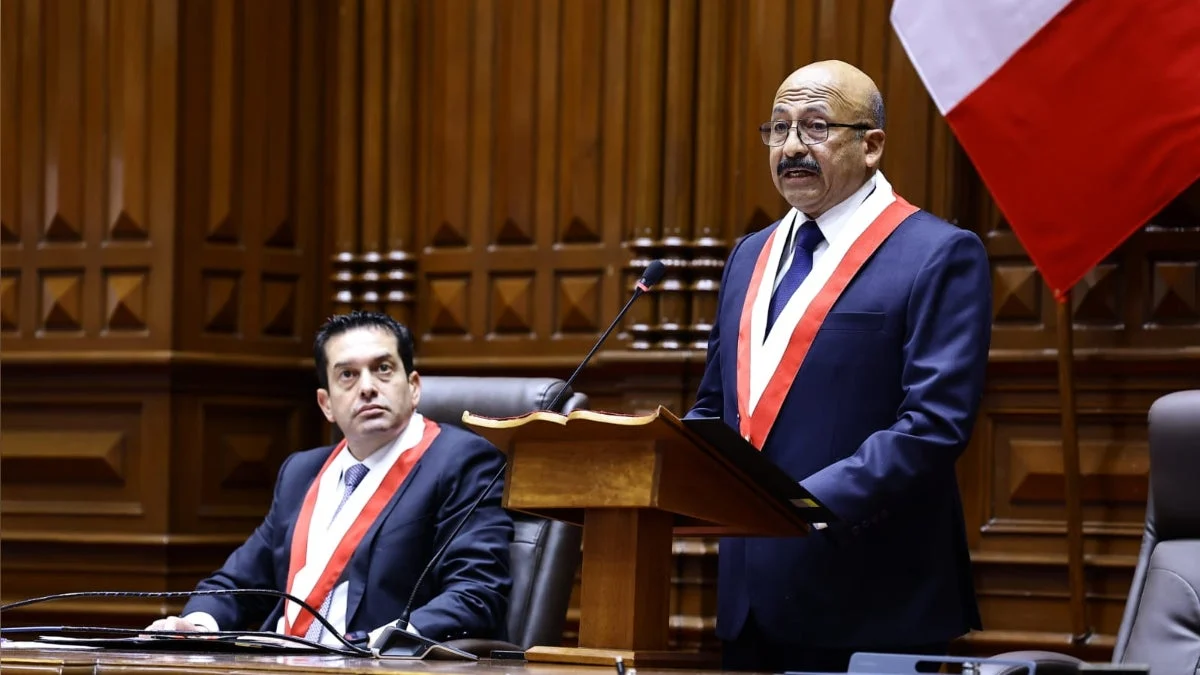
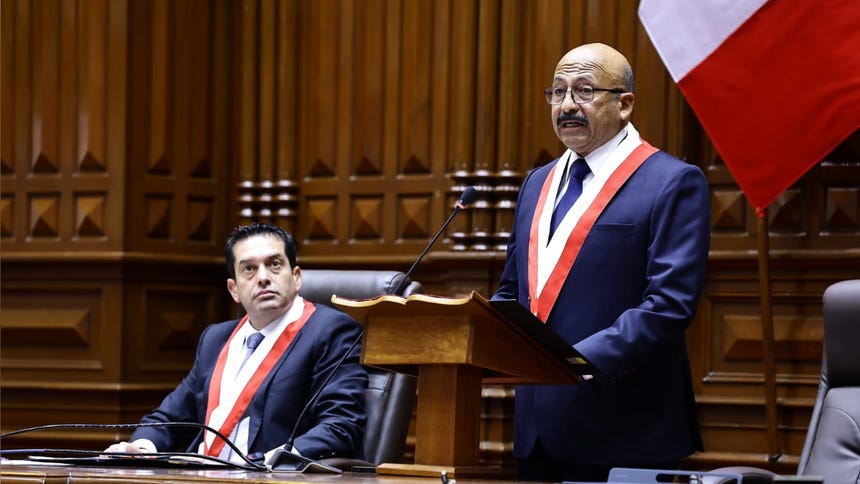
A significant institutional crisis has emerged within the Peruvian legislative branch, highlighting a profound disagreement regarding the bicameral structure of the nation’s Congress. Óscar Reto, President of the Chamber of Deputies, has formally demanded that Miguel Torres, President of the Senate, rectify the publication of a recently signed legislative delegation law. The conflict centers on the omission of the signatures of the leadership of the Chamber of Deputies, an act that Reto argues undermines the constitutional mandate of a bicameral legislative body.
The dispute stems from the formal autographed law granting the Executive branch extraordinary powers to legislate on security and climate-related crises. By excluding the signatures of the Chamber’s presiding officers, the Senate has effectively sidelined the lower house, triggering a constitutional debate over the legitimacy of the act and the procedural requirements for legislative validity.
Chronology of the Legislative Dispute
The friction between the two houses did not emerge in a vacuum; it follows weeks of high-stakes negotiations regarding the delegation of legislative powers to the Executive.
- October 20, 2026: The Senate and the Chamber of Deputies conclude negotiations regarding the request from the Executive branch to legislate on specific urgent matters.
- October 22, 2026: The plenary of the Senate approves the bill delegating legislative faculties in the areas of citizen security and response strategies for the impending "El Niño" phenomenon.
- October 23, 2026: Miguel Torres, acting in his capacity as President of the Congress and the Senate, signs the official autographed copy of the law.
- October 23, 2026 (Afternoon): Upon reviewing the published document, the leadership of the Chamber of Deputies identifies a procedural omission. The document bears only the signatures of the Senate leadership, ignoring the legal requirement for the signatures of the Chamber of Deputies.
- October 23, 2026 (Evening): Óscar Reto sends a formal, sternly worded official letter (oficio) to Miguel Torres, challenging the validity of the document and demanding immediate correction.
Supporting Data and Constitutional Framework
The core of this disagreement lies in the interpretation of the Constitution of the Republic. Article 90 of the Peruvian Constitution defines the Congress as a body consisting of two distinct houses: the Senate and the Chamber of Deputies.
The Argument for Bicameral Integrity
Óscar Reto’s position is anchored in the premise that a law emanating from the "Congress of the Republic" must reflect the consensus of both chambers. By omitting the Chamber of Deputies, the current autographed document suggests that the Senate holds a superior or exclusive legislative authority, which, according to Reto, contradicts the principle of checks and balances inherent in a bicameral system.
Technical Deficiencies in the Autograph
The document in question, which grants the Executive branch a 90-day window to enact decrees on citizen security and disaster mitigation, now faces a challenge to its formal integrity. Legal experts suggest that if the signature of the Chamber of Deputies—specifically that of the President and the First Vice President, Anali Márquez—is required by internal regulations, the absence of these signatures could render the act voidable or vulnerable to constitutional challenge before the Constitutional Court.
Official Responses and Political Posturing
The Stance of the Chamber of Deputies
In his formal communication, Óscar Reto was unequivocal. He stated: "It is concerning that the referred autograph only lists the Senate of the Republic and carries only the post-signature of the President and First Vice President of the Senate, omitting the Congress as a whole and the signatures of the undersigned leadership of the Chamber of Deputies."
Reto further emphasized that this is not merely a bureaucratic oversight but a fundamental departure from the constitutional order. He asserts that the law, in its current state, does not formally represent the "manifestation of the will of the Congress" as required by the legal framework of the nation.
The Stance of the Senate
Miguel Torres has maintained a posture of administrative necessity, arguing that the legislative process was conducted in accordance with standard practice for urgent delegation requests. While he has not yet issued a detailed public rebuttal to Reto’s letter, his office has previously stated that the approval of the delegation of powers was carried out with full transparency and that no "denaturalization" of the legislative process occurred during the Senate floor debates.
Implications for Governance and Stability
1. The Executive Branch in Limbo
The most immediate consequence of this internal rift is the legal uncertainty facing the Executive branch. With the delegation of powers currently contested, any legislative decree issued by the government within the next 90 days could be subject to litigation. If the underlying law is deemed formally defective, the validity of subsequent decrees could be challenged, stalling vital efforts to combat rising crime rates and prepare for the severe climate impacts of the El Niño phenomenon.
2. A Crisis of Institutional Legitimacy
This dispute threatens to erode public confidence in the legislative process. In a time of national crisis, the spectacle of the two houses of Congress arguing over signatures suggests a lack of coordination and a potential power struggle that transcends mere protocol. The public perception of a "dysfunctional" legislature could lead to increased pressure from civil society for institutional reform.
3. Precedent for Future Legislation
Should the Senate be forced to reprint and resign the document to include the Chamber of Deputies’ signatures, it will set a critical precedent for the future of the bicameral system. It would effectively solidify the requirement that both chambers must be explicitly acknowledged in all formal legislative acts, preventing the Senate from acting as a unilateral legislative authority.
Comparative Analysis: Bicameralism in Practice
Historically, the transition to or maintenance of a bicameral system is intended to provide a "sober second thought" and ensure that legislation is scrutinized by two distinct bodies with potentially different compositions and political alignments.
In international contexts, such as the United States or the United Kingdom, the interplay between houses is strictly governed by procedural rules that ensure both chambers participate in the final signing of legislation. The current Peruvian situation serves as a cautionary tale of what happens when these procedural norms are blurred. The tension between Reto and Torres is not just a clash of personalities; it is a manifestation of the growing pains of a legislature adapting to its own structural design.
Future Outlook: Resolution or Escalation?
As of late October 2026, the situation remains fluid. There are three potential paths toward resolution:
- The Remedial Path: Miguel Torres agrees to the correction, acknowledges the oversight, and issues a corrected version of the law featuring the necessary signatures. This would likely calm the internal rift but could lead to questions regarding why the oversight occurred in the first place.
- The Judicial Path: If the impasse continues, the matter may be escalated to the Constitutional Court. Such a ruling would provide a definitive interpretation of the signature requirements for bicameral legislative acts, effectively acting as a "constitutional referee."
- The Political Stalemate: If both parties refuse to yield, the legislative delegation may remain in a state of suspended animation, forcing the Executive branch to seek alternative, potentially more controversial, methods to address the security and climate crises.
Conclusion
The conflict between the Senate and the Chamber of Deputies regarding the legislative delegation act is a defining moment for the current legislative session. At its heart, the dispute asks a fundamental question: What does it mean for a law to be the "will of the Congress"? As Óscar Reto has made clear, the answer requires the participation of both houses, not just the Senate.
Until this matter is resolved, the shadow of procedural illegitimacy will hang over the delegation of powers. Whether this leads to a strengthening of the bicameral system through rigid adherence to protocols or a weakening of the legislature through continued infighting remains to be seen. For now, the eyes of the nation are fixed on the congressional leadership, waiting to see if institutional harmony can be restored in the face of pressing national challenges.