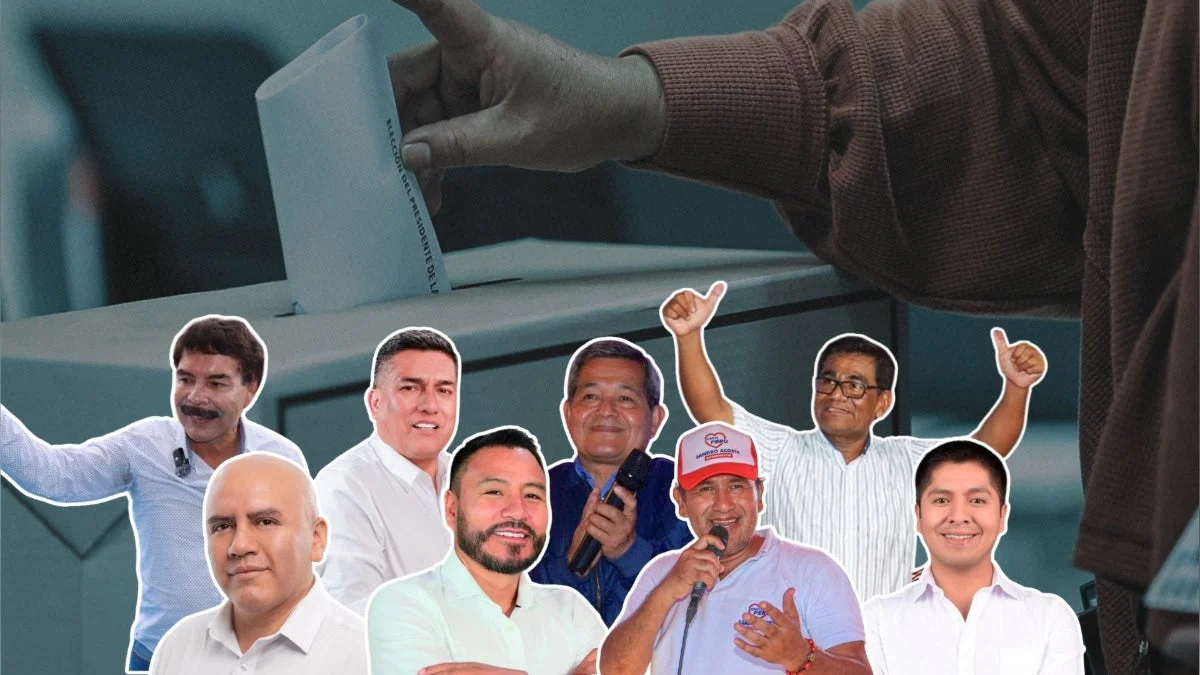
The recent regional and municipal elections in Peru have unveiled a troubling trend that has sparked intense national debate: the prevalence of candidates with criminal convictions ascending to positions of regional power. Following the October 4th electoral process, preliminary results from the National Office of Electoral Processes (ONPE) indicate that two individuals with registered criminal histories are now the "virtual" governors-elect, having secured over 30% of the valid votes in the first round.
This development is not an isolated occurrence but the culmination of a broader electoral phenomenon. According to data compiled by "El Poder en tus Manos"—RPP’s specialized electoral coverage unit—at least 143 candidates for the positions of governor, vice-governor, and regional councilor reached the final stages of the campaign after explicitly declaring criminal convictions in their sworn statements submitted to the National Jury of Elections (JNE). With over 98% of the electoral tallies processed, it is confirmed that in eight regions across the country, at least one candidate with a criminal background remains in the running for the governorship.
The First-Round Victors: Leaders with Legal Baggage
The electoral landscape in Huánuco and Ucayali has been particularly striking. In both regions, candidates with previous judicial convictions have managed to surpass the 30% threshold, effectively defeating their rivals in the first round.
Huánuco: The Case of Rosalí Leandro Tarazona
In Huánuco, Rosalí Leandro Tarazona, representing the "País para Todos" party, secured 31.9% of the valid votes. His record contains a conviction for gender-based violence and psychological mistreatment. When questioned regarding the ethical implications of his past, Tarazona framed the issue as a personal family matter that has been unfairly politicized.
"Who hasn’t had a family problem? There are always separations when there is no understanding," Tarazona stated in an interview. "The people have understood this and have pushed me to win. This issue has been demonized because I am a politician. I am a formal person who is always with his family and children. We want to work for the Huánuco region because I have demonstrated technical and political capacity when I was mayor, and that is what has borne fruit."
Ucayali: Sandro Acosta Villavicencio
In Ucayali, Sandro Acosta Villavicencio of the "Somos Perú" party claimed 34.3% of the vote. His criminal record includes a 2007 conviction for driving under the influence and resisting authority. Addressing his past, Acosta emphasized his personal growth, suggesting that the conviction belongs to a different chapter of his life.
"In Ucayali, throughout my campaign, I always said that as human beings, we have virtues and defects from which we must learn," Acosta said. "It is a conviction from many years ago, and the proof that I learned my lesson is that I have not incurred any such fault again. The population has entrusted us with their confidence knowing our background because we are going to do things right. It is also true that in Peru and all over the world, there is no perfect human being."
The Second Round: High-Stakes Contests for Six Regions
While two candidates have already secured their positions, six other regional contests involving candidates with criminal histories will be decided in the second round, scheduled for December 6th. The list includes several high-profile political figures and candidates from major national parties.
Alianza para el Progreso (APP) under Scrutiny
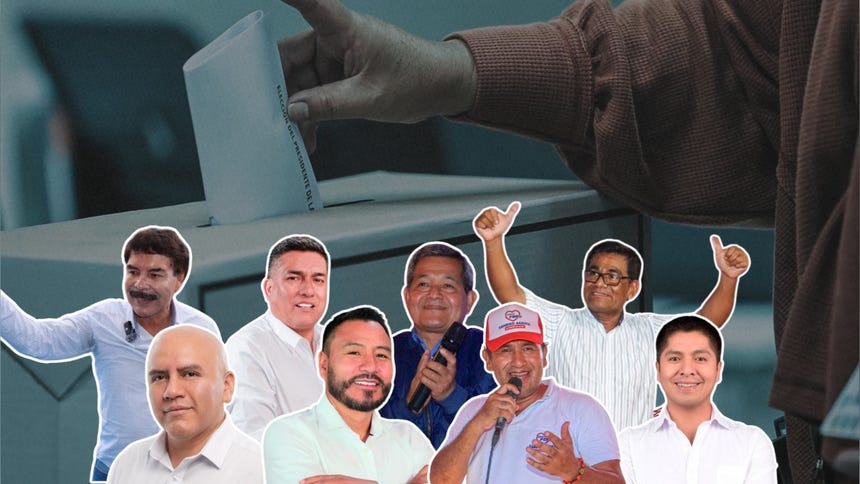
The party Alianza para el Progreso (APP) finds itself in the spotlight, with three of its candidates currently in the running for governorships despite having criminal records:
- Moisés Gonzáles Cruz (Cajamarca): Convicted of failing to perform official duties.
- Arnoldo Mallma Auqui (Junín): Convicted of false declaration.
- Segundo Ruiz Rubio (Tacna): Convicted of simple usurpation.
Despite multiple requests for comment from RPP regarding these candidacies, the party leadership and the candidates themselves remained silent, raising questions about the vetting processes within the organization.
The Case of Alfredo Zegarra (Arequipa)
Perhaps the most complex case in this election cycle is that of Alfredo Zegarra Tejada, representing the "Fuerza Arequipeña" movement. Zegarra, a former provincial mayor of Arequipa, carries two convictions related to the illegal granting of rights while in public office.
The first conviction, handed down in 2019, involved the illegal approval of the Metropolitan Development Plan, which authorized the misuse of agricultural land for urban development. The second, from 2021, involved the unauthorized rezoning of public land intended for an Eco-Metropolitan Park to facilitate the construction of a private university. Zegarra has consistently dismissed these as "culpable" rather than "dolose" (intentional) crimes, arguing that as the mayor presiding over the municipal council, he was held responsible for collective decisions made by the council members.
Regional Snapshots: Tumbes and Lambayeque
The patterns of legal conflict among candidates extend into the northern regions as well.
In Tumbes, Luis Arévalo Guerrero (Somos Perú) is competing in the second round. His record includes a conviction for abuse of authority during his time as the regional health director in 2014. Arévalo argues that the conviction stemmed from an attempt to enforce labor discipline. "My sentence is not for corruption," he asserted. "The motive of the sentence was trying to put order with a worker who was failing to fulfill her functions. We removed her, and she sued us. I had to declare this sentence, but it was an act of management, not corruption."
Similarly, in Lambayeque, Rolando Barboza of Fuerza Popular faces a second-round vote with two convictions: one for a crime against cultural heritage and another for abuse of authority. Barboza maintains that both incidents were unfortunate byproducts of his administrative work as a local official, claiming that the legal proceedings were misunderstandings regarding land use and municipal sanitation that were mischaracterized as criminal acts.
The Legal Gateway: How Rehabilitation Enables Participation
The persistence of candidates with criminal records in the Peruvian electoral system is fundamentally linked to the concept of "rehabilitation." Under current Peruvian law, as outlined in the Organic Law of Elections, individuals currently serving sentences for intentional crimes are barred from running for office. However, once a sentence has been served and any associated economic reparations have been paid, the individual is considered "rehabilitated."
Alexandra Marallano, former Secretary-General of the JNE, explains that this legal status is the primary vehicle allowing such candidates to participate in democratic processes. "The law prevents those who have been sentenced for an intentional crime from running, but many of these candidates have been rehabilitated. They have fulfilled their sentences and owe no economic reparations. That word, ‘rehabilitation,’ opens a door for them to participate in the electoral process and, subsequently, to be elected."
Implications for Governance and Public Trust
The election of individuals with criminal backgrounds presents a profound dilemma for Peruvian democracy. Critics argue that regardless of the legal definition of "rehabilitation," the presence of these candidates on the ballot undermines the moral authority of regional governments.
Erosion of Institutional Legitimacy
When governors-elect have records related to abuse of authority or the illegal use of public resources, the public’s trust in the institution of the governorship is significantly weakened. This is particularly concerning in regions where corruption is a persistent grievance. The perception that the justice system is a mere hurdle to be cleared before returning to political power contributes to voter apathy and cynicism.
The Role of Transparency Tools
In response to this trend, media outlets and civil society organizations have sought to empower voters by centralizing information. The "Candidatos con Condena" (Candidates with Convictions) tool, provided by RPP, serves as a critical resource for citizens to verify the histories of those asking for their vote. By providing access to sworn statements and judicial records, these tools attempt to inject transparency into a process where political parties often obscure the pasts of their candidates.
Looking Ahead: The December 6th Vote
As the country approaches the second round on December 6th, the electorate faces a challenging choice. For many voters, the primary concern is the administrative capability of the candidate; for others, the moral integrity of the individual is paramount. The results in December will reveal whether the Peruvian electorate is increasingly willing to overlook judicial records in favor of familiar political figures, or if the scrutiny of candidates’ pasts will lead to a shift in voting patterns.
Ultimately, the 2026 regional elections serve as a mirror reflecting the deeper complexities of the Peruvian political system. The intersection of legal rehabilitation, the necessity of political representation, and the demand for ethical leadership remains an unresolved tension. As the nation watches the upcoming runoff, the question remains: Can a government truly effectively serve its people if its legitimacy is clouded by the very records intended to hold it accountable?