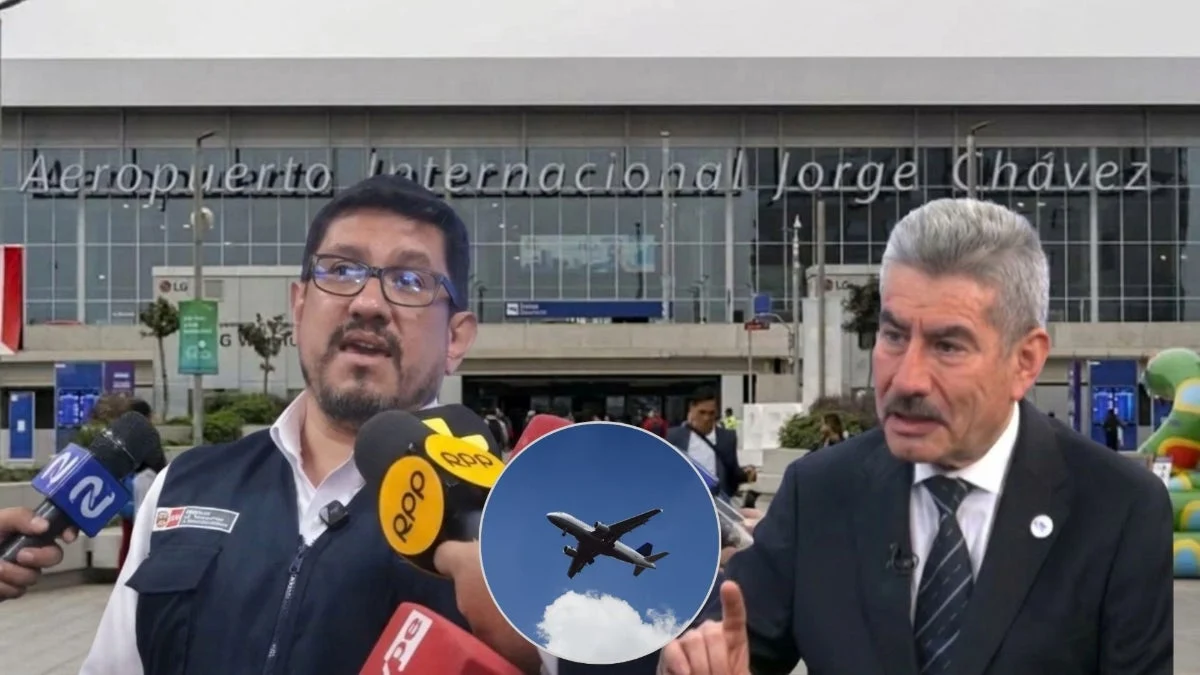
The future of international connectivity in Peru faces a critical juncture, as two key government ministries remain locked in a fundamental disagreement regarding the Tariff for the Use of Airport Facilities (TUUA, for its acronym in Spanish) for international transfers at the Jorge Chávez International Airport.
While the Ministry of Transport and Communications (MTC) advocates for a reduction and integration of the fee into airfares, the Ministry of Foreign Trade and Tourism (Mincetur) argues that only the total elimination of the charge will prevent Lima from losing its competitive edge as a primary regional transit hub. This divergence of opinion highlights the complex balancing act the Peruvian government must navigate to reconcile infrastructure financing with the need for competitive tourism and aviation policies.
Main Facts: The Core of the Conflict
The "TUUA de transferencia" is a fee levied on passengers who do not enter the country but merely pass through the Jorge Chávez International Airport to connect to another international destination. For example, a traveler flying from Buenos Aires to Lima to connect to a flight to Miami is currently required to pay this additional tax.
The conflict stems from the perception that this cost acts as a "barrier to entry" for international airlines. Because passengers are already paying airport fees at their points of origin and destination, the added cost in Lima is viewed by many airlines as a deterrent to utilizing the capital as a primary hub for South American connections.
The current debate centers on three distinct proposals:
- The Concessionaire (LAP) Approach: Lima Airport Partners (LAP) has previously suggested a reduction in the fee from US$10.05 to US$6.40 (plus IGV), a move intended to placate airlines while ensuring revenue for airport operations.
- The MTC Proposal: Seeking a middle ground, the MTC is working with the Ministry of Economy and Finance (MEF) to reduce the fee "considerably" while mandating its inclusion in the price of the air ticket, effectively automating the collection process and reducing friction for the traveler.
- The Mincetur Stance: The Ministry of Foreign Trade and Tourism, led by Minister Rogers Valencia, firmly believes that a reduction is insufficient. They contend that the fee should be abolished entirely to place Peru on equal footing with other regional hubs that do not charge transfer passengers.
Chronology of the Debate
The tension surrounding the TUUA is not a new development, but it has intensified as air traffic in South America has become increasingly competitive.
- Pre-2023 Context: For years, the TUUA was viewed as a standard operational cost. However, as Santiago (Chile), Panama City, and Bogotá expanded their capacities, the "hub" status of Lima came under closer scrutiny.
- The LAP Proposal: In earlier negotiation cycles, LAP proposed a significant reduction of approximately 36% to mitigate airline complaints. The industry, however, largely rejected this, arguing that any fee acts as a drag on competitiveness.
- The MTC Intervention: Recognizing the need to modernize the passenger experience, the MTC initiated a series of dialogues with the MEF and airlines to integrate the fee into ticket pricing—a standard practice globally that simplifies the passenger journey.
- Current Standoff: Recent statements by MTC officials suggest that an agreement on a "reduced fee" model is nearing completion, while Mincetur continues to publicly advocate for complete removal to prioritize tourism and air traffic growth.
Supporting Data: Why the Hub Status Matters
The economic implications of this policy are significant. Lima’s current role as a bridge between the Southern Cone and North America is central to the country’s aviation strategy. However, the data reveals a stark imbalance in internal and external connectivity.
The Concentration of Traffic
According to data cited by Mincetur, the overwhelming majority of Peru’s international air traffic is concentrated in Lima. The combined international movements of airports in cities like Cusco and Chiclayo represent less than 3% of the national total. This leaves the country highly dependent on the efficiency and cost-effectiveness of the Jorge Chávez terminal.
Regional Comparisons
Mincetur’s argument is bolstered by the practices of competing hubs. Many major international airports in Latin America have moved toward eliminating transfer fees to incentivize airlines to increase their frequencies. When a carrier decides where to base its regional operations, the cost per passenger is a decisive factor. If Lima charges an extra $10 per passenger, a carrier moving thousands of passengers daily faces a multi-million dollar annual burden that it does not face in alternative hubs.
Official Responses and Ministerial Perspectives
The divide between the MTC and Mincetur reflects a broader tension between fiscal management and economic development.
The MTC’s Pragmatic Approach
Minister of Transport José Tangherlini has emphasized that the MTC’s priority is to stabilize the aviation environment through negotiated solutions. By working with the MEF and LAP, the MTC aims to ensure that the airport remains financially sustainable while improving the passenger experience. "We are finishing a proposal that will allow for a reduction of this fee and its inclusion in air tickets," Tangherlini stated. The ministry views this as a balanced path that secures airport revenue while modernizing the collection process.
The Mincetur’s Competitive Stance
Conversely, Minister Rogers Valencia has been vocal about the strategic necessity of eliminating the fee. In his view, the TUUA for transfers is an outdated barrier that hampers the growth of the tourism sector. During his appearance on the program Economía para Todos, he noted that if the goal is to attract more international airlines and increase connectivity, the government must remove the "friction" that makes Lima less attractive compared to its neighbors. He argues that the lost revenue from the fee would be more than compensated by the increase in tax revenue generated by higher volumes of tourists and business travelers.
Implications: A Future at Stake
The resolution of the TUUA debate will have lasting implications for Peru’s economy.
For the Aviation Industry
Airlines are closely watching the outcome. For carriers, the issue is not just about the cost of the fee, but about the transparency and predictability of airport charges. Integrating the fee into the ticket price is a step forward, as it removes the need for passengers to navigate separate payment channels, but the total cost remains the primary hurdle.
For Tourism and Trade
The tourism sector views this as a vital issue for post-pandemic recovery. If Lima remains a costly hub, airlines may continue to bypass it in favor of cheaper alternatives. By eliminating or drastically reducing the cost, Peru could see a significant influx in connecting traffic, which in turn supports local services, hospitality, and the broader retail ecosystem of the airport.
For Fiscal Policy
The MEF faces the most difficult task: balancing the demand for lower taxes with the need to fund the infrastructure improvements required for the expansion of the Jorge Chávez airport. If the fee is eliminated, the government may need to find alternative ways to subsidize the concession, which could involve complex renegotiations of the existing contract with LAP.
The Broader Economic Outlook
Ultimately, the debate is a microcosm of a larger challenge: how to transform Peru into a truly competitive global logistics and tourism hub. The current disparity in ministerial positions reflects the difficulty of transitioning from a protectionist or revenue-centric aviation model to a modern, growth-oriented strategy.
As negotiations continue between the government, the concessionaire, and the airlines, the final decision will signal the government’s priorities for the coming decade. Whether the choice is to reduce and integrate the fee or to abolish it entirely, the objective remains clear: to ensure that the Jorge Chávez International Airport does not just serve the city of Lima, but continues to act as a vital, competitive artery for the entire South American continent.
The pressure is mounting. With regional competitors actively lobbying for increased air connectivity, the Peruvian government must act decisively. A failure to reach a consensus could result in stagnant traffic numbers, while a bold, unified strategy could unlock a new era of growth for the Peruvian aviation industry and the nation’s tourism sector at large.