Introduction: A Clash of Economic Perspectives
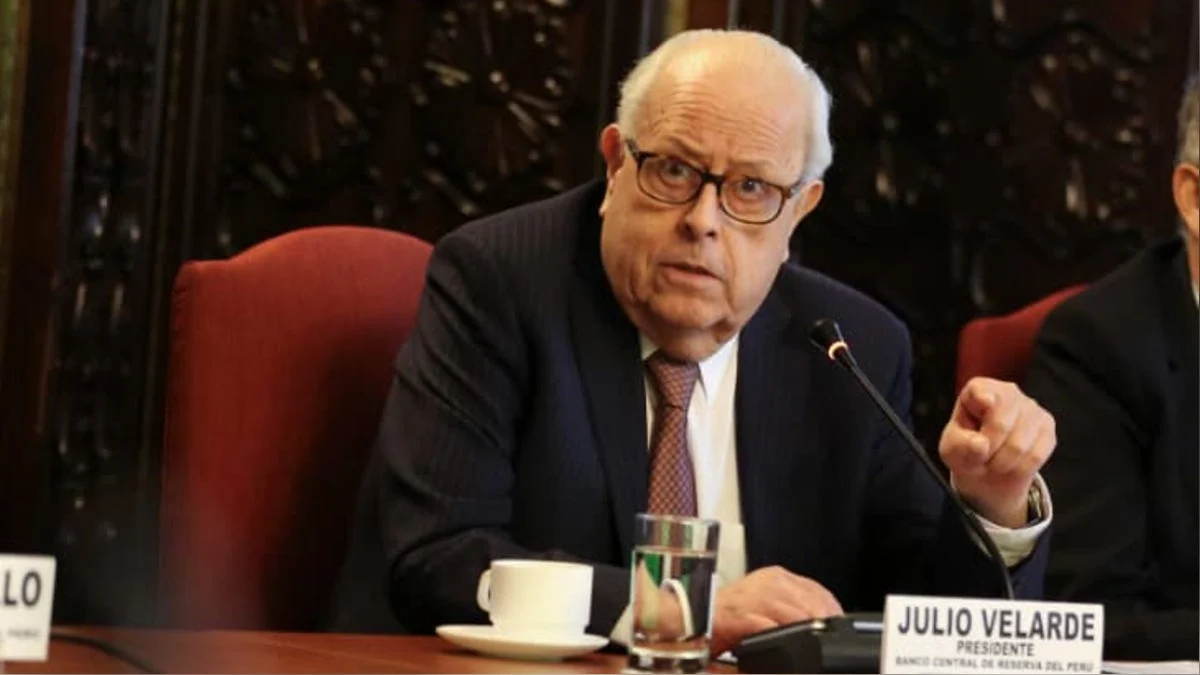
In a pointed rebuke that underscores the deepening tension between legislative populism and macroeconomic stability, Julio Velarde, the long-standing president of the Central Reserve Bank of Peru (BCRP), has issued a stern warning against new legislative proposals aimed at allowing further withdrawals from the Private Pension Funds (AFP). As the Peruvian Congress debates the feasibility of providing liquidity to citizens in the face of potential economic downturns caused by the El Niño phenomenon, Velarde’s criticism highlights a growing divide regarding the long-term viability of the nation’s social security architecture.
At the heart of the debate is a proposal championed by legislator Catherine Palomino of the Juntos por el Perú party. Proponents argue that in a climate of economic uncertainty, specifically regarding the impacts of climate-related disruptions on the fishing, agricultural, and industrial sectors, citizens should have the right to access their own savings to mitigate the immediate impact of a crisis. However, for the BCRP, this approach represents a "complete irresponsibility" that threatens to dismantle the foundational pillars of the country’s pension system.
The Core Conflict: Economic Stability vs. Immediate Liquidity
Legislative Proposals and the "El Niño" Justification
The legislative push for a new round of AFP withdrawals comes at a time when Peru’s economy is showing signs of both resilience and vulnerability. While GDP saw a modest 3.56% rebound in July, the looming threat of the El Niño weather phenomenon—which historically devastates infrastructure and agricultural output—has created a climate of anxiety. Legislators arguing for the measure claim that allowing citizens to withdraw portions of their pension funds acts as an essential "cushion" against the inflationary and recessionary pressures that such a climate event might trigger.
The BCRP’s Stance: Protecting the Future
During the presentation of the 2026 Inflation Report, Julio Velarde did not mince words. He argued that the continuous erosion of the AFP system—marked by several rounds of withdrawals authorized during the pandemic—is effectively destroying the private pension model.
"Every country in the world has a pension system; here, we are destroying ours, and I think it is a complete irresponsibility," Velarde stated. He dismissed the popular sentiment of "spend now, don’t worry about your old age" as a reckless policy that shifts the burden of survival from the individual to an already strained state apparatus.
Chronology of the Pension Withdrawal Trend
To understand the current impasse, one must look at the recent history of pension policy in Peru.
- 2020: The Pandemic Catalyst: As COVID-19 brought the Peruvian economy to a standstill, the government and Congress authorized the first major withdrawals from AFP accounts to provide emergency liquidity to households.
- 2021-2022: Continued Liquidity Measures: Despite early warnings from the BCRP and international credit rating agencies, successive legislative actions allowed for additional rounds of withdrawals. These measures were sold to the public as necessary interventions to combat inflation and reduced purchasing power.
- 2023: The Shift in Economic Forecasts: The BCRP began revising its growth projections downward, citing both the political instability and the potential for a severe El Niño event.
- 2024 (Present): The Legislative Deadlock: Legislators, citing the continued struggle of the average citizen to cope with rising costs, have introduced new bills to allow further access to funds. Meanwhile, the BCRP and independent economic experts argue that the pension pot is now dangerously depleted, leaving the current workforce with little to no protection for their retirement.
Demographic Realities: The "Time Bomb" of Aging
Beyond the immediate economic concerns, Velarde raised a critical point regarding the structural transformation of Peruvian society. The country is moving away from the high fertility rates of the 20th century, leading to an aging population—a shift that fundamentally alters how social safety nets must function.
The Failure of Traditional Systems
Velarde warned that the traditional "pay-as-you-go" systems, where the current workforce supports the retired population, are increasingly unsustainable in a country with a shrinking youth demographic. "In a country where the population is aging, systems like the old ones, where the employee pays for the retiree, are not sustainable because there are more elderly people and fewer young people," he noted.
The BCRP president emphasized that if the private savings system is dismantled through constant withdrawals, there will be no safety net left. He posed a sobering rhetorical question: "There won’t be children to support their parents if they don’t have pensions." This suggests that the current policy of depleting savings is not just a financial error, but a social catastrophe waiting to happen.
Supporting Data and Economic Implications
Projections and Inflationary Risks
The BCRP’s latest reports indicate that the Peruvian economy is under significant pressure. The reduction of growth projections for 2026 is directly tied to the expected disruptions from climate events. Economists point out that if a significant portion of pension funds—which are usually invested in long-term financial instruments—is liquidated, the domestic capital market will suffer. This, in turn, could drive up interest rates and reduce the funding available for infrastructure and private enterprise, potentially worsening the very recession the legislators are trying to combat.
The Role of Individual Accounts
Despite his harsh critique, Velarde acknowledges that the current system is not perfect. He noted that systems based on individual accounts are the most viable way to handle demographic aging, but they require adjustments to increase coverage and efficiency. However, he maintained that "adjustments" are not the same as "liquidation." By allowing withdrawals, the state is effectively incentivizing the liquidation of long-term assets to fund short-term consumption, a practice that historically leads to lower national savings rates and diminished investment capacity.
Official Responses and Political Repercussions
The Congressional View
Legislators supporting the withdrawal bill argue that the BCRP and the AFP administrators are out of touch with the reality of the average citizen. They contend that for many, a pension that might exist in 20 or 30 years is irrelevant compared to the immediate threat of poverty today. Their argument is rooted in the philosophy of "sovereignty over personal savings," suggesting that the government has no moral right to prevent individuals from accessing their own capital during a national crisis.
The Institutional Response
Institutional actors, including the Superintendency of Banking, Insurance, and Private Pension Fund Administrators (SBS), have frequently echoed Velarde’s concerns. They warn that the constant withdrawals have turned a system designed for "retirement income" into a "short-term savings account." This shift creates a moral hazard: individuals may rely on the state to bail them out in their old age, despite the state having no mechanism to provide universal pensions at a sustainable level.
Implications for the Future of Peru
The conflict over AFP withdrawals is symptomatic of a broader struggle in Peru: the battle between fiscal prudence and political survival.
- The Erosion of Capital Markets: Continued withdrawals force the sale of domestic assets, which lowers the value of the remaining funds and hurts the economy’s ability to finance long-term growth.
- Increased Future Dependency: By encouraging the depletion of retirement funds today, the legislature is essentially guaranteeing that the state will face a massive poverty crisis among the elderly in the coming decades.
- Loss of Credibility: Frequent changes to pension laws reduce investor confidence in the stability of Peru’s regulatory environment, which could impact the cost of borrowing for the country in international markets.
Conclusion: A Call for Responsibility
As the debate moves forward, the message from the BCRP is clear: the path of least resistance—letting people spend their retirement savings now—is a path toward long-term national instability. Julio Velarde’s intervention serves as a sobering reminder that economic policy cannot be guided solely by the pressures of the electoral cycle.
For Peru, the challenge lies in balancing the immediate needs of a population facing economic hardship with the imperative to maintain a sustainable, secure, and viable pension system. Whether the legislative branch will heed the warnings of the country’s top financial authority remains to be seen, but the consequences of further depleting the nation’s pension funds will undoubtedly be felt for generations to come. The "irresponsibility" that Velarde highlights is not merely a policy choice; it is an act that threatens to rewrite the social contract of the Peruvian state.