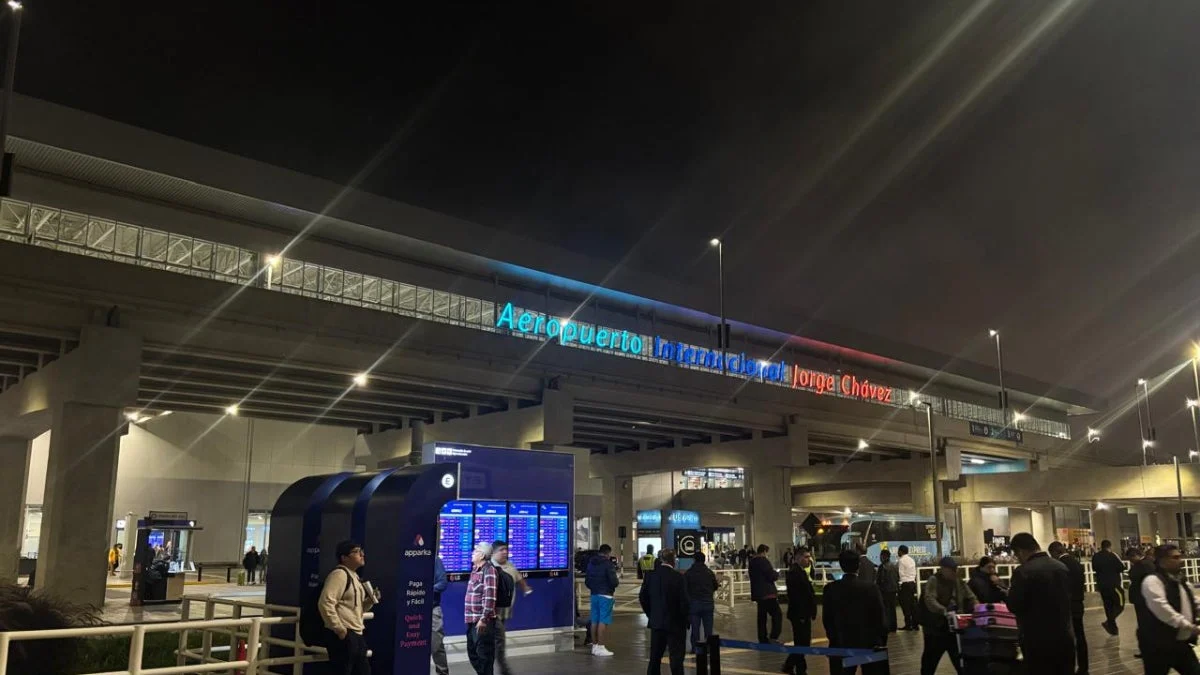
In a remarkable display of operational efficiency and infrastructure modernization, the new Jorge Chávez International Airport in Lima has solidified its position as a world-class aviation hub. Since its inauguration on June 1, 2025, the facility has not only handled a massive influx of over 26 million passengers but has also secured the prestigious title of the most punctual airport globally in the "Large Airports" category. This milestone marks a transformative chapter for Peruvian aviation, underscoring the success of a long-term strategic vision for South American connectivity.
A Global Achievement in Punctuality
The most significant accolade for the new terminal came recently, when the aviation analytics firm Cirium released its performance report for June 2026. According to the data, the Jorge Chávez International Airport achieved a stellar departure punctuality rate of 92.67%.
This ranking is particularly noteworthy as it places Lima at the pinnacle of the global aviation industry, outperforming major international hubs that have historically dominated such metrics. The "Large Airports" category is highly competitive, consisting of terminals that manage massive daily volumes of transit passengers and complex logistical chains. Achieving such precision—where nearly 93 out of every 100 flights depart exactly on time—is a testament to the seamless integration of ground operations, air traffic control coordination, and the enhanced passenger processing systems implemented in the new facility.
Juan José Salmón, the General Manager of Lima Airport Partners (LAP), confirmed that this efficiency has been a core objective since the airport’s inception. The ability to maintain such high standards while managing the high volume of traffic experienced in the first year of operation demonstrates the scalability and robustness of the new terminal’s architecture.
Chronology: From Inauguration to Global Recognition
To understand the scale of this achievement, one must look at the timeline of the airport’s rapid development:
- June 1, 2025: The new Jorge Chávez International Airport officially opens its doors to the public. This marked the culmination of years of construction and complex logistical planning intended to replace the aging, overburdened infrastructure of the previous terminal.
- Late 2025: As the facility enters its first six months of operation, passenger throughput begins to surge, validating the decision to increase capacity.
- Early 2026: The airport stabilizes its operational workflows. Feedback from airlines indicates that the new boarding gates and automated security processes are significantly reducing turnaround times for aircraft.
- June 2026: The turning point. The Cirium report validates the internal data collected by LAP, officially crowning Jorge Chávez as the most punctual large airport in the world.
- Present Day: The facility continues to process millions of passengers, with stakeholders focusing on balancing operational growth with the maintenance of these world-leading service standards.
Supporting Data: Infrastructure and Throughput
The success of the new airport is not merely anecdotal; it is rooted in quantitative data that highlights the massive undertaking of moving operations to the new terminal.
The 26 million passengers served in just over a year represent a significant portion of the region’s total air traffic. This volume is supported by advanced aeronautical infrastructure designed to minimize bottlenecks. The terminal was engineered with state-of-the-art passenger handling systems, including modernized check-in zones and expanded security checkpoints that leverage biometric technology to expedite flow.
Furthermore, the integration of new migration facilities—such as the specialized agency for emergency passport processing—has streamlined the experience for international travelers, ensuring that the "human element" of travel does not lag behind the technical efficiency of the flight departures.
Official Responses and Ministerial Perspectives
The Ministry of Transport and Communications (MTC) has been a vocal supporter of the terminal’s performance. During a recent address, Minister Aldo Prieto reflected on the journey since the airport’s launch.
"In just one year, we have achieved so much," Prieto stated. "If you look back to when we started, many things were still in their infancy. Today, the consolidation of this terminal is a source of national pride. We are celebrating an award that recognizes us as the most punctual airport in the world, a feat accomplished after competing against long-established, massive global hubs."
The Minister emphasized that the government’s role has been to provide the stable regulatory framework necessary for LAP to succeed. He stressed that the transformation seen at the airport is not just a success for the concessionaire, but a victory for the country’s global image.
Addressing the TUUA Controversy
Despite the widespread acclaim for operational punctuality, the airport’s administration has faced scrutiny regarding the "Tarifa Unificada por Uso de Aeropuerto" (TUUA), or the Unified Airport Use Fee. Specifically, international passengers performing domestic transfers have expressed frustration over the mandatory payment of these fees, which some argue adds unnecessary friction to the travel experience.
Minister Prieto addressed these concerns directly, framing the situation as a matter of contractual integrity. "We have done nothing more than respect the contracts that were already established," the Minister explained. "The development of this infrastructure and its integration into daily life inevitably creates real-world scenarios that may require evaluation. However, any changes to these financial structures must be handled through a dialogue involving all stakeholders, including the concessionaire, the state, and the passengers."
This response signals that while the government is open to reviewing the economic model of the airport, it prioritizes legal stability and contractual obligations to ensure that the private-public partnership remains viable for future infrastructure investments.
Implications for the Future of Peruvian Aviation
The success of the Jorge Chávez International Airport carries several profound implications for Peru’s economy and tourism sector:
- Hub Potential: By proving it can be the most punctual airport in the world, Lima effectively markets itself as the premier hub for South American connections. Airlines are increasingly likely to choose Lima as a transit point because the reliability of their schedules is guaranteed by the airport’s operational efficiency.
- Economic Growth: The capacity to handle over 26 million passengers acts as a catalyst for trade and tourism. As the airport grows, so does the demand for ancillary services, logistics, and hospitality, creating jobs and fostering regional development.
- Infrastructure Benchmarking: The success of this project serves as a blueprint for future infrastructure developments in the Andean region. It demonstrates that with the right combination of state oversight and private sector expertise, massive civil engineering projects can be delivered successfully and reach top-tier global standards.
- Passenger Experience: The focus on punctuality directly translates to a better passenger experience. Reduced wait times and predictable schedules are the most significant factors in customer satisfaction. If the airport can maintain this level of service while potentially addressing the TUUA concerns, it will likely see sustained passenger growth in the coming years.
Conclusion
The first year of the new Jorge Chávez International Airport has been nothing short of a triumph. By evolving from a construction project into the world’s most punctual large airport, it has set a high bar for the rest of the industry. While challenges remain—such as the ongoing debates over fee structures—the operational foundation is secure. As Peru looks toward the future, the airport stands not only as a gateway to the country but as a testament to what can be achieved through rigorous planning, infrastructure investment, and a commitment to operational excellence. The challenge now for Lima Airport Partners and the Ministry of Transport will be to sustain this momentum, ensuring that as passenger numbers continue to climb, the quality of service remains the benchmark by which all other airports are measured.