Introduction: A Shift in the Legislative Landscape
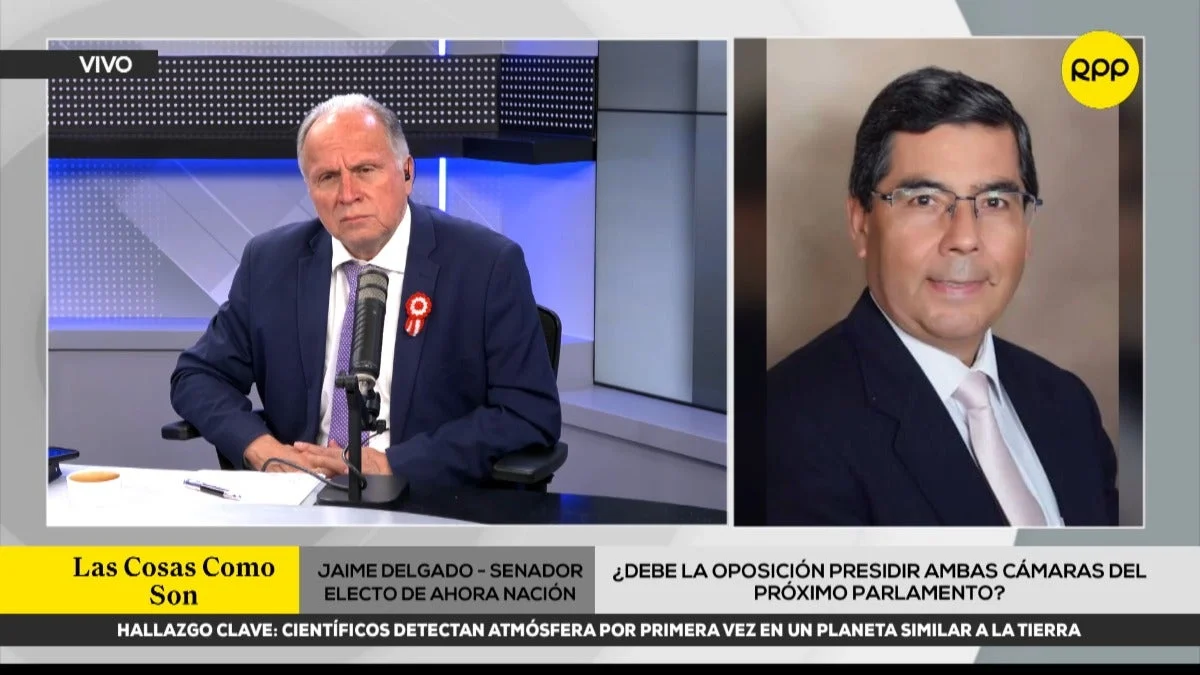
As the newly elected members of Peru’s bicameral Congress prepare to assume their mandates for the 2026–2031 period, the political climate in Lima has shifted toward intensive back-room negotiations. At the heart of this maneuvering is a coalition of opposition forces seeking to establish a legislative counterweight to the current administration. Jaime Delgado, a senator-elect representing the Ahora Nación party, has publicly confirmed that his group is spearheading a strategic alliance with Juntos por el Perú, Obras, and Buen Gobierno. The primary objective of this coalition is to present a unified slate to preside over both the Senate and the Chamber of Deputies, effectively challenging the influence of the ruling party, Fuerza Popular.
This move underscores a critical juncture in Peruvian politics: the return to a bicameral system, which promises to reshape the legislative process but also intensifies the competition for institutional control. For Delgado and his allies, the priority is not merely political posturing, but the preservation of democratic "checks and balances" that they argue are essential for national stability.
The Chronology of Legislative Transition
The path toward the installation of the new Congress has been marked by a sequence of institutional milestones designed to ensure a smooth transition of power.
- The Installation of the Preparatory Board: Following the official certification of election results, the Junta Preparatoria (Preparatory Board) was established to oversee the logistical and legal transition. Figures such as Miguel Torres and Cecilia Chacón have been tasked with chairing this body, ensuring that the swearing-in process adheres to constitutional requirements.
- The Swearing-in Phase: The formal induction of the new legislators represents the first step in the formalization of the 2026–2031 legislative term. This stage serves as the precursor to the most anticipated event of the cycle: the election of the Mesas Directivas (Executive Boards) for both houses.
- The Negotiation Window: Since the announcement of the election results, political groups have entered a high-stakes period of dialogue. The goal is to build a consensus that can secure the necessary votes for the presidency of the Senate and the Chamber of Deputies.
- Upcoming Plenary Vote: The final, decisive moment will be the floor vote, where the competing lists will be put to the test. The formation of the coalition mentioned by Delgado suggests that the opposition is attempting to lock in its support early to prevent last-minute defections.
Strategic Alliances and the Search for Equilibrium
In a recent interview with the program Las Cosas Como Son on RPP, Jaime Delgado articulated the rationale behind the coalition’s formation. He emphasized that for the health of the country, the leadership of the legislative chambers must remain in the hands of parties outside of the executive’s direct influence.
The "Contrapeso" Doctrine
Delgado’s argument is rooted in the principle of political equilibrium. By ensuring that Ahora Nación, Juntos por el Perú, Obras, and Buen Gobierno manage the legislative agenda, the coalition hopes to prevent the centralization of power. According to Delgado, "It is healthy for the country and for the government itself that these four groups, which are distinct from the executive, provide the necessary counterweight by leading the executive boards of both chambers."
The Mathematical Reality of the Senate
The composition of the new Senate presents a complex challenge. With a total of 60 seats, the path to a majority is narrow. Delgado acknowledged that his coalition currently holds 30 seats. While this represents a significant block, it is not an absolute majority, leaving the coalition vulnerable to the shifting allegiances of smaller or undecided parties. This precarious balance makes the negotiation process with other groups, such as Renovación Popular, particularly vital.
Supporting Data: Mapping the Legislative Power
To understand the implications of these negotiations, one must analyze the current power distribution within the legislative branch.
- Total Senate Seats: 60.
- Opposition Coalition Strength: 30 seats (Ahora Nación, Juntos por el Perú, Obras, Buen Gobierno).
- The Swing Vote: Renovación Popular. As of now, there is no formal agreement between Renovación Popular and Fuerza Popular, the government’s main base.
Delgado’s strategy includes a direct appeal to Renovación Popular to reconsider their positioning. He argues that even if Renovación Popular does not fully align with the coalition’s ideological platform, they could find common ground in the pursuit of institutional independence. "I believe it would be beneficial for Renovación to reflect. It would be positive to form the executive boards, and we are even open to them presiding over one of the chambers. The goal is not the chair itself; the goal is to guarantee a balance of power," Delgado noted.
Official Responses and Political Reactions
The statements from Ahora Nación have triggered a wave of reactions across the political spectrum. While official responses from the ruling Fuerza Popular have remained measured, political analysts suggest that the government is under immense pressure to prevent this coalition from consolidating.
The discourse surrounding the Mesa Directiva is not merely about who holds the gavel; it is about the power to define the legislative agenda. Whoever controls the executive boards controls the flow of bills, the appointment of committee chairs, and the timing of censure motions. Consequently, the pressure on Renovación Popular to commit to a side has become the most significant narrative of the pre-session period.
Implications for the 2026–2031 Term
The outcome of these negotiations will define the tone of the entire 2026–2031 mandate. Several key implications arise from the potential success of the opposition coalition:
1. Enhanced Legislative Oversight
A coalition-led executive board would likely prioritize aggressive oversight of the executive branch. This could lead to an increase in investigations, cabinet summons, and a more rigorous examination of public spending. While proponents argue this is a necessary safeguard, critics fear it could lead to "paralysis by oversight," where the executive is perpetually on the defensive.
2. The Return of Bicameralism
The move to a bicameral system is intended to provide a "second look" at legislation, fostering a more deliberative process. However, if the Senate and the Chamber of Deputies are governed by a coalition that is fundamentally at odds with the executive, the legislative process could become a battleground for political survival rather than a forum for policy development.
3. Stability vs. Gridlock
The risk of gridlock is high. If the ruling party and the opposition coalition remain deadlocked, Peru could face a period of legislative stagnation. Conversely, if the coalition manages to present a unified front that forces the executive to negotiate, it could lead to a more moderate, consensus-based governance model.
4. Future Electoral Positioning
The formation of these alliances is also a strategic preparation for the future. By demonstrating the ability to govern and organize, these parties are positioning themselves as viable alternatives for the next general elections. The Ahora Nación initiative is as much about the present as it is about cementing the parties’ identities as the new leaders of the political landscape.
Conclusion: A Delicate Balancing Act
As the installation date approaches, the political tension in Peru remains palpable. Jaime Delgado and his counterparts in the opposition have made their intent clear: the era of unchecked executive dominance must come to an end. However, the path forward is fraught with obstacles. With the Senate seats evenly split and the role of swing voters like Renovación Popular still undecided, the final configuration of the Mesas Directivas remains an open question.
The Peruvian public watches with expectation, hoping that this transition to a bicameral legislature will result in a more robust and responsive democratic system. Whether the outcome leads to a fruitful period of checks and balances or a protracted season of political friction, the decisions made in the coming weeks will undoubtedly define the trajectory of the nation for the next five years. The search for a "unique list" is not just a tactical maneuver; it is a test of the strength and cohesion of the opposition in a newly restructured political arena.