Date: September 11, 2026
The long-standing debate regarding Peru’s economic trajectory has reached a fever pitch. For years, populist political factions have maintained a consistent refrain: the current economic model—anchored in the 1993 Constitution—is the primary culprit for the country’s perceived failure to achieve full-scale industrialization. Critics argue that the constitutional framework, which prioritizes private initiative, acts as a shackle on state-led development.
However, a closer examination of the economic reality suggests that this narrative is fundamentally flawed. The Constitution serves as a foundation of general rules, not a granular industrial policy. The true barriers to growth are not found in the supreme law of the land, but in the dense, suffocating undergrowth of secondary legislation, bureaucratic red tape, and administrative hurdles that have accumulated over decades.
The Myth of the "Failed Model"
The premise that the economic model is failing rests on the assumption that industrialization requires state intervention rather than market agility. In reality, the "maraña" (tangle) of regulations—ranging from labor requirements to environmental permitting—has stripped businesses of the flexibility needed to pivot, scale, and innovate.
Legislators and bureaucrats, often driven by short-term political gains, have systematically distorted the constitutional mandate. By prioritizing control over facilitation, the state has effectively transformed the path to development into an obstacle course. If Peru has not achieved the industrial output of its peers, it is not because the engine of private initiative is broken, but because the fuel lines of investment have been clogged by populist rhetoric and unnecessary administrative burden.
The Agro-Export Success Story: A Case Study in Competitiveness
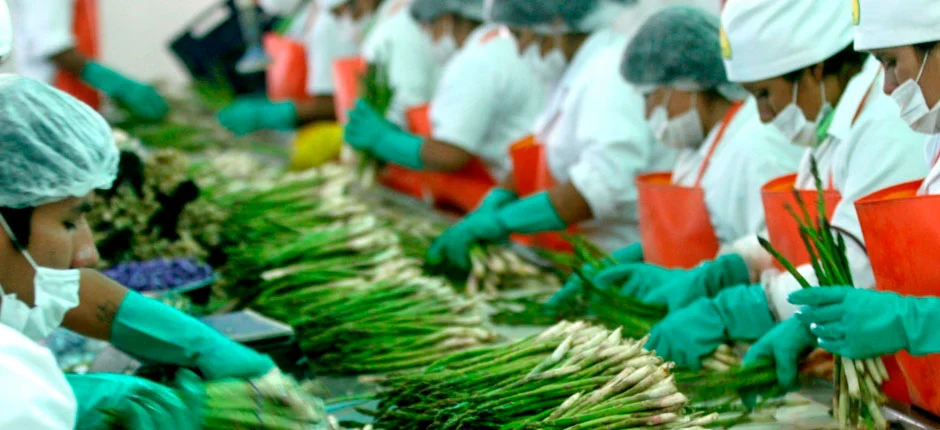
If one needs evidence that the current economic framework is capable of fostering world-class industry, the agro-export sector provides an indisputable success story. Twenty years ago, the sector’s exports were a modest $500 million. Today, that figure has soared to $15 billion.
This transformation occurred in some of the most arid, inhospitable deserts in the world. It was not the result of state-run industrial planning, but rather a triumph of private initiative operating within a stable legal framework that rewarded risk-taking.
Key Factors in the Agro-Export Miracle:
- Global Integration: By focusing on international markets, the sector was forced to adopt global standards of quality and efficiency.
- Incentivized Investment: Recognizing that agriculture is a high-risk sector, policy designers implemented frameworks that allowed for capital reinvestment and growth.
- Employment Multiplier: The sector moved from small-scale farming to a sophisticated industry that integrated thousands of smallholders into global value chains, driving massive job creation.
Chronology of Legislative Friction (2020–2026)
The success of the agro-export sector has unfortunately made it a target for political opportunism, creating a timeline of mounting tension between the state and the private sector:
- 2020–2021: Following political instability and social unrest, the government responded to populist pressure by repealing the Agrarian Promotion Law. This move replaced a stable incentive structure with increased labor costs, including a 30% mandatory bonus on payrolls.
- 2023–2024: As global commodity prices fluctuated, the sector faced mounting climate-related pressures, specifically the onset of the El Niño phenomenon, which threatened crop yields and infrastructure.
- 2025: Debates intensified over the removal of remaining tax benefits. Proponents of the move argued that the sector had reached a level of maturity where special treatment was no longer required.
- Late 2026: As the country enters a new summer cycle with the continued threat of El Niño, the industry remains in a precarious position, grappling with both climate uncertainty and a legislative environment that appears increasingly hostile to established success.
The Perils of "Successful Enough" Policy
The current political discourse often adopts the dangerous mantra: "The sector has already earned enough." This perspective is not only economically illiterate but also destructive. It ignores the reality of global competition, where industries must constantly innovate to survive.
By imposing punitive taxes and labor costs on the most successful sector in the economy, the state is effectively capping growth. This "tall poppy syndrome"—the desire to cut down the most successful players—threatens to kill the goose that lays the golden eggs. When the government chooses to extract more revenue through tax hikes rather than expanding the tax base through new, large-scale irrigation projects, it stunts the country’s potential to double or triple its output in the coming decades.
Official Responses and Economic Reality
Government officials often argue that their interventions are aimed at "social equity." However, the data suggests that these interventions frequently backfire. When the government restricts the ability of agro-exporters to remain competitive, it is the small farmers and the rural workforce who suffer the most, as investment flows dry up and expansion projects are shelved.
Economic analysts emphasize that the fiscal impact of these populist measures is negative in the long run. By eroding the competitiveness of a sector that brings in vital foreign currency, the state reduces its own future tax collection capacity. The focus, according to industry leaders and economists alike, should shift away from redistributing existing wealth and toward "unlocking" the major irrigation projects—such as Chavimochic and Majes-Siguas—that have remained stagnant due to bureaucratic inertia.
Implications for the Future of Peru
The path forward for Peru is clear, though it requires a significant shift in political courage. To transition from a country that exports raw materials to a truly industrialized nation, the government must undertake a systematic "de-bottlenecking" of the economy.
1. Re-establishing the Rule of Law
Investors require predictability. Constant changes to tax regimes and labor laws create a risk premium that drives capital to more stable jurisdictions. The constitution must be treated as a shield for private property and initiative, not a target for continuous ideological renegotiation.
2. Infrastructure as the Catalyst
Productivity is not a product of legislation; it is a product of infrastructure. The government’s role should be to provide the physical backbone—water, energy, and logistics—that allows the private sector to scale. Irrigation projects are the most direct path to multiplying the agro-export success across other regions.
3. Embracing the Model
The economic model of the last three decades has proven its ability to generate wealth where there was once only dust. The failure to achieve broader industrialization lies not in the model’s core, but in the failure to extend that same model to other sectors. If the country truly wishes to see more "agro-export-style" success stories, it must foster an environment that rewards investment, simplifies business creation, and prioritizes long-term growth over short-term political populism.
In conclusion, the future of Peru rests on whether it chooses to continue shackling its most productive sectors with the chains of bureaucracy or whether it opts to unleash the full potential of its private sector. The "industrialization" that politicians speak of will only become a reality when the state stops being the primary obstacle to the very progress it claims to seek.