Executive Summary: A Milestone for Regional Justice
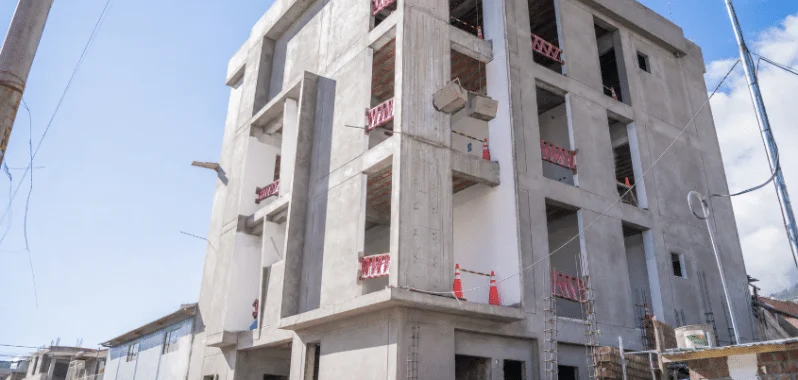
In a significant development for the administration of justice in the Apurímac region, the construction of the new "Improvement of Justice Administration Services at the Judicial Seat of Curahuasi" is moving steadily toward completion. With a total investment exceeding S/ 4.8 million, this infrastructure project represents a critical pillar in the ongoing efforts to decentralize and modernize judicial services in the province of Abancay.
The project, which is being executed through a strategic partnership between the Superior Court of Justice of Apurímac and the Regional Government of Apurímac, recently reached a physical progress milestone of 56%. This advancement confirms that the facility is on track to provide a more efficient, accessible, and dignifying environment for both the legal professionals who serve the community and the citizens who rely on these essential services.
Chronology: The Path to Modernization
The journey toward the realization of the Curahuasi Judicial Seat is a testament to institutional cooperation. While the project is currently in its active construction phase, the groundwork was laid months prior through rigorous administrative planning and inter-institutional coordination.
Phase 1: Planning and Strategic Alignment
The initiative was born out of a recognized necessity: the existing judicial infrastructure in the district of Curahuasi had become insufficient to handle the increasing demand for legal services. Recognizing this, the Superior Court of Justice of Apurímac identified the need for a modern facility that complies with current building codes and operational requirements for courtrooms and administrative offices.
Phase 2: The Inter-Institutional Agreement
A pivotal moment occurred with the signing of a cooperation agreement between the Superior Court of Justice of Apurímac and the Regional Government of Apurímac. This partnership was designed to pool resources and expertise, ensuring that the project would be adequately funded and technically supervised. By leveraging regional government funds, the Court ensured that the project would not be hindered by the typical bureaucratic delays that often plague public works.

Phase 3: Construction and Oversight
Since the breaking of ground, the project has been under constant monitoring. The current stage involves the structural completion of the building and the internal finishing, including electrical and data infrastructure necessary for a modern, digital-ready judicial office. The recent inspection conducted by the president of the Superior Court of Justice of Apurímac, Rene Gonsalo Olmos Huallpa, served as a "sanity check" to ensure that the quality of materials and the speed of construction remain consistent with the established timeline.
Supporting Data: Investment and Impact
The scope of this project is best understood through its financial and logistical parameters.
- Total Investment: S/ 4,828,702.
- Current Progress: 56% physical completion.
- Scope of Work: The construction includes modern courtrooms, administrative offices for the Juzgado de Paz Letrado, public reception areas, and secure archiving systems.
- Geographic Focus: The district of Curahuasi, province of Abancay.
This investment is not merely about bricks and mortar; it is a capital expenditure aimed at increasing the "judicial density" of the region. By providing a proper physical space, the court reduces the backlog of cases by allowing for more fluid, transparent, and organized proceedings.
Official Responses and Institutional Vision
During his site visit, President Rene Gonsalo Olmos Huallpa underscored the institutional commitment to this project. His remarks highlight a broader vision for the judiciary in Peru, which emphasizes that justice must be served in an environment that commands respect and provides efficiency.
"The execution of this project represents a substantial leap forward for our institutional strengthening," Olmos Huallpa stated. "We are not just building a new office; we are creating a hub where the citizens of Curahuasi can access their rights under optimal conditions. Our focus remains on the constant supervision of the works to ensure that every sol invested translates into a higher quality of service for the public."

The Court’s leadership has emphasized that the "supervision culture" being applied to this project is a model for future infrastructure investments. By maintaining a permanent presence at the construction site, the Court ensures that contractors adhere to safety standards and environmental regulations, while also preventing budget overruns.
The Broader Implications for the Judicial System
The construction of the Curahuasi Judicial Seat carries several long-term implications for the Apurímac region and the Peruvian judicial system at large.
1. Enhancing Public Trust
Public trust in the justice system is intrinsically linked to the perceived efficiency and transparency of the courts. Modern, clean, and accessible judicial offices contribute to a more positive public perception. When a citizen enters a well-maintained, professional facility, it fosters a sense of legitimacy and order that is essential for a functioning democracy.
2. Modernization and Digital Transition
Modern infrastructure is a prerequisite for the digitization of the judiciary. As the Peruvian system moves toward paperless, digital record-keeping and virtual hearings, physical offices must be equipped with the necessary high-speed connectivity and hardware. The Curahuasi project is designed with these future-proof requirements in mind, ensuring that the district is not left behind in the technological shift of the national judiciary.
3. Economic and Social Development
The construction process itself acts as a local economic stimulus, providing jobs to the local workforce and stimulating demand for materials and logistics within the province of Abancay. Furthermore, a stable and reliable local judicial presence acts as a stabilizer for the local economy, providing legal certainty for businesses, landowners, and individuals.

4. Decentralization of Justice
One of the most persistent challenges in Peru is the centralization of administrative services in major cities. By investing in the district of Curahuasi, the Superior Court of Justice of Apurímac is actively working to bridge the gap between rural and urban access to justice. This ensures that residents of the district do not need to travel significant distances to resolve legal disputes, thereby reducing the "cost of justice" for the common citizen.
Future Outlook and Challenges
As the project approaches the 60% completion threshold, the focus will soon shift toward the interior finishing and the installation of specialized judicial equipment. While the progress has been steady, the project managers face the typical challenges of construction in the Andean region, including logistical complexities and the need for strict adherence to quality control during the rainy season.
However, the collaboration between the judicial and regional government entities provides a robust framework to mitigate these risks. The success of the Curahuasi Judicial Seat will likely serve as a blueprint for other districts within Apurímac that are currently awaiting similar upgrades.
In conclusion, the Curahuasi project is more than a construction site; it is a manifestation of the commitment to uphold the rule of law. By investing S/ 4.8 million into the heart of the community, the Superior Court of Justice of Apurímac is taking a decisive step toward a more equitable and efficient justice system. As construction continues, the residents of Curahuasi can look forward to a modern facility that reflects the importance of the justice they seek.
The eyes of the region remain on the project, waiting for the ribbon-cutting ceremony that will mark the official opening of a new chapter for the judiciary in this historic district. With continued oversight and diligent execution, this facility is poised to become a landmark of institutional progress for years to come.