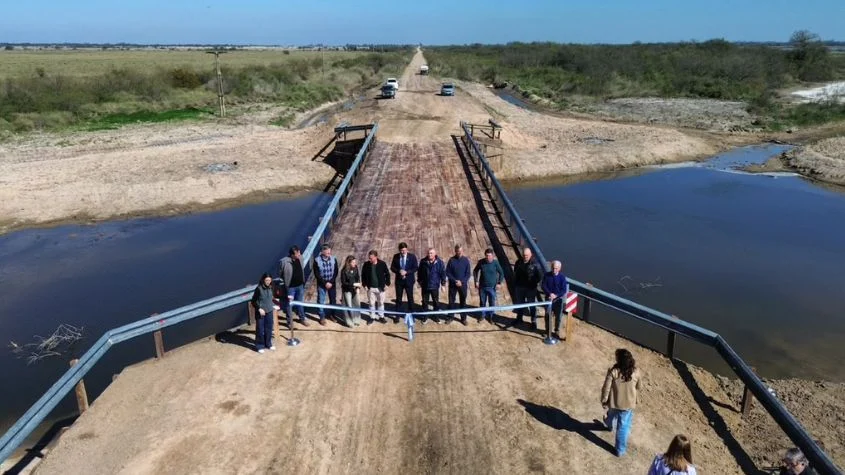
In a significant move to bolster regional connectivity and logistical efficiency, the Government of the Province of Santa Fe, Argentina, has officially inaugurated two major bridge reconstruction projects within the Las Colonias department. This initiative is part of a broader, aggressive infrastructure master plan aimed at modernizing the provincial road network, which serves as a critical artery for the nation’s agricultural and industrial output.
The successful restoration of these structures, located in the districts of La Pelada and Elisa, signals a shift toward proactive maintenance and the strategic use of sustainable construction materials. Beyond the bridges, the provincial administration, led by Governor Maximiliano Pullaro, has also committed substantial financial resources toward essential hydraulic and urban development projects, underscoring a commitment to the long-term resilience of the region’s infrastructure.
Main Facts: Restoring Vital Connectivity
The two primary bridge projects are located on critical transport corridors: the Provincial Route No. 69-s in La Pelada and the crossing over the Cululú Creek on Provincial Route No. 10, south of Elisa.
The La Pelada bridge project was fast-tracked as an emergency priority. The urgency stemmed from a major structural failure caused by a heavy-duty truck colliding with a Bailey bridge—a temporary structure that had been serving as the sole crossing point. The collapse of the temporary bridge severely hampered local traffic and threatened the supply chain for regional producers.

The new structure, spanning 30 meters across three segments, features an 11-meter wide roadway designed to accommodate modern agricultural machinery and freight transit. Engineers utilized a blend of traditional and contemporary materials, integrating robust quebracho colorado timber with modern double-T metallic profiles. By incorporating salvaged components that remained in sound condition, the project achieved both cost-efficiency and historical continuity in the design.
Simultaneously, the bridge over the Cululú Creek in Elisa underwent a comprehensive technical overhaul. The focus here was on increasing structural rigidity through the strategic placement of steel beams and metallic profiles. Similar to the La Pelada project, engineers prioritized the reuse of existing timber elements where structural integrity allowed, reinforcing them to meet current safety standards. A key innovation in the final phase was the application of Recycled Asphalt Pavement (RAP) on the bridge deck, providing a durable, weather-resistant surface that ensures smoother transit for commuters and transport vehicles alike.
Chronology of the Infrastructure Initiative
The progress in Las Colonias is not an isolated development but rather a milestone in a multi-year provincial infrastructure roadmap.
- Initial Assessment (Q1-Q2 2026): Following reports of structural fatigue and the accidental collapse of the Bailey bridge in La Pelada, the provincial Ministry of Infrastructure conducted a comprehensive audit of bridges across the Las Colonias department.
- Planning and Procurement: The provincial government finalized designs for the two bridges, incorporating the “hybrid” construction approach that combines structural steel with high-durability timber.
- Execution Phase (Mid-2026): Construction teams were mobilized to both sites simultaneously. The work involved the delicate process of dismantling failing sections while shoring up existing foundations to prevent further erosion or structural settling.
- Inauguration and Official Review (September 2026): Governor Maximiliano Pullaro formally opened the structures, marking the completion of the physical works and the official return to normal traffic flow for the local communities.
- Expansion of Scope: Following the successful bridge openings, the government immediately pivoted to secondary infrastructure agreements, signing new accords for hydraulic and urban projects in the same region, ensuring that the momentum gained from the bridge repairs was channeled into wider community improvements.
Supporting Data and Technical Specifications
The scale of the Santa Fe infrastructure program is substantial. According to official reports, the provincial government is currently overseeing the construction or rehabilitation of 35 distinct bridges across the territory. This reflects a significant budgetary allocation aimed at mitigating the risks posed by extreme weather events and aging transport infrastructure.

In terms of financial commitment, the government has moved beyond the bridge projects into the realm of hydrological management. A new agreement has been signed to replace culverts in the Tacural tertiary canal and the Secondary Canal No. 2, with a provincial investment of $162.07 million. This hydraulic project is designed to optimize water drainage during heavy rain events, protecting thousands of hectares of arable land and preventing the flooding of local roads.
Additionally, the municipality of Elisa has been granted $88.38 million to execute urban drainage works and the installation of curb-and-gutter systems. These urban improvements are vital for preventing soil erosion and managing stormwater runoff in residential and commercial areas, further integrating the rural transport network with the local municipal infrastructure.
Official Responses and Strategic Vision
During the inauguration ceremony, Governor Maximiliano Pullaro emphasized that the modernization of infrastructure is a pillar of his administration’s economic policy. "Our priority is to facilitate the transit of those who produce, those who work, and those who live in these communities," Pullaro stated. "By securing our bridge network, we are not just fixing roads; we are safeguarding the economic lifeblood of the province."
Provincial officials noted that the integration of Recycled Asphalt Pavement (RAP) is part of a larger mandate to incorporate sustainable engineering practices into public works. By recycling materials from older road surfaces, the province is reducing the carbon footprint of its construction projects while lowering logistics costs. This approach has been praised by regional planning committees as a benchmark for how provincial governments can manage tight budgets while delivering high-quality, long-lasting infrastructure.

The administration also highlighted the collaborative nature of these projects. The partnerships between provincial engineering bodies and local municipal leaders have allowed for a more localized assessment of needs, ensuring that the infrastructure serves the specific requirements of the local agricultural sector—which often deals with heavier, high-tonnage transport vehicles compared to typical urban transit.
Broader Implications for the Region
The successful completion of these works in the Las Colonias department holds significant implications for the province of Santa Fe:
- Supply Chain Reliability: By restoring the connection on the Provincial Route No. 69-s, the province has eliminated a major logistical bottleneck that previously forced heavy traffic onto longer, secondary routes. This reduces fuel consumption for producers and decreases the time required to transport goods to market.
- Climate Resilience: The emphasis on hydraulic projects, specifically the canal work in Tacural and the urban drainage in Elisa, suggests a proactive approach to climate change adaptation. As the region experiences more erratic rainfall patterns, modernizing drainage systems is essential to prevent costly emergency repairs in the future.
- Regional Integration: These projects demonstrate the provincial government’s ability to coordinate large-scale engineering feats across multiple jurisdictions. The strategy of linking road transport improvements with urban hydraulic projects ensures that the development is holistic—addressing both the macro-logistics of the province and the micro-needs of local town centers.
- Confidence in Public Investment: The rapid response to the bridge failure in La Pelada has served to increase public trust in the current administration. By moving from crisis to resolution within a short timeframe, the provincial government has demonstrated the efficacy of its administrative processes and its commitment to rapid disaster recovery.
As Santa Fe continues its 35-bridge program, the model established in Las Colonias serves as a blueprint. It highlights the effectiveness of balancing fiscal responsibility—through the reuse of materials and the use of recycled asphalt—with the necessity of building high-durability structures capable of supporting the modern economy.
Ultimately, the developments in La Pelada and Elisa illustrate a government focused on the "nuts and bolts" of economic growth: the physical connections that allow a province to thrive. As these projects move from construction to operational status, the long-term impact on the agricultural productivity and overall quality of life in the Las Colonias department is expected to be significant and lasting.