Executive Summary: The Third Line of the Virú Siphon
The modernization of Peru’s agricultural infrastructure has reached a critical milestone. In a high-level meeting between the Minister of Agrarian Development and Irrigation (MIDAGRI), Marco Vinelli, and the Governor of La Libertad, Joana Cabrera, the government confirmed that the contract for the design, procurement, and construction of the "EPCC-02 – Third Line of the Virú Siphon" will be signed in September.
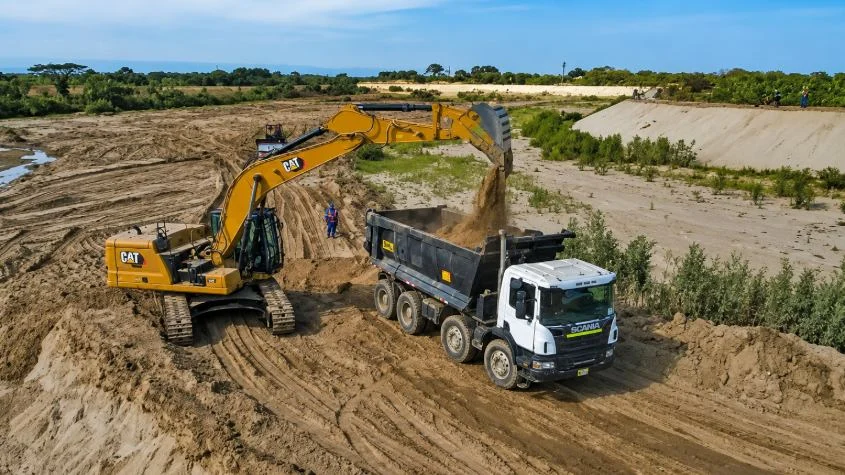
This hydraulic project, spanning approximately 3.5 kilometers, represents a foundational pillar of the Third Stage of the Chavimochic Project. As one of the most ambitious irrigation initiatives in the country, the expansion of the Virú Siphon is expected to significantly enhance water security, optimize irrigation efficiency for thousands of hectares, and fortify the region against the growing threats posed by climate change.
Chronology of Development: A Strategic Roadmap
The advancement of the Chavimochic project has been characterized by meticulous planning and inter-governmental coordination. The path toward the construction of the Third Line has unfolded as follows:
- Preliminary Planning Phase: Technical evaluations identified the aging infrastructure of existing siphons as a bottleneck for the region’s agricultural output. The need for a third line was prioritized to ensure redundancy and increased capacity.
- Approval and Budgeting: Following a series of negotiations between the central government and regional authorities, the project was greenlit as part of the broader effort to modernize irrigation systems in La Libertad.
- Contractual Finalization: As of August 2026, the project moved into its final administrative phase. Minister Vinelli’s announcement confirms that September will mark the signing of the implementation contract.
- Construction Timeline: The upcoming construction phase is expected to be fast-tracked to ensure that the infrastructure is integrated into the existing network before the onset of the next peak irrigation demand season.
Supporting Data: Infrastructure and Technical Scope
The "EPCC-02" component is more than just a pipeline; it is a critical engineering feat designed to handle high-pressure water distribution.

Technical Specifications:
- Total Length: 3.5 kilometers of high-resistance hydraulic conduit.
- Operational Objective: To provide a reliable secondary path for water distribution, ensuring that in the event of maintenance or emergency repairs on the existing lines, water flow to the agricultural sectors remains uninterrupted.
- Regional Impact: The Chavimochic Third Stage aims to incorporate thousands of hectares of new land into the productive agricultural belt of Peru, while simultaneously securing the water supply for current export-oriented crops.
Official Responses and Strategic Coordination
The success of this project is rooted in the "synergy" highlighted by both Minister Vinelli and Governor Cabrera. The collaboration between the Ministry and the Regional Government of La Libertad serves as a model for decentralized public investment.
Minister Marco Vinelli’s Stance
Minister Vinelli emphasized that the government’s focus extends beyond individual projects. During the technical sessions, he noted: "Our objective is to create a robust framework that safeguards agricultural production against volatility. The Third Line of the Virú Siphon is a structural necessity, not an optional upgrade."
Governor Joana Cabrera’s Perspective
Governor Cabrera underscored the importance of the national government’s commitment to regional development. "The articulation between the central and regional governments is the engine that will allow La Libertad to mitigate the risks associated with climate change. This project is a direct response to the needs of our farmers and the economic sustainability of our region," she stated.
Implications: Mitigating the Risks of "El Niño"
A significant portion of the technical discussion was dedicated to the threat posed by the El Niño Phenomenon (FEN). Beyond the irrigation project, the government has implemented a series of preventative measures to safeguard critical infrastructure.

The Moche River Bridge (Bailey)
One of the most immediate actions announced is the installation of a Bailey bridge over the Moche River. This move is designed to maintain the connectivity of vital logistics and transportation corridors. Should extreme weather events cause damage to existing road infrastructure, the Bailey bridge will ensure that agricultural produce can still reach domestic and international markets, preventing a supply chain collapse.
Proactive Monitoring of Hydraulic Works
The Ministry of Agrarian Development and Irrigation has committed to an aggressive monitoring schedule. Minister Vinelli announced that a series of aerial inspections will be conducted to oversee the progress of dike construction in the San Ildefonso and San Carlos ravines. These structures are essential for controlling debris flows and flooding, which historically have been the primary agents of destruction during El Niño cycles in La Libertad.
The Broader Context: Agriculture as an Economic Engine
To understand the significance of the Virú Siphon, one must look at the macro-economic impact of the Chavimochic Project on Peru.
Agricultural Sovereignty and Exports
La Libertad is a powerhouse of non-traditional agricultural exports, particularly in avocados, blueberries, and asparagus. By ensuring a steady water supply, the Third Line of the Virú Siphon effectively de-risks the capital investments made by the private sector in these regions. A secure water supply allows for long-term crop planning and increases the competitiveness of Peruvian products in European and North American markets.

Long-term Sustainability and Climate Resilience
The integration of new hydraulic infrastructure is part of a national strategy to "climate-proof" the Peruvian coast. As rainfall patterns become increasingly unpredictable, the ability to store and distribute water efficiently is the difference between a record harvest and a localized economic crisis. The government’s focus on the San Ildefonso and San Carlos ravines highlights a shift from reactive emergency management to proactive, preventative infrastructure engineering.
Future Outlook: Looking Beyond 2026
As the September contract signing approaches, the focus for the Ministry and the regional government will shift toward execution oversight. The success of the Third Line of the Virú Siphon will likely serve as a blueprint for similar projects in other regions currently facing water scarcity.
The combination of the irrigation project and the preventative infrastructure (like the Bailey bridge and the ravine dikes) demonstrates a holistic approach to regional development. By addressing both the growth-oriented requirements (irrigation) and the safety-oriented requirements (flood mitigation), the government is positioning La Libertad to remain a resilient and prosperous agricultural hub for decades to come.
In conclusion, the development of the Third Line of the Virú Siphon is a testament to the power of sustained institutional commitment. As the project transitions from the drawing board to the field, stakeholders from the private sector, local communities, and the government remain optimistic that this infrastructure will serve as a permanent barrier against the uncertainties of climate change and a catalyst for continued economic growth in northern Peru.