Executive Summary: A Call for Fiscal Discipline
Former Minister of Economy and Finance, Alfredo Thorne, has issued a stark warning regarding the Peruvian government’s current strategy to mitigate the impacts of the El Niño phenomenon. As the country braces for potential climatic volatility, Thorne argues that the Ministry of Economy and Finance (MEF) must move beyond its traditional role as a simple purse-string holder and assume direct leadership in both the financial planning and the execution of emergency infrastructure works.
According to Thorne, the current decentralized and reactive approach risks creating a "disorderly pressure" on public accounts, potentially destabilizing the national fiscal position. He advocates for a centralized, three-tiered strategy—prevention, containment, and reconstruction—to ensure that resources are allocated with precision rather than scattered across various government sectors without a unified vision.
The Core Argument: Why the MEF Must Lead
The central thesis of Thorne’s critique is that the magnitude of the resources required to combat El Niño exceeds the operational capacity of individual sector ministries. He posits that the MEF, by virtue of its command over technical dossiers and its unique ability to expedite bureaucratic processes, is the only entity equipped to act as the "command center" for the crisis.
The Failure of Past Models
Thorne draws on historical experience, specifically from his tenure during the Pedro Pablo Kuczynski administration. He recalls proposing that the MEF should take full control of the execution of works related to El Niño. However, political pressures shifted the responsibility to the Presidency of the Council of Ministers (PCM). The result, he notes, was a paralysis of action. "The politics won," Thorne lamented, "and because it was handed to the PCM, essentially nothing was executed."
He views this as a vital lesson for the current government: when crisis response is fragmented among multiple agencies, the lack of a single, accountable driver leads to inefficiency, administrative bottlenecks, and, ultimately, a failure to protect the public.
Chronology and Context: From 2017 to the Present
To understand the urgency of Thorne’s plea, one must look at the historical precedent of the 2017 El Niño episode.
- 2017 Crisis: During the height of the 2017 disaster, the government allocated approximately 24 billion soles to combat the effects of the phenomenon. This was a massive, systemic effort that required unprecedented coordination.
- The Current Gap: In contrast, the current government’s initial allocations, which Thorne estimates at around 800 million soles (approximately 0.1% of GDP), appear significantly undersized relative to the potential scale of the threat.
- The Three-Stage Strategy: Thorne emphasizes that a successful response must be categorized into:
- Prevention: Identifying high-risk zones and fortifying infrastructure before the climate shifts.
- Containment: Immediate relief measures to protect populations during the peak of the event.
- Reconstruction: Long-term investment to rebuild damaged urban and rural centers.
Thorne argues that the country is currently hovering between the first and second stages, but without a long-term roadmap, the transition to the third stage will be fraught with delays and ballooning costs.
Supporting Data: The Fiscal and Economic Impact
The economic implications of a poorly managed response are significant. Thorne provides a sober analysis of how this climatic risk threatens the macroeconomic stability of the nation.
Fiscal Sustainability
Thorne warns that a "piecemeal" approach—where individual ministries receive small, isolated grants for specific needs like bridge repairs or food aid—is a recipe for fiscal disaster. "They need bridges and are given a little money; they need food and are given another little bit of money. It cannot be like that," he stated. Such an approach, he argues, will eventually "break the fiscal box," forcing the government to incur unnecessary debt or abandon other critical public projects.
Growth Projections
The economic fallout of El Niño is expected to ripple through the 2026 and 2027 fiscal years. Thorne has adjusted his growth forecasts:
- 2024 Outlook: Expected growth has been revised downward from 3.4% to approximately 3%.
- 2027 Outlook: Growth is projected to settle between 2.5% and 2.8%.
Thorne estimates that the state will need to commit at least 0.5% of GDP over the next three years solely to address the fallout of the phenomenon. However, he cautions that this is a conservative estimate that could expand significantly if the intensity of the climate event mirrors or exceeds the 2017 disaster.
Official Responses and Political Dynamics
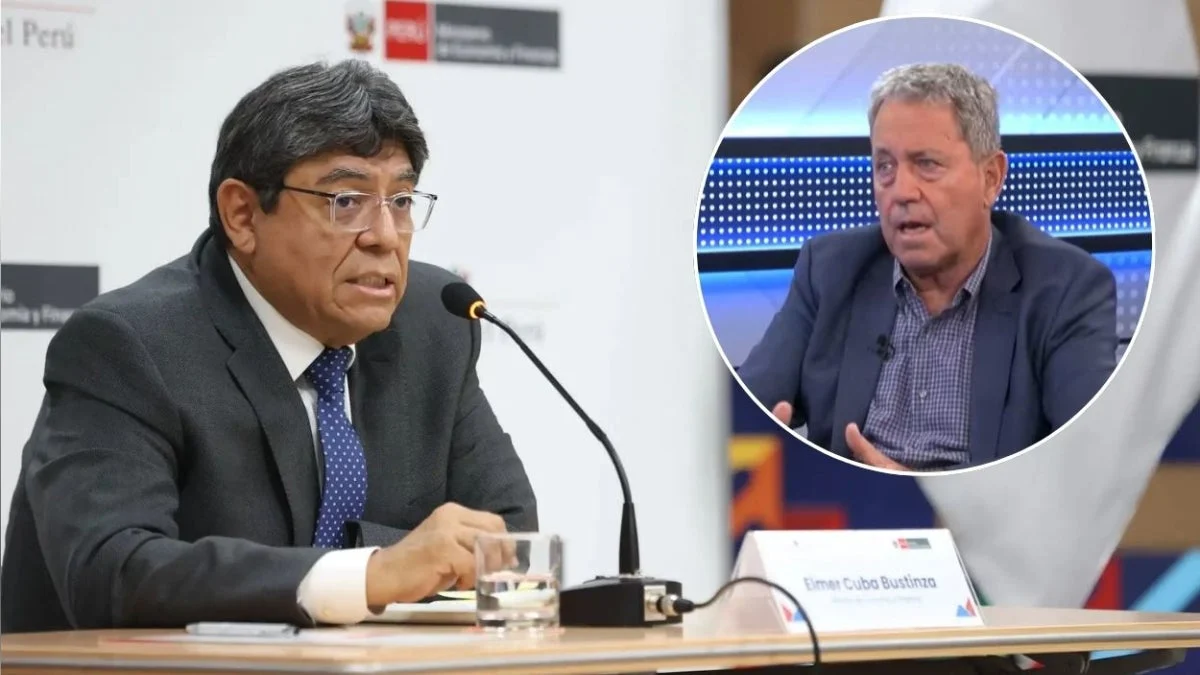
The current administration finds itself in a precarious position. The Minister of Economy, Elmer Cuba, faces the unenviable task of balancing the legitimate, urgent demands of various government sectors against the strictures of a national budget already under strain.
Thorne’s critique serves as a pressure point for the government to move away from political maneuvering and toward technical efficiency. The "political" tendency—which led to the PCM handling the response in 2017—is the very thing that the current administration must avoid if it hopes to maintain credibility with international observers and domestic stakeholders.
The current strategy appears to be a reactive, sector-by-sector funding model. Critics argue that this is a byproduct of a lack of clear, top-down direction from the executive branch. If the government fails to consolidate its financial strategy under the MEF, it risks a scenario where the "costs of inaction" eventually far outweigh the costs of a coordinated, well-funded preventative program.
Implications: The Path Forward
The implications of Thorne’s warning are clear: the cost of El Niño is not just a meteorological issue; it is a management crisis.
1. Centralization of Decision-Making
The government must empower the MEF to prioritize projects based on technical feasibility and impact, rather than political urgency or departmental lobbying. This involves creating a unified "El Niño Fund" that is transparently managed and governed by clear performance metrics.
2. Strengthening Technical Capacity
The execution of complex infrastructure projects requires more than just money; it requires high-level project management. If the MEF takes the lead, it must leverage its existing relationships with technical experts to ensure that projects are not just funded, but built to withstand the climate challenges identified.
3. A Multi-Year Fiscal Framework
The government cannot treat El Niño as a single-year budget line item. Given that the economic impact will likely be felt through 2027, the MEF must integrate these emergency costs into a multi-year fiscal framework. This ensures that the country maintains its debt-to-GDP targets while still providing for the necessary emergency investments.
4. Public Trust and Transparency
Finally, Thorne emphasizes that the public needs to see a clear plan. When the population sees "cities flooded" and a lack of organized state presence, confidence in government stability wanes. A well-communicated, centralized strategy is the most effective way to reassure the public and the markets that the state is in control.
Conclusion
Alfredo Thorne’s intervention serves as a critical audit of Peru’s readiness for the climate challenges ahead. The warning is unambiguous: without a fundamental shift toward a centralized, MEF-led strategy, the government risks repeating the mistakes of the past—fragmented execution, wasted resources, and a weakened national economy.
The task ahead for Minister Elmer Cuba and the administration is to move beyond the comfort of traditional ministerial silos and adopt a unified, disciplined, and proactive stance. Whether the state chooses to listen to this counsel will determine not only the speed of the eventual reconstruction but also the overall health of the Peruvian economy for the remainder of the decade. The clock is ticking, and as history has shown, nature rarely waits for the bureaucracy to catch up.