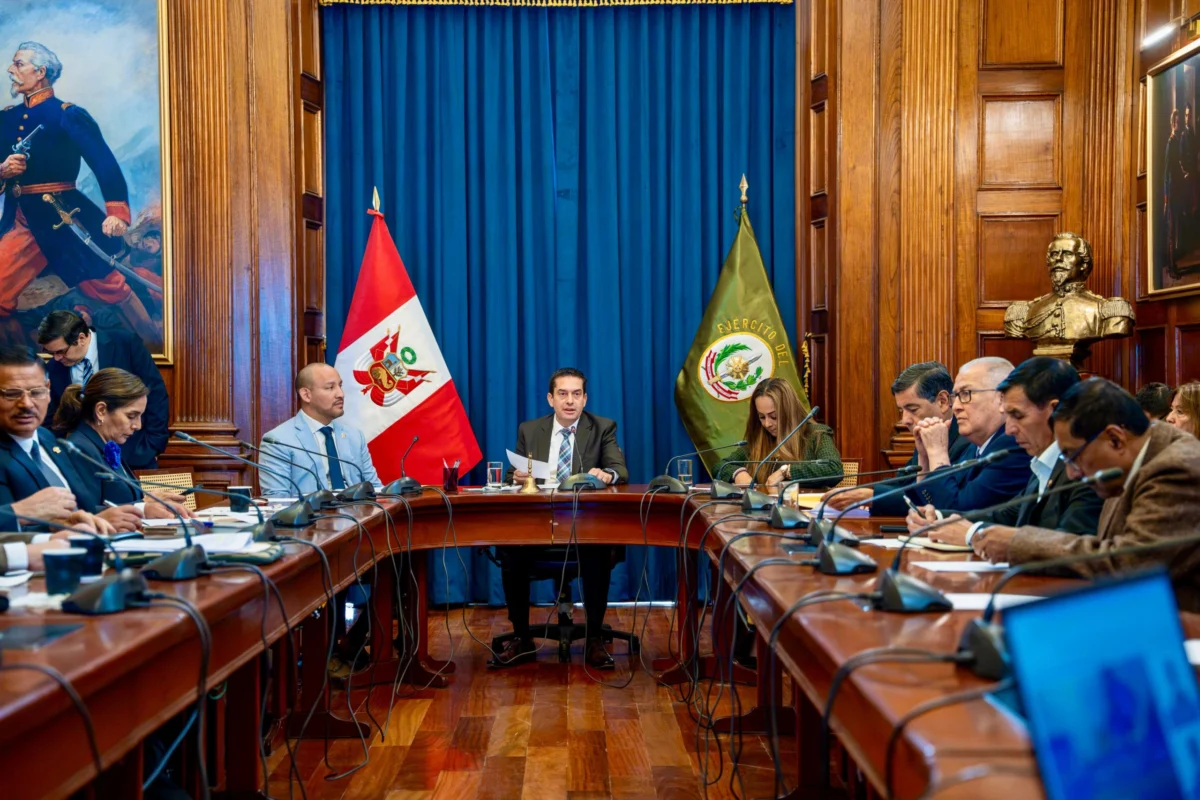
Lima, Peru – In a significant procedural step for the upcoming legislative year, the Senate of the Republic, through its Board of Spokespersons, has formally approved a proportional distribution of leadership positions for its standing and non-standing committees for the 2026-2027 Annual Session. This decision, reached by majority vote during a session presided over by Senate President Miguel Ángel Torres Morales, aims to ensure a balanced representation of political forces in the oversight and legislative functions of the upper house.
The allocation of presidencies, vice-presidencies, and secretariats across the various committees reflects a strategic approach to power-sharing within the Senate, underscoring the multi-party dynamics that will shape legislative discourse and policy development in the coming period. The detailed breakdown of these appointments, as reported, provides a clear roadmap of which political factions will steer the agendas of key legislative bodies.
Background: The Role of the Board of Spokespersons and Committee Leadership
The Board of Spokespersons (Junta de Portavoces) serves as a crucial deliberative body within the Senate, comprising the leaders of each political group represented in the chamber. Its primary function is to coordinate legislative activities, discuss significant procedural matters, and, as demonstrated in this instance, facilitate consensus on the distribution of leadership roles within the various committees. These committees are the bedrock of legislative work, delving into specific policy areas, conducting in-depth analysis of proposed legislation, and holding executive bodies accountable.
The proportional distribution of committee leadership is a common practice in many parliamentary systems, designed to prevent any single party or bloc from monopolizing the legislative agenda or exercising undue influence. By assigning these roles based on the relative strength of each political party within the Senate, the system aims to foster broader participation, encourage compromise, and enhance the legitimacy of legislative outcomes. The period of the 2026-2027 Annual Session signifies a new cycle of legislative activity, making this distribution a foundational element for the Senate’s operational effectiveness.
Chronology of the Decision-Making Process
While the provided text focuses on the outcome, understanding the context of such a decision involves recognizing the typical parliamentary procedures. The approval by the Board of Spokespersons signifies the culmination of discussions and negotiations among the various political factions.
Pre-Session Deliberations: Prior to the formal session, it is highly probable that extensive behind-the-scenes negotiations took place among the party leaders and their representatives. These discussions would have focused on the strategic importance of each committee, the perceived strengths and weaknesses of different parties in specific policy areas, and the overall balance of power desired by each faction. Political parties would have lobbied for key presidencies that align with their core ideologies and policy priorities.
Formal Session and Vote: The session presided over by Senate President Miguel Ángel Torres Morales in the Sala Bolognesi of the Legislative Palace served as the formal venue for the presentation and ratification of the proposed distribution. The decision was made by a majority vote, indicating that while a consensus might have been sought, the final outcome was determined by the collective will of the participating spokespersons. This majority vote underscores the democratic process by which such critical assignments are made, ensuring that the decision reflects the prevailing political landscape within the Senate.
Dissemination of the Decision: Following the vote, the approved distribution is officially recorded and communicated to all senators and relevant stakeholders. The public announcement, as presented in the news article, serves to inform the broader public and the executive branch about the leadership structure that will guide the Senate’s committee work for the duration of the 2026-2027 session.
Detailed Breakdown of Committee Leadership Assignments
The approved proportional distribution outlines the leadership structure for numerous key committees. A closer examination of these assignments reveals the strategic positioning of various political parties:
Constitutional, Regulatory, and Foreign Relations Committee:
- Presidency: Fuerza Popular
- Vice-Presidency: Obras
- Secretariat: Renovación Popular
This committee, dealing with fundamental aspects of governance, constitutional matters, and Peru’s international standing, will be led by Fuerza Popular. This indicates a significant focus on shaping constitutional discourse and foreign policy from a party perspective.
National Defense and Internal Order Committee:
- Presidency: Renovación Popular
- Vice-Presidency: Obras
- Secretariat: Fuerza Popular
Renovación Popular takes the helm of this critical committee, responsible for national security and public safety. The inclusion of Obras and Fuerza Popular in key positions suggests a multi-party approach to defense and internal security matters.
Productive Development, Energy and Mines, Infrastructure, and Labor Affairs Committee:
- Presidency: Obras
- Vice-Presidency: Buen Gobierno
- Secretariat: Fuerza Popular
The committee overseeing economic development, resource management, and labor policies will be chaired by Obras. This assignment highlights the party’s interest in shaping the nation’s economic trajectory and infrastructure projects.
Economy, Environment, and Consumer Defense Committee:
- Presidency: Ahora Nación
- Vice-Presidency: Fuerza Popular
- Secretariat: Buen Gobierno
Ahora Nación will lead the committee responsible for economic policy, environmental stewardship, and consumer rights. The vice-presidency held by Fuerza Popular suggests a collaborative approach to these vital areas.

Health, Education, Culture, Women, Social, and Digital Development Affairs Committee:
- Presidency: Buen Gobierno
- Vice-Presidency: Juntos por el Perú
- Secretariat: Fuerza Popular
This broad-ranging committee, encompassing social welfare, education, and emerging digital sectors, will be steered by Buen Gobierno. The inclusion of Juntos por el Perú and Fuerza Popular in leadership roles underscores the commitment to addressing diverse societal needs.
State Management and Comptroller’s Office Committee:
- Presidency: Juntos por el Perú
- Vice-Presidency: Fuerza Popular
- Secretariat: Ahora Nación
Juntos por el Perú will chair the committee overseeing state administration and accountability through the Comptroller’s Office, signaling a focus on transparency and efficient governance.
Justice and Human Rights Committee:
- Presidency: Renovación Popular
- Vice-Presidency: Buen Gobierno
- Secretariat: Fuerza Popular
Renovación Popular assumes leadership of the Justice and Human Rights Committee, indicating a priority on legal reforms and the protection of fundamental rights.
Parliamentary Ethics Committee:
- Presidency: Juntos por el Perú
- Vice-Presidency: Fuerza Popular
- Secretariat: Renovación Popular
The committee responsible for upholding ethical standards within the Senate will be led by Juntos por el Perú, emphasizing a commitment to integrity in parliamentary conduct.
Special Procedures Committee:
- Presidency: Juntos por el Perú
- Vice-Presidency: Renovación Popular
- Secretariat: Fuerza Popular
Juntos por el Perú also secures the presidency of the Special Procedures Committee, suggesting its engagement in managing specific legislative processes.
Intelligence Committee:
- Presidency: Fuerza Popular
- Vice-Presidency: Buen Gobierno
- Secretariat: Juntos por el Perú
Fuerza Popular will lead the Intelligence Committee, a critical body for overseeing national intelligence activities and ensuring their alignment with democratic principles.
Political Control over Regulatory Acts of the Executive Branch and Regimes of Exception Committee:
- Presidency: Fuerza Popular
- Vice-Presidency: Renovación Popular
- Secretariat: Obras
This committee, tasked with scrutinizing executive actions and emergency powers, will be chaired by Fuerza Popular, highlighting a significant oversight role.
Bicameral Committee on Budget and the General Account of the Republic:
- Presidency: Fuerza Popular
- Secretariat: Buen Gobierno
Fuerza Popular will also lead the crucial Bicameral Committee on Budget and the General Account of the Republic, underscoring its influence on fiscal matters. The presence of Buen Gobierno as secretary further emphasizes a collaborative approach to financial oversight.
Supporting Data and Political Landscape
The distribution of committee leadership is intrinsically linked to the political composition of the Senate. While the specific number of seats held by each party is not detailed in the provided text, the allocations suggest a nuanced balance of power. The prominent roles assigned to Fuerza Popular, Renovación Popular, Obras, Buen Gobierno, Juntos por el Perú, and Ahora Nación indicate their significant presence and influence within the upper legislative chamber.

-
Fuerza Popular: Appears to have secured leadership positions in several high-profile committees, including Constitutional, Regulatory, and Foreign Relations; Intelligence; Political Control over Regulatory Acts of the Executive Branch; and the Bicameral Committee on Budget. This suggests a strategic focus on shaping fundamental governance, national security, and fiscal policy.
-
Renovación Popular: Will lead the National Defense and Internal Order Committee and the Justice and Human Rights Committee, indicating a strong emphasis on security and legal frameworks.
-
Obras: Takes the presidency of the Productive Development, Energy and Mines, Infrastructure, and Labor Affairs Committee, pointing towards an agenda centered on economic growth and infrastructure development.
-
Buen Gobierno: Will chair the Health, Education, Culture, Women, Social, and Digital Development Affairs Committee, and holds significant vice-presidency and secretariat roles, suggesting a broad agenda focused on social well-being and progress.
-
Juntos por el Perú: Secures presidencies in State Management and Comptroller’s Office, Special Procedures, and Parliamentary Ethics committees, signaling a commitment to good governance, transparency, and ethical conduct.
-
Ahora Nación: Leads the Economy, Environment, and Consumer Defense Committee, highlighting its focus on economic sustainability and consumer protection.
The proportional distribution, by its very nature, implies that no single party holds a dominant position across all committees. This necessitates inter-party cooperation and negotiation, which is essential for effective legislative functioning in a multi-party democracy. The inclusion of vice-presidency and secretariat roles for various parties within each committee further reinforces this collaborative framework.
Official Responses and Implications
Official Statements: While the provided text focuses on the factual reporting of the decision, official statements from the Senate President, Miguel Ángel Torres Morales, and the spokespersons of the various political parties would likely have accompanied this announcement. These statements would typically emphasize the commitment to democratic principles, the importance of consensus-building, and the dedication to serving the nation through effective legislative oversight. Senate President Torres Morales, in his role as facilitator, would likely have highlighted the successful negotiation process and the unified approach to commencing the legislative session.
Implications for Governance: The approved distribution of committee leadership carries significant implications for the legislative agenda and the overall governance of Peru:
-
Policy Direction: The party leading a committee often sets its thematic priorities and influences the direction of legislative proposals and inquiries. Therefore, the assignments signal which policy areas will likely receive increased attention and scrutiny in the 2026-2027 session.
-
Oversight of the Executive: Committees play a crucial role in overseeing the actions of the executive branch. The composition of committees like National Defense, State Management, and Political Control over Regulatory Acts will determine the rigor and focus of executive oversight.
-
Inter-Party Dynamics: The distribution lays the groundwork for ongoing inter-party relationships. Successful collaboration within committees can foster broader political consensus, while potential disagreements could lead to legislative stalemates. The proportional system, by design, encourages compromise.
-
Legislative Productivity: The efficiency and effectiveness of the Senate’s work will depend on the ability of committee members and leaders to collaborate constructively. A well-functioning committee system is crucial for advancing legislation and addressing national challenges.
-
Public Perception: The distribution of power within the Senate can influence public perception of the legislative branch’s fairness and responsiveness. A transparent and equitable distribution process is vital for maintaining public trust.
In conclusion, the Senate’s approval of a proportional distribution of committee leadership for the 2026-2027 session represents a foundational step in shaping the legislative landscape. This decision, born from deliberation and majority consensus, underscores the commitment to a balanced and representative parliamentary process. The strategic assignments across various committees will undoubtedly guide the nation’s legislative agenda, influence policy outcomes, and shape the dynamics of inter-party cooperation in the crucial period ahead. The coming session will be a test of the Senate’s ability to leverage this structured distribution for effective governance and the advancement of Peru’s national interests.