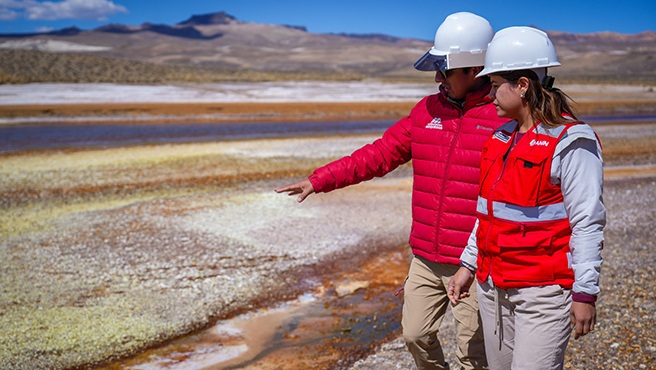
LIMA, PERU – Decades of unregulated mining activity have left an indelible scar on the soils and river basin of Moquegua, a southern Peruvian region historically rich in mineral resources. Now, the Peruvian State, through the National Infrastructure Authority (ANIN), has unveiled a comprehensive roadmap to reverse this environmental legacy. A monumental S/1.114 billion remediation project for the former Florencia Tucari mining unit has been presented, aiming to stabilize a vast 311.59 hectares and address the complex environmental challenges left behind by incomplete mine closure.
This ambitious intervention, characterized by its high degree of complexity, seeks to significantly reduce environmental risks and ensure the physical, hydrological, and geochemical stability of the affected areas. The ultimate goals are the recovery of the river basin, the protection of vital water resources, and the restoration of conditions that will enable local families to resume their productive activities, which have been hampered by the environmental degradation.
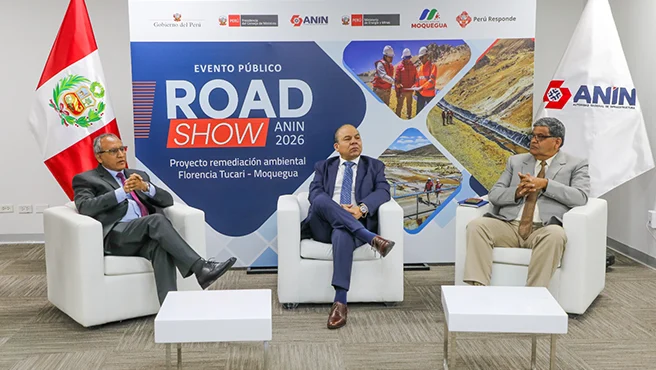
The project’s unveiling took place during the ANIN Roadshow 2026, a significant event that brought together 51 national and international companies, government representatives, and authorities from the Regional Government of Moquegua. This platform served not only to present the Florencia Tucari remediation plan but also to foster crucial dialogue and collaboration between the public and private sectors for tackling challenging infrastructure and environmental projects.
The Weight of Unfinished Business: A Lingering Environmental Debt
For years, the Florencia Tucari mining unit operated without adhering to proper closure protocols, leaving behind a legacy of environmental contamination and instability. This negligence has had a profound impact on the local ecosystem, affecting soil quality, water sources, and the overall ecological balance of the region. The remediation project is a direct response to this long-standing environmental debt, signifying the State’s commitment to rectifying past oversights and ensuring a sustainable future for the affected communities.
Sergio Atarama Martínez, General Manager of ANIN, emphasized the critical role of platforms like the ANIN Roadshow in strengthening the synergy between the State and the private sector. "For years, mining activity that did not comply with its closure left deep marks on our ecosystems. Today, the State firmly assumes the responsibility to transform that reality," he stated during the event, underscoring the government’s resolve to address this critical issue.
Atarama further elaborated on the collaborative nature of the project, highlighting the indispensable involvement of key governmental bodies. The success of this ambitious undertaking, he noted, will be contingent upon the close cooperation between ANIN, the Ministry of Energy and Mines (Minem), the Ministry of Environment (Minam), the Presidency of the Council of Ministers (PCM), the Environmental Assessment and Enforcement Agency (OEFA), the National Water Authority (ANA), Activos Mineros (a state-owned company responsible for managing former mining assets), and the regional and local governments of Moquegua. This multi-stakeholder approach is designed to ensure comprehensive oversight, efficient execution, and effective long-term management of the remediation efforts.
A Multi-Stage Approach to Comprehensive Recovery
The remediation of the Florencia Tucari mining unit is envisioned as a multi-stage process, meticulously planned to address the various facets of environmental damage and ensure sustainable recovery. The total estimated cost for this comprehensive intervention stands at an impressive S/1,114,864,138.75. The project will be executed in three distinct phases, each with specific objectives and responsibilities.
Phase 1: Immediate Stabilization and Technical Foundation
The initial phase, under the direct purview of ANIN, will be executed within the framework of an agreement with the Ministry of Energy and Mines (Minem). This phase focuses on critical immediate actions to mitigate ongoing environmental risks. Key activities will include the diversion of non-contact water from the Tucarirani and Apostoloni ravines, a crucial step to prevent the further spread of contaminants and manage water flow effectively. Simultaneously, the detailed technical study and design for the entire remediation project will be developed. This foundational phase represents an initial investment of S/66.6 million, laying the groundwork for the subsequent, more intensive stages of work.
Phase 2: Comprehensive Mine Closure and Remediation Execution
The second phase marks the heart of the remediation effort, involving the formal modification of the existing Mine Closure Plan to align with the new, comprehensive remediation strategy. This will be followed by the direct execution of the closure and remediation works themselves. This phase will encompass a wide range of activities, from the physical stabilization of tailings and waste rock piles to the revegetation of disturbed areas and the implementation of water treatment systems where necessary. Rigorous supervision will be maintained throughout this stage to ensure that all work is conducted to the highest environmental and engineering standards.
Phase 3: Long-Term Monitoring and Administrative Closure
The final phase of the project is dedicated to ensuring the long-term sustainability of the remediation efforts and the eventual administrative and financial closure of the project. This will involve ongoing monitoring of the remediated areas to assess their ecological recovery and stability. This long-term follow-up is crucial for verifying the effectiveness of the implemented measures and making any necessary adjustments. The administrative and financial closure will formalize the completion of the project, ensuring all contractual obligations are met and that the site is officially handed over for appropriate management.

Regional Support and the Promise of Revitalization
The Regional Government of Moquegua has expressed strong support for the ANIN-led initiative, viewing it as a critical step towards addressing a long-standing regional concern. Abraham Ponce Sosa, General Manager of the Regional Government of Moquegua, highlighted the significance of the project in rectifying a historical oversight. "The challenge is enormous, but today we have a different institutional route. Thanks to articulated work, we have a declared viable project that seeks to recover the river basin, protect water resources, and reduce environmental impacts," he stated, underscoring the collaborative spirit driving the project forward.
Ponce Sosa’s remarks reflect the deep-seated desire within the region to see the environmental damage reversed and to reclaim the potential for economic and social development that has been curtailed by the lingering effects of past mining practices. The successful remediation of the Florencia Tucari site is expected to not only restore ecological health but also to reopen avenues for sustainable economic activities, such as agriculture and ecotourism, which are vital for the region’s prosperity.
Supporting Data and Technical Considerations
The scale of the Florencia Tucari remediation project is underscored by the substantial investment and the vast area designated for intervention. Stabilizing 311.59 hectares of land presents significant engineering and environmental challenges. These include:
- Geochemical Stability: Addressing the potential for acid mine drainage and the leaching of heavy metals from exposed rock and tailings is paramount. Remediation strategies will likely involve the capping of waste materials, the application of neutralizing agents, and the implementation of containment systems to prevent the migration of contaminants into the soil and water.
- Physical Stability: The affected areas may be prone to erosion and landslides. Stabilization techniques such as regrading, the construction of retaining structures, and the implementation of robust drainage systems will be essential to ensure the long-term physical integrity of the site.
- Hydrological Management: The project must address the complex water dynamics within the basin. This includes managing surface water runoff, groundwater flow, and the diversion of uncontaminated water sources to minimize contact with potential pollutants. The recovery of water quality in the river basin is a central objective, vital for both ecological health and the potential for human use.
- Biodiversity and Ecosystem Restoration: Beyond the immediate technical challenges, the project aims to facilitate the gradual restoration of the local ecosystem. This will likely involve soil remediation, the reintroduction of native vegetation, and the creation of conditions conducive to the return of local flora and fauna.
The S/1.114 billion investment reflects the comprehensive nature of the planned interventions, encompassing detailed studies, advanced engineering solutions, extensive construction, and long-term monitoring. This significant financial commitment from the Peruvian State demonstrates a serious intent to tackle one of the country’s most pressing environmental remediation challenges.
Implications for Peru’s Mining Sector and Beyond
The Florencia Tucari remediation project carries significant implications for Peru’s mining sector and its broader environmental governance. Firstly, it signals a strengthened commitment by the Peruvian government to hold mining companies accountable for their environmental responsibilities, even in cases where companies may have ceased operations or become defunct. The State’s proactive role in undertaking such a large-scale remediation effort sets a precedent for future environmental management.

Secondly, the project’s success will depend heavily on the effective coordination and collaboration between various government agencies and the private sector. The ANIN Roadshow initiative, aimed at fostering such partnerships, underscores the recognition that complex infrastructure and environmental projects require a unified approach. The lessons learned from this ambitious endeavor will undoubtedly inform future public-private collaborations on similar environmental challenges across the country.
Finally, the successful remediation of the Florencia Tucari mining unit will serve as a tangible example of environmental restoration and sustainable development. By reclaiming degraded land and restoring vital water resources, the project will not only benefit the local communities of Moquegua but also contribute to Peru’s broader goals of environmental protection and sustainable resource management. It represents a critical step towards transforming environmental liabilities into opportunities for ecological and economic revitalization, ensuring that the country’s rich mineral heritage does not come at the irreversible cost of its natural environment.