By [Author Name/Editorial Desk]
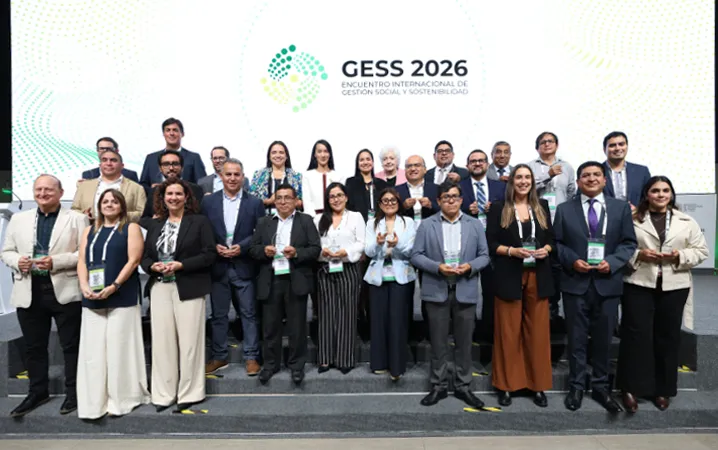
In an era where the intersection of corporate strategy, public policy, and social well-being has become the cornerstone of sustainable development, the International Encounter for Social Management and Sustainability (GESS 2026) has set a new benchmark. During its latest edition, the event recognized 24 groundbreaking initiatives that are redefining how private entities, public institutions, and civil society organizations interact with the territories they serve.
These initiatives, which span from the high Andes to the Amazon basin, demonstrate a shift in the paradigm of social management: moving away from traditional corporate social responsibility (CSR) and toward integrated, sustainable development that creates shared value.
Main Facts: A Recognition of Excellence
The GESS 2026 Recognition was designed to shine a light on experiences that go beyond mere philanthropy. The core objective was to identify projects that contribute to sustainable development, strengthen social management, and propose innovative methodologies for building trust in regions often characterized by complex social dynamics.
From a pool of 77 rigorous applications, 24 projects were selected by a multidisciplinary panel of experts. These projects were chosen not just for their immediate impact, but for their replicability—their capacity to serve as blueprints for other organizations facing similar challenges in different geographical or social contexts.
The scope of the awarded initiatives is vast, encompassing critical sectors such as:
- Water and Sanitation: Tackling the fundamental right to clean water through innovative technology.
- Education and Human Capital: Bridging the gap in STEAM education and financial literacy.
- Environmental Conservation: Transforming industrial legacies into educational and development hubs.
- Productive Development: Empowering local economies through agriculture, tourism, and circular fashion.
Chronology: The Evolution of GESS 2026
The trajectory leading to the GESS 2026 Recognition was a year-long process of rigorous vetting and knowledge sharing.
- Q1 2026: Launch of the Call for Nominations. Organizations from across Peru were invited to submit case studies demonstrating measurable impact in social management.
- Q2 2026: The Technical Evaluation Phase. A panel of academics, sustainability experts, and government advisors reviewed the 77 submissions, focusing on innovation, sustainability, and stakeholder engagement metrics.
- August 2026: The GESS 2026 Event. Over three days, the conference served as a forum for leaders to debate the future of sustainability, culminating in the formal announcement of the 24 recognized initiatives.
- Post-Event (Late 2026): Integration into the "Legado" (Legacy) repository. This phase marks the beginning of the knowledge-transfer cycle, where these cases are being formalized into toolkits for future policy-makers.
Supporting Data: The Anatomy of Success
The success of these initiatives can be measured by their diversity. By categorizing the winners, we gain insight into where the most pressing social needs in Peru are currently being met:
1. Water, Sanitation, and Environment
Projects like Engie Energía Perú’s "Agua que Transforma" and Los Portales’ "EcoChilca" highlight the move toward circular water management. Similarly, Procter & Gamble Peru’s "Agua Limpia para los Niños" underscores the power of private sector logistics in delivering essential health resources to vulnerable populations.
2. Education and Capacity Building
Education initiatives took center stage, with programs like Sociedad Minera Cerro Verde’s "STEAM" initiative and Asbanc’s "Educación Financiera en tu Cole." These programs represent a strategic investment in the future workforce of Peru, equipping students with 21st-century skills.
3. Economic and Territorial Development
The "La mina Escuela CIEMAM" project by CETEMIN stands out for its circular approach to environmental liabilities, turning former mining zones into active classrooms. In the Amazon, the Universidad Nacional Toribio Rodríguez de Mendoza has successfully piloted sustainable tourism as a tool for economic autonomy.

4. Public-Private Collaboration
The inclusion of initiatives like the Ministry of Energy and Mines’ "Programa de Integración Minera (PIM)" and Cedro’s "Migracentros" confirms that the most effective solutions are those that bridge the gap between government policy and local implementation.
Official Perspectives: The Philosophy of "Legado"
The GESS 2026 Recognition is an integral component of "Legado," an initiative established to ensure that the insights shared during the conference do not dissipate once the doors close.
"Our goal is to ensure that these three days of discussion translate into years of actionable policy," stated a representative from the GESS organizing committee. "By systematizing these 24 cases, we are building a library of ‘what works.’ Whether it is a municipality trying to improve water access or a startup looking to engage a local community, this repository provides a roadmap based on proven successes."
The repository is designed to be a living document, serving as a reference for:
- Policy Makers: To identify evidence-based strategies that can be scaled into national guidelines.
- Social Managers: To learn from the challenges and failures encountered by others, effectively "learning by proxy."
- Academics: To analyze the evolving dynamics of social license to operate in the 21st century.
Implications: A New Era for Social Management
The 2026 GESS awards are not merely a ceremony; they represent a fundamental shift in the "Social License to Operate."
From Conflict to Collaboration
The presence of initiatives like Cementos Pacasmayo’s "Sueños en Concreto" or Compañía Minera Poderosa’s water management programs in Pataz highlights a transition from reactive conflict management to proactive, collaborative regional development. These companies are positioning themselves as "anchor institutions" in their regions—entities that provide the infrastructure and resources necessary for broader community growth.
The Role of Technology and Innovation
Innovation is no longer limited to industrial processes; it is now being applied to social intervention. Sanilab EE’s "Sanisystem" (cleantech) and Ecotextil Moda’s "Metamorfosis" (circular fashion) demonstrate that technology can be a powerful equalizer. By leveraging cleantech and circular models, these organizations are addressing environmental degradation while creating new income streams for local communities.
Inclusion as a Strategic Pillar
The recognition of Lima Airport Partners’ "Salud para Todos" and Newmont ALAC’s "Uniones de Crédito y Ahorro" reinforces the necessity of social inclusion. For large-scale projects to be sustainable, the surrounding communities must have direct access to health, finance, and basic services. These initiatives prove that when inclusion is baked into the business model, the entire ecosystem benefits.
Conclusion: Looking Ahead
The 24 recognized initiatives from GESS 2026 serve as a testament to the resilience and creativity of the Peruvian social sector. As these practices are integrated into the national discourse, they provide a clear signal to stakeholders: the future of Peru lies in the ability to harmonize industrial progress with social justice.
For the managers, engineers, educators, and public servants involved, the work is far from over. The real success of the GESS 2026 Recognition will be measured in the years to come, as these 24 models are replicated, scaled, and adapted across the country. Through the "Legado" repository, the lessons of 2026 will serve as the foundation for the social strategies of 2030 and beyond, ensuring that growth is not just measured in economic terms, but in the sustained improvement of the quality of life for all citizens.
Appendix: The Full List of Recognized Initiatives
- Cementos Pacasmayo: Sueños en Concreto
- Sociedad Minera Cerro Verde: STEAM – Science, Technology, Engineering, Arts & Mathematics
- CETEMIN: La mina Escuela CIEMAM
- Sanilab EE: Sanisystem
- Asociación Pataz: Sembrando un futuro sostenible en el anexo de Chuquitambo & Unidos por la Salud de Pataz
- Asbanc: Educación financiera en tu cole
- Fundación Territorial Arequipa NOSxOTROS: Pupilab
- Engie Energía Perú: Agua que Transforma
- UN Toribio Rodríguez de Mendoza: Desarrollo turístico comunitario sostenible en la Amazonía
- Intercorp Retail: Plan Amazonía
- Compañía Minera Poderosa: Gestión estratégica del agua para un Pataz sostenible
- Anglo American Quellaveco: Innovagro
- Qroma: Arcoíris Malabrigo
- Procter & Gamble Perú: Agua Limpia para los Niños
- Los Portales: EcoChilca
- Ecotextil Moda: Metamorfosis
- Newmont ALAC: Uniones de Crédito y Ahorro
- Asociación Pataz: Alianzas territoriales para combatir la anemia
- Komatsu-Mitsui Maquinarias Perú: Technical Education for Communities (TEC)
- Lima Airport Partners: Salud para Todos
- Minera Las Bambas: Programa de Refuerzo Escolar
- Ministerio de Energía y Minas: Programa de Integración Minera (PIM)
- Cedro: Migracentros