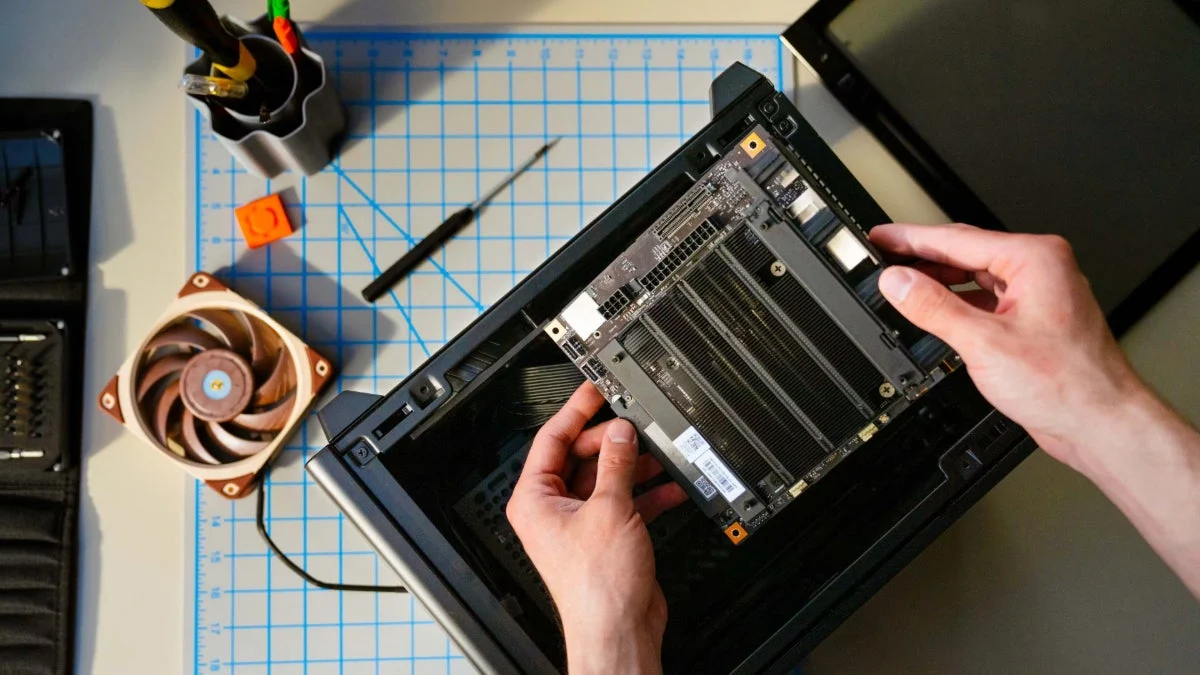
The landscape of artificial intelligence is undergoing a profound architectural transformation. For years, the intelligence powering our digital lives—from creative image generation to complex conversational chatbots—has been tethered to massive, remote data centers. When a user prompts an AI, the request travels to a server farm, undergoes processing, and returns as a result. However, a new paradigm is emerging: the era of "Edge AI," where the heavy lifting is increasingly performed directly on our personal computers and workstations.
This shift is not merely a technical preference; it is a strategic necessity driven by the rise of sophisticated AI agents. Unlike the static chatbots of yesterday, these new autonomous agents can maintain context, navigate multiple software environments, and execute multi-step workflows with minimal human oversight. To support these operations, the hardware beneath our desks is being fundamentally redesigned.
The New Frontier: Why Local Processing Matters
The primary driver of this change is the evolution of AI agents. These systems require significant computational resources, low latency, and high bandwidth. Relying solely on the cloud for every micro-operation introduces bottlenecks that can disrupt the user experience. By offloading a portion of this computational burden to local hardware, developers and enterprises can achieve several critical advantages:
- Privacy and Security: Sensitive corporate or personal data never leaves the local machine, mitigating the risks associated with cloud transmission and third-party data hosting.
- Latency: Real-time decision-making is exponentially faster when the model resides on the local silicon, eliminating the round-trip time to a remote server.
- Cost Efficiency: While cloud computing offers scale, it also entails significant ongoing costs. Running models locally reduces dependency on expensive API calls and cloud subscription models.
- Reliability: Offline capabilities ensure that critical AI-driven workflows remain functional even in environments with unstable internet connectivity.
Chronology of the Shift: From Cloud-Only to Edge-Native
The journey toward local AI began as a niche interest for researchers and developers, but it has quickly moved into the mainstream.
- 2022–2023: The "Generative AI Boom." The world was captivated by cloud-based services like ChatGPT and Midjourney. During this phase, the sheer scale of the Large Language Models (LLMs) made local execution practically impossible for the average consumer.
- Early 2024: The emergence of "quantization." Researchers began developing methods to compress massive models—reducing their memory footprint without significantly sacrificing intelligence. This breakthrough signaled that running AI on consumer-grade hardware was a tangible goal.
- Mid-2024: The "NPU" (Neural Processing Unit) race. Chip manufacturers, including Intel, AMD, and Qualcomm, began integrating dedicated AI hardware directly into their CPUs, setting the stage for the current hardware revolution.
- Late 2026: The present day. With the release of high-performance chips like AMD’s Ryzen AI Max series, the industry has crossed a critical threshold where complex AI models—previously requiring enterprise infrastructure—can now reside within a workstation.
Supporting Data: The Power of the New Silicon
The recent launch of AMD’s Ryzen AI Max and Ryzen AI Max PRO 400 series serves as the definitive proof point for this shift. The specifications are staggering by historical standards for desktop computing.
The flagship Ryzen AI Max+ PRO 495 represents a paradigm shift in portable and desktop computing capability. With support for up to 192 GB of unified memory, these processors are designed to handle models with more than 300 billion parameters. In technical terms, this level of capacity allows for the execution of high-end LLMs directly on the device, provided the models are properly quantized.
To put this in perspective, a 300-billion-parameter model represents a level of sophistication previously reserved for the world’s most powerful server racks. The ability to load these weights into a local machine’s memory transforms the computer from a simple interface into a self-contained AI brain. However, as industry experts caution, performance is not universal. It remains a complex equation of the specific model architecture, the level of quantization, the efficiency of the software stack, and the overall system thermal management.
Industry Adoption: Leading the Charge
The hardware movement is gaining momentum as major OEMs (Original Equipment Manufacturers) integrate these high-performance chips into their product lineups.
HP’s ZBook Ultra G3a
HP has positioned the ZBook Ultra G3a as a premier workstation for AI developers and power users. By incorporating the Ryzen AI Max PRO 400 series and enabling a 192 GB memory configuration, HP is explicitly targeting the market for local AI development, allowing professionals to train, fine-tune, and run complex agents without relying on the cloud.
Framework’s Modular Vision
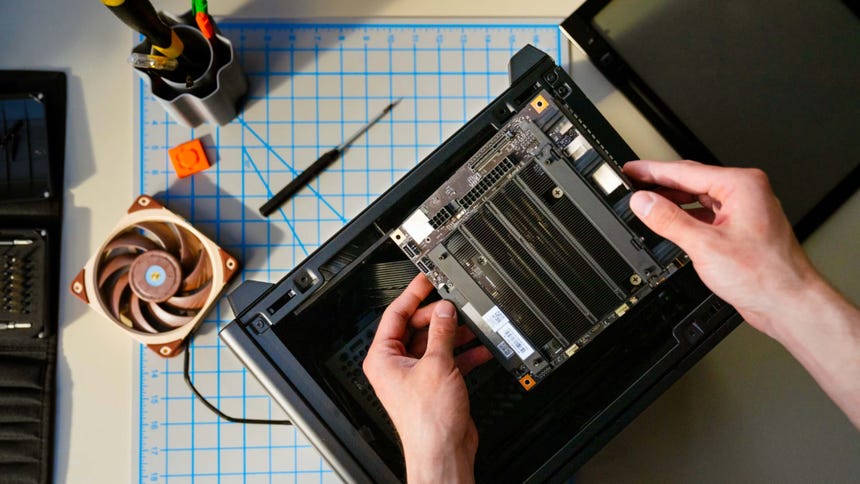
Framework, known for its focus on sustainability and repairability, has introduced its Framework Desktop featuring the Ryzen AI Max series. By offering up to 192 GB of memory in a compact form factor, Framework is democratizing access to high-end AI processing, proving that high-performance, local AI does not necessarily require a bulky, power-hungry tower.
GMKtec and the Miniature Powerhouse
The launch of the GMKtec EVO-X5 Pro, utilizing the Ryzen AI Max+ PRO 495, highlights the drive for extreme efficiency. The company’s claims—that it can run models of hundreds of billions of parameters entirely offline—underscore the incredible density of modern silicon.
Lenovo’s Hybrid Strategy
Lenovo’s ThinkCentre X Ultra represents a more nuanced approach. By focusing on a hybrid model, Lenovo acknowledges that while local processing is the future, the cloud still holds an essential role for massive-scale operations. Their machines are designed to intelligently route tasks: simple, private, or latency-sensitive tasks stay local, while resource-intensive, global-scale queries are pushed to the cloud.
Official Responses and Technical Nuances
Manufacturers are careful to manage expectations. While the raw capability to run massive models exists, they emphasize that "local execution" is not a plug-and-play experience.
"The hardware is now capable, but the software ecosystem is catching up," notes a lead engineer at a major chip manufacturer. "We are moving from a world where we just ‘access’ AI to a world where we ‘host’ AI. This requires developers to optimize their models for specific hardware architectures. Not every model is created equal, and not every workload is optimized for a desktop environment."
The consensus among industry leaders is that the goal is not to eliminate the cloud, but to redefine its purpose. The cloud remains the repository for massive global models that require thousands of GPUs to maintain. However, the "Edge" is becoming the home for personalized, secure, and rapid-response AI.
Implications for the Future
The implications of this transition are far-reaching, affecting everything from software development to consumer privacy.
1. The End of the "Thin Client" Era: For a decade, the industry moved toward thin clients—devices that rely on the internet to do everything. We are now seeing a return to "thick clients," where the local machine is a powerful, autonomous entity.
2. A New Software Paradigm: Software developers are beginning to build applications that are "AI-native." These apps assume the existence of local compute and are designed to function differently than traditional, static software.
3. Data Sovereignty: For industries like law, medicine, and defense, the ability to process data locally is a game-changer. It allows these sectors to embrace the benefits of AI without the regulatory and security hurdles of sending data to a third-party cloud.
4. The Hardware Refresh Cycle: As AI becomes the standard, the definition of a "modern computer" will change. A PC that cannot run local agents will soon be considered obsolete. This will likely trigger a massive upgrade cycle in both the enterprise and consumer markets as users demand hardware capable of handling the next generation of AI agents.
Conclusion
We are witnessing the "decentralization" of intelligence. While the cloud will continue to serve as the backbone for massive data processing, the computer in front of you is rapidly evolving into a sophisticated AI engine in its own right. With manufacturers like AMD providing the raw power, and OEMs like HP, Framework, and Lenovo building the vessels, the barrier between the user and the AI is dissolving. The machine is no longer just a window to the internet—it is becoming the infrastructure itself. As we move forward, the question will no longer be "what can the AI do," but rather "what can I run on my own machine." This shift marks the dawn of a more personal, secure, and capable era of human-computer interaction.