Introduction: A Vital Link Reborn
In the heart of Lima’s sprawling outskirts, the collapse of critical infrastructure often translates into more than just a logistical headache; it becomes a fundamental threat to the quality of life, economic stability, and safety of thousands. Such was the case with the Tambo Inga Bridge, a crossing that served as a lifeline for the communities of Manchay and the surrounding sectors of Pachacámac for over half a century. Following its collapse in April 2024, the region faced a period of isolation that disrupted the daily lives of residents and businesses alike.
Today, after months of bureaucratic coordination and persistent advocacy, the Municipal District of Pachacámac, in strategic alliance with EMAPE (Municipal Company of Toll Roads) and Provías Nacional, has commenced the comprehensive reconstruction of this vital link. This project is not merely a repair; it represents a commitment to modernizing the area’s infrastructure, ensuring that residents of one of Lima’s most populous and vibrant districts can finally regain the connectivity they deserve.
The Chronology of a Crisis
The decline of the Tambo Inga Bridge was not an overnight occurrence, but rather a slow-moving crisis exacerbated by extreme weather events that have increasingly challenged Peru’s infrastructure.
The Impact of "Yaku"
The bridge, which had served the community faithfully for over 50 years, began to show critical signs of structural fatigue. However, the turning point occurred in 2023 with the arrival of the Yaku Cyclone. The torrential rains and subsequent huaicos (debris flows) triggered by this phenomenon placed unprecedented stress on the bridge’s foundations. The hydrological pressure and the accumulation of sediment weakened the structure, rendering it increasingly unstable.
The Collapse: April 2024
Despite ongoing concerns from local leaders and residents, the structural integrity of the bridge reached a breaking point. On April 26, 2024, the bridge suffered a final, catastrophic failure, effectively severing the connection between Manchay and the rest of the district. This collapse forced thousands of commuters, students, and workers to seek precarious alternative routes, increasing travel times and creating significant risks for those navigating the damaged terrain.

The Path to Reconstruction
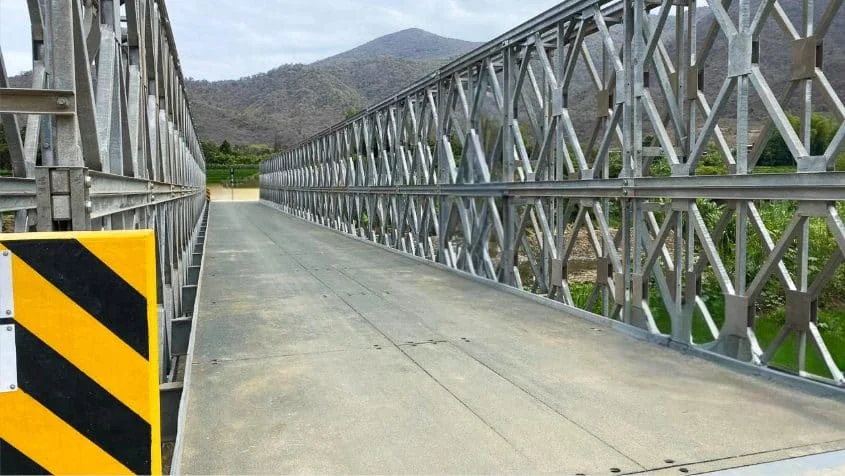
In the immediate aftermath, the Mayor of Pachacámac initiated a series of urgent negotiations with national entities to secure the resources necessary for a replacement. Recognizing the gravity of the humanitarian and economic impact, Provías Nacional intervened, allocating ACROW 700 modular metallic bridge structures to the project. This transfer of assets, valued at approximately S/ 32,044.25, marked the beginning of the end of the region’s isolation.
Technical Specifications and Project Scope
The project, which is currently underway, is designed to be completed within a 16-day calendar window—a testament to the urgency of the situation and the efficiency of modern modular construction techniques.
Modern Engineering for Safety
The new Tambo Inga Bridge is engineered to meet contemporary standards of durability and safety. Key technical details include:
- Modular Design: Utilizing the ACROW 700 system, the bridge is highly resistant to environmental stressors and allows for rapid assembly.
- Capacity: The new structure is rated for a weight capacity of 20 tons, allowing for the safe passage of both passenger vehicles and light commercial trucks, which are vital for the local economy.
- Dimensions: With a total length of 12.40 meters and a width of 3.40 meters, the bridge is optimized to manage the flow of traffic while providing dedicated space for pedestrians, addressing long-standing concerns regarding foot-traffic safety.
Socioeconomic Implications: Who Benefits?
The impact of the Tambo Inga Bridge extends far beyond the immediate residents of Tambo Inga. The bridge acts as a primary artery for several interconnected communities.
Beneficiary Demographics
The primary beneficiaries are the residents of Manchay and Tambo Inga, sectors that have seen rapid population growth over the last two decades. The project is expected to positively impact approximately 9,000 residents in the immediate vicinity. When considering the broader connectivity with neighboring Cieneguilla and the wider Pachacámac district, the total number of people whose daily lives will be improved exceeds 15,000.

Economic and Social Stabilization
For these communities, the bridge is an economic engine. It facilitates:
- Access to Essential Services: Many residents in these areas travel to central Pachacámac or other parts of Lima for healthcare, education, and administrative services. A restored bridge significantly reduces the travel time to clinics and schools.
- Local Commerce: Local businesses in Manchay rely on the flow of customers and goods. The bridge collapse stunted economic activity, as logistics became costly and unpredictable. Its restoration is expected to catalyze a recovery for small businesses in the area.
- Enhanced Safety: Perhaps most importantly, the new bridge replaces a structure that was, by the end of its life, a hazard. The inclusion of pedestrian-friendly design ensures that students and the elderly can cross the gap safely, mitigating the risks previously associated with traversing the riverbed or damaged paths.
Official Responses and Administrative Challenges
While the project is currently moving forward, the road to reconstruction has been marked by scrutiny and administrative oversight. The complexity of managing public works in Peru often involves navigating the watchful eye of the Comptroller General’s Office (Contraloría).
Recent reports from the Contraloría have highlighted the importance of transparency and accountability in the execution of road works. In the case of the Tambo Inga Bridge, the collaboration between municipal and national authorities is being closely monitored to ensure that the allocated funds—and the valuable metallic components provided by Provías—are utilized with the highest degree of efficiency and integrity.
The local government has emphasized that this project is a top priority, stating that the coordination with EMAPE and Provías Nacional is proof that inter-institutional cooperation can overcome the bottlenecks that typically delay public works. By leveraging existing modular stock, the municipality has bypassed the lengthy procurement processes that often hinder infrastructure delivery, providing a model that could be replicated in other districts facing similar emergency infrastructure needs.
Looking Ahead: The Future of Pachacámac’s Connectivity
The reconstruction of the Tambo Inga Bridge is a microcosm of a larger challenge facing Peru’s urban periphery: the need for resilient infrastructure capable of withstanding the changing climate. As extreme weather events become more frequent, the transition from traditional, aging bridges to modular, rapidly deployable systems may become the new standard for local governments.

Strengthening Resilience
The focus now is not just on finishing the 16-day construction phase, but on ensuring long-term maintenance. The municipal authorities have committed to a monitoring program to ensure that the bridge’s foundations remain secure against future rainfall. This proactive stance is essential to prevent a repeat of the 2024 collapse.
Community Expectations
For the people of Manchay and surrounding areas, the bridge is more than just steel and asphalt; it is a symbol of their inclusion in the broader urban landscape of Lima. The successful completion of this project will restore a sense of normalcy and provide a foundation for future development. As the scaffolding comes down and the bridge opens to traffic, it will serve as a reminder that with focused leadership and effective inter-agency coordination, the challenges of infrastructure degradation can be met head-on.
Conclusion
The story of the Tambo Inga Bridge is one of resilience. From the collapse in April 2024, which left thousands in a state of uncertainty, to the current, rapid reconstruction efforts, the project underscores the vital importance of maintaining the physical connections that hold our communities together.
As the project nears completion, the focus shifts to the benefits of restored mobility: safer commutes for workers, easier access to schools for children, and a much-needed boost for local commerce. The collaboration between the Municipality of Pachacámac, EMAPE, and Provías Nacional sets a positive precedent for public management, proving that when the focus remains on the needs of the citizen, progress is possible even in the wake of disaster. The residents of Pachacámac are now on the verge of a new chapter of connectivity, one built on a sturdier, more reliable foundation than ever before.