Introduction: A Clash of Constitutional Powers
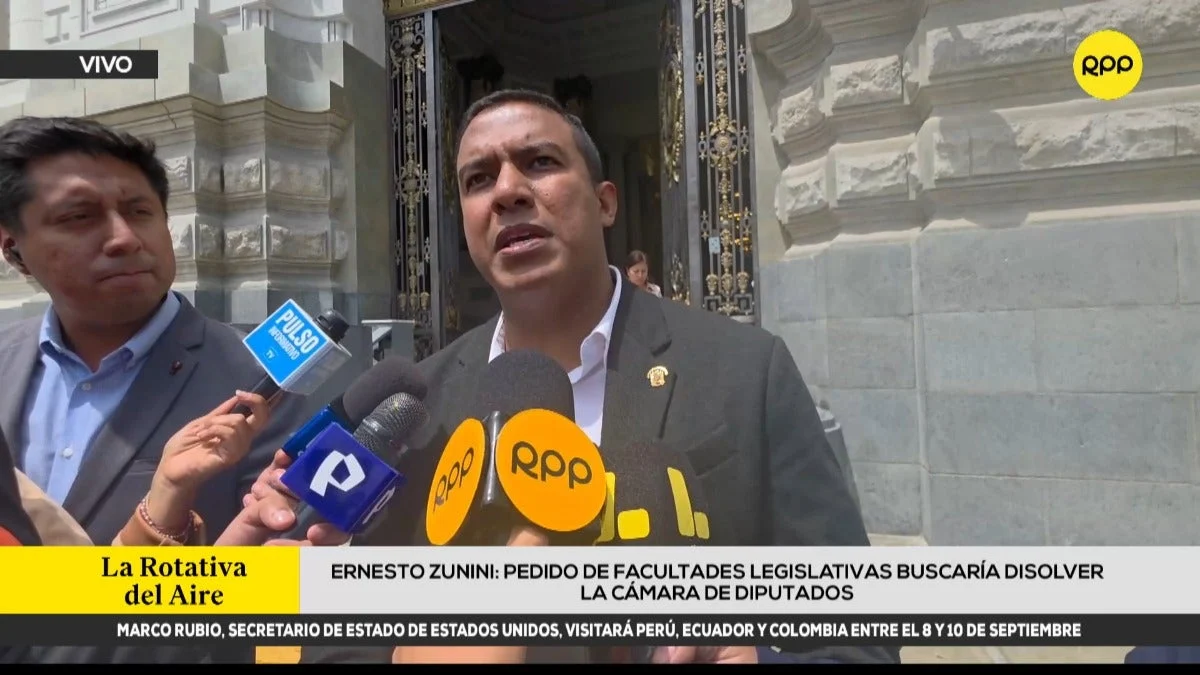
The political landscape in Peru has reached a critical juncture as the legislative and executive branches lock horns over a sweeping request for delegated legislative powers. Ernesto Zunini, a prominent spokesperson and deputy for the political bloc Juntos por el Perú, has confirmed that his party will engage in formal dialogue with the President of the Council of Ministers, Luis Galarreta. However, this willingness to participate in talks is overshadowed by deep-seated suspicions regarding the nature and scope of the government’s recent legislative agenda.
At the heart of the conflict is a request by the executive branch for 66 distinct legislative faculties. While the government argues that these powers are necessary for administrative efficiency and economic reform, Zunini and his colleagues view the move as a dangerous overreach that threatens the fundamental role of the Chamber of Deputies.
The Core Controversy: 66 Requests for Power
The executive branch’s formal request to delegate legislative authority has sparked a firestorm of debate within the halls of Congress. Critics, led by Zunini, argue that the sheer volume of the request—66 separate items—is unprecedented and suggests a strategy to bypass legislative oversight entirely.
Zunini’s critique is sharp and direct. He posits that the government, led by figures associated with the Fujimori faction, is attempting to consolidate power under the guise of bureaucratic necessity. "If we grant all these faculties to Mrs. Fujimori, I bet you that within a month, not a single meaningful project will be presented," Zunini stated during a press conference. He characterized the move as an "encubierto" (covert) attempt to neutralize the Chamber of Deputies, effectively stripping it of its constitutional duty to debate, amend, and approve legislation.
Chronology of the Legislative Standoff
To understand the gravity of the current impasse, it is essential to look at the timeline of events leading up to this confrontation:
- Initial Proposal: The executive branch signaled its intent to seek sweeping legislative faculties, citing the need for rapid economic restructuring and administrative deregulation.
- The Formal Request: Following initial discussions, the government formally submitted the request for 66 specific legislative areas to be delegated to the executive branch.
- Public Pressure: Keiko Fujimori, a key political influencer and proponent of the current government’s agenda, publicly urged the Congress to accelerate the analysis and approval of the request, citing the urgency of national recovery.
- Congressional Pushback: Juntos por el Perú and other opposition factions began questioning the legitimacy of these requests, highlighting the potential for misuse.
- The Invitation: On the Tuesday prior to the latest developments, Prime Minister Luis Galarreta issued a formal invitation to party leaders to discuss the proposal, aiming to build consensus and neutralize the growing public skepticism.
- The Confirmation: Ernesto Zunini confirmed that Juntos por el Perú would accept the invitation to meet with Galarreta, though he maintained that the party remains highly skeptical of the executive’s true intentions.
Supporting Data: The Argument Against Deregulation
Beyond the institutional concerns, Juntos por el Perú has raised specific objections to the content of the proposed legislative changes. Zunini highlighted a particular concern regarding the potential for predatory economic policies.
"They are asking for the power to act as if these matters were urgent," Zunini noted. "For instance, they want the power to eliminate caps on bank interest rates under the guise of ‘promoting competition,’ but in reality, it is a move toward institutionalized usury."
This argument touches on a broader socio-economic anxiety. By delegating the authority to modify interest rates and financial regulations, the executive branch could potentially bypass public hearings and expert testimony, favoring financial institutions over the interests of the average Peruvian citizen. Zunini’s party argues that such significant changes to the nation’s economic framework require the transparent, multi-party scrutiny that only the Chamber of Deputies can provide.
Official Responses and Political Maneuvering
The executive branch, represented by Prime Minister Luis Galarreta, maintains that the delegation of faculties is a standard constitutional practice intended to streamline governance. In a recent statement, the administration underscored that the requested powers are focused on simplifying bureaucratic procedures, improving tax efficiency, and fostering private investment—all of which are described as vital to the nation’s economic health.
However, the opposition is not buying the narrative of efficiency. The political discourse has shifted toward the constitutional prerogative of the Congress. Zunini and his bloc emphasize that the legislative power is the bedrock of democracy. "The constitutional prerogative is ours," Zunini stated. "We cannot be asked to hand over our duties as if the Chamber of Deputies were a mere rubber stamp for the Executive."
Furthermore, Juntos por el Perú has recently escalated its friction with the administration by filing a constitutional complaint against the Ombudsman. This move, linked to the Ombudsman’s controversial statements regarding the potential dissolution of Congress, highlights the high-stakes environment in which these negotiations are taking place. The party is clearly positioning itself as the primary defender of institutional integrity against what it perceives as an executive power grab.
Implications for the Future of Peruvian Governance
The standoff between the Chamber of Deputies and the executive branch carries significant implications for the future of the Peruvian political system.
1. The Erosion of Checks and Balances
If the 66 requests are granted in full, the balance of power in Peru could shift decisively toward the executive. Critics fear that this would set a dangerous precedent, where future administrations could leverage "urgent" legislative requests to consolidate power and effectively sideline the legislative branch for months or even years at a time.
2. Economic Policy Volatility
The concern regarding interest rate caps and financial regulation suggests that the delegation of powers could lead to rapid, unilateral changes in economic policy. Without the tempering effect of legislative debate, these policies may lack the broad-based consensus necessary for long-term stability, potentially triggering market uncertainty and public backlash.
3. The Threat of Institutional Collapse
The language used by Zunini—specifically the phrase "attempt to dissolve the Chamber of Deputies"—reflects the extreme level of mistrust in the current political environment. If the executive continues to press for rapid approval without addressing the concerns of the opposition, the country could face a period of intense political instability, potentially leading to protests, judicial interventions, or even a constitutional crisis.
Conclusion: A Delicate Path Ahead
As the meeting between Juntos por el Perú and Prime Minister Luis Galarreta approaches, the nation watches with bated breath. The outcome of this dialogue will likely determine the legislative trajectory for the remainder of the government’s term.
Will the executive branch be willing to trim its request to focus on truly urgent matters, or will it push forward with the full 66-point agenda? For Zunini and his party, the priority remains clear: they will not sacrifice the constitutional authority of the Chamber of Deputies for the sake of political expediency. As the political chess match continues, the survival of democratic norms in Peru remains the ultimate, albeit unspoken, item on the agenda.
The coming weeks will prove decisive. Whether the executive and the legislature can find common ground or continue on a path toward collision will depend on the transparency of the upcoming meetings and the willingness of both sides to prioritize the stability of the state over the pursuit of unchecked power. For now, the only certainty is that the debate over the 66 faculties is far from over.