Following a period of marked optimism that defined the early stages of the new administration, the Peruvian business landscape is showing signs of a recalibration. According to the latest survey from the Central Reserve Bank of Peru (BCRP), the exuberance observed in July—when business confidence surpassed the 70-point threshold—has moderated. While the corporate sector remains within the "optimistic" territory, the cooling of expectations reflects a growing awareness of the structural challenges and external risks facing the national economy.
The State of Play: From Post-Election Peak to August Moderation
The narrative of the Peruvian economy in the third quarter of this year has been one of two distinct speeds: current performance versus future outlook. In the immediate aftermath of the inauguration of President Keiko Fujimori, business leaders expressed an overwhelming sense of relief and optimism, driving key confidence indicators to heights not seen in years.
However, as the dust has settled and the realities of governance have taken hold, the BCRP data reveals a softening in sentiment. While businesses continue to report robust figures regarding their current operations—notably in production volumes, sales, and order books—the forward-looking metrics have retreated.

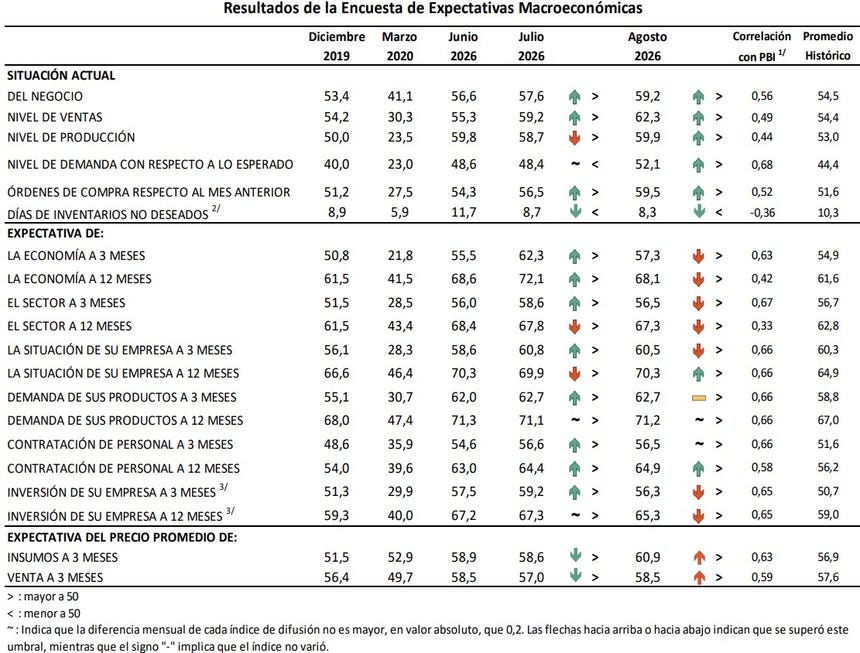
The index tracking the economy’s performance at a three-month horizon fell from 62.3 points in July to 57.3 points in August. Despite this decline, it is crucial to note that the index remains above the 50-point mark, the psychological boundary that separates optimistic projections from pessimistic ones. This suggests that while the initial "honeymoon" phase has ended, the private sector is not anticipating a contraction, but rather a more measured pace of growth.
Chronology of Confidence: The July Surge and the August Correction
To understand the current economic climate, one must look at the trajectory of the last three months.
- June: Following the electoral results, the business sector displayed a significant rebound, with expectations regarding the national economy surging as market participants reacted to the promise of stability.
- July: This month represented the zenith of the post-election "high." Confidence reached its peak, with sentiment indicators breaking through the 70-point barrier. The consensus was one of rapid recovery and a favorable investment environment.
- August: The current reporting period shows a definitive "cool-down." While the indicators for current business health (such as sales and production) actually improved—with the sales index climbing from 59.2 to 62.3 points—the expectations for the near future (three months out) declined.
This divergence is critical: businesses are doing well today, but they are becoming increasingly cautious about what the next 90 days hold.

Supporting Data: Investment Trends and Cost Pressures
The BCRP’s report provides a detailed look into why business leaders are tempering their enthusiasm. The most significant shift is found in investment expectations.
Investment Outlook
Expectations for investment at the three-month horizon dipped from 59.2 to 56.3 points. Similarly, the 12-month outlook saw a decrease from 67.3 to 65.3 points. While these numbers remain positive, the trend toward caution is clear. However, economists suggest this should not be interpreted as a cessation of private investment.
Juan Carlos Odar, a noted economist, points out that the expansion phase is still underway, as evidenced by the steady importation of capital goods. He expects that the second half of the year will see increased dynamism in public investment, particularly as the government accelerates infrastructure projects and disaster prevention measures that were neglected in the first half of the year.
The Inflationary Pressure Cooker
A primary driver of the cooling sentiment is the rising cost of operations. The expectation regarding the price of inputs—raw materials, fuel, electricity, and transportation—rose from 58.6 in July to 60.9 in August.
When businesses anticipate higher input costs, they are forced to pass these expenses on to the consumer. Consequently, the index for projected sales prices rose from 57 to 58.5 points. Economists are now warning that inflation, already hovering around 4%, could edge closer to 5% by the end of the year, driven by both domestic supply chain disruptions and global energy price volatility, particularly concerning oil.
Expert Perspectives: The Dual Challenge of El Niño and Security
The shift in sentiment is not merely a reaction to macroeconomic numbers but is heavily influenced by two looming "flagships" of concern: the potential impact of the El Niño phenomenon and the persistent issue of national insecurity.

The "El Niño" Factor
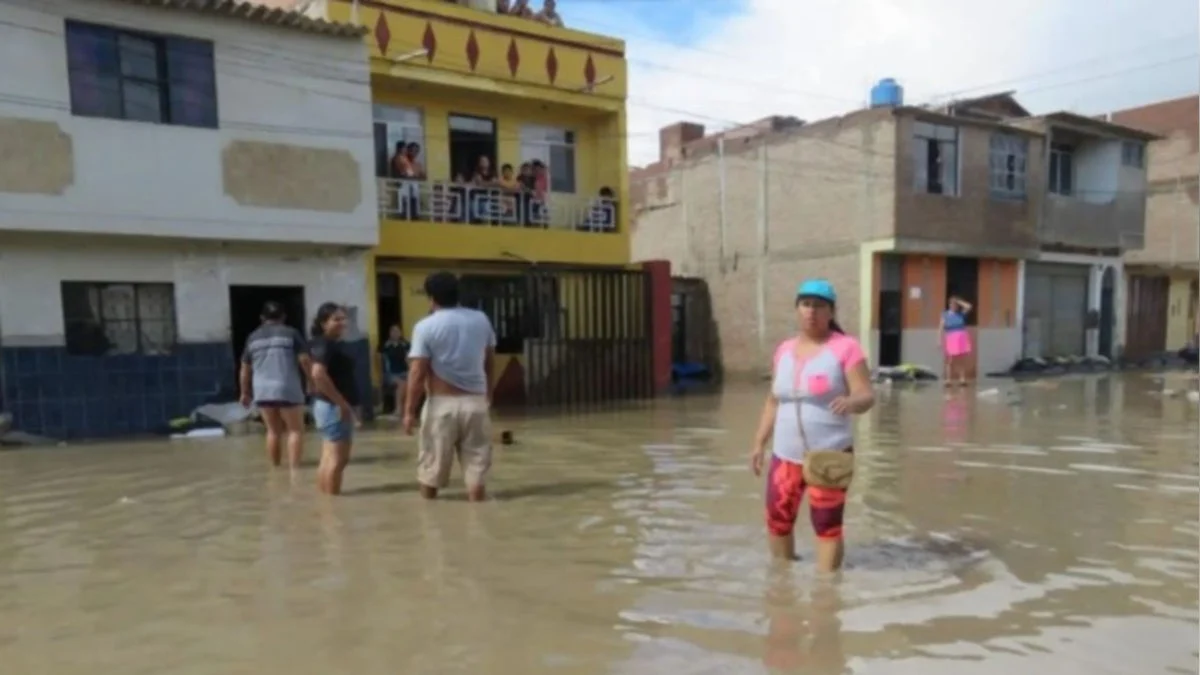
Economist Juan José Marthans emphasizes that El Niño is the primary threat to the stability of the Peruvian supply chain. "A single obstruction in a critical artery like the Pan-American Highway can lead to the loss of harvests, production, and wealth," Marthans noted. He argues that while the country is better prepared than it was during the 1983 crisis, the logistical risks remain a significant drag on the economy.
The Need for Political Consensus
Beyond natural phenomena, the business community is watching the government’s ability to handle the "tremendous liabilities" left behind by previous administrations. There is a palpable need for a unified approach between the Executive and the Congress.
"The productive sector is watching the delegation of powers with great attention," says Marthans. The ability to enact a robust regulatory framework that addresses both public safety and infrastructure resiliency will be the true test for the current administration in the coming months.

Implications: A Period of "Wait and See"
The current economic landscape can be best described as a phase of strategic transition. The initial exuberance of the post-election period has given way to a more pragmatic approach.
Key Implications:
- Projected Growth: While growth is expected to continue, it may be more moderate than the initial market expectations of July.
- Investment Strategy: Companies are not stopping their projects, but they are increasingly selective. Future investment decisions will likely depend on the government’s ability to demonstrate efficiency in managing the upcoming climatic and security challenges.
- Inflationary Risks: The pressure on input prices suggests that consumers will continue to face higher costs for goods and services in the short-to-medium term.
- The Political Variable: The relationship between the Executive and Legislative branches will serve as the primary barometer for business confidence. If the government can demonstrate a capacity to execute projects effectively and provide a secure environment, the "caution" currently observed may transition back into sustainable growth.
In conclusion, the Peruvian business sector remains resilient and fundamentally optimistic, but it is no longer viewing the future through rose-colored glasses. The next few months will be decisive. If the government can effectively mitigate the risks posed by El Niño and deliver on the promise of improved security and administrative efficiency, the current decline in expectations may prove to be nothing more than a temporary, healthy correction. However, should these challenges overwhelm the current administrative capacity, the "cautious optimism" could easily erode further, posing a challenge for the remainder of the fiscal year.