Executive Summary: A Conflict of Empathy and Governance
The political landscape in Peru faced a brief but intense period of turbulence this week following remarks made by the Minister of Economy and Finance (MEF), Elmer Cuba, regarding the severe weather conditions affecting Lima. As residents in districts such as Villa El Salvador grappled with the aftermath of unusual lloviznas (drizzles) and subsequent flooding, Minister Cuba’s dismissive tone—suggesting that “it rains all over the planet” and urging the public not to “despair”—ignited a firestorm of criticism.
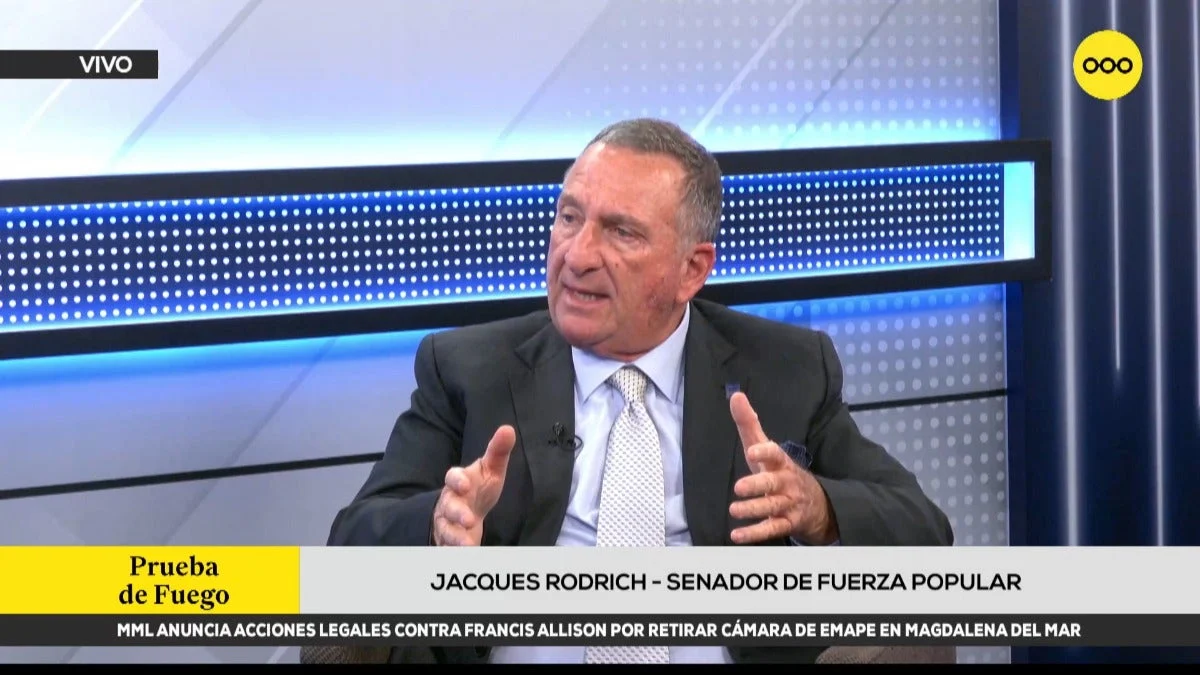
Jacques Rodrich, a senator representing the Fuerza Popular party, took center stage to condemn the Minister’s lack of empathy, describing the comments as “profoundly ill-advised.” While the situation highlighted the delicate balance between technical governance and public perception, it also served as a litmus test for the administration of President Keiko Fujimori, who intervened to ensure the Minister issued a formal apology.
Chronology: From Offhand Remark to Public Apology
The controversy unfolded in a rapid sequence of events that highlighted the volatility of communication in the current administration:
- Initial Incident: During a national media interview, Minister Elmer Cuba was questioned about the emergency response efforts in the southern districts of Lima. In an attempt to contextualize the meteorological event, Cuba remarked, “In the entire planet there is rain; let us not despair.” The comment was widely perceived by the public and political analysts as a minimization of the structural challenges and suffering experienced by those living in vulnerable areas.
- The Backlash: Social media platforms and local community leaders in Villa El Salvador immediately denounced the remarks, characterizing them as an example of a technocratic elite disconnected from the realities of the working class.
- The Presidential Intervention: Sensing the growing political liability, President Keiko Fujimori reportedly intervened, effectively “setting the record straight” and demanding that the Minister clarify his position.
- Formal Apology: Hours after the initial outburst, Minister Cuba appeared on RPP to retract his statements, defining them as an “unhappy” and colloquial expression that did not reflect his true sentiment toward affected compatriots.
The Political Critique: Senator Rodrich’s Perspective
In an exclusive interview on the RPP TV program Prueba de Fuego, Senator Jacques Rodrich provided a nuanced analysis of the situation. While he did not shy away from criticizing the Minister’s tone, he was careful to distinguish between a single “ill-advised phrase” and the Minister’s broader professional character.
A Test of Executive Leadership
Rodrich emphasized that President Fujimori’s ability to correct her cabinet members is a sign of a maturing administration. “The President puts an indolent minister in his place when necessary,” Rodrich noted. However, he clarified that in his professional opinion, Elmer Cuba is not fundamentally an “indolent” individual, but rather someone who failed to grasp the emotional weight of the crisis during a high-pressure interview.
According to Rodrich, the administration is currently undergoing a systemic transition. “One thing is to be the opposition for many years; it is entirely different to be the government. You have to change your entire chip,” the Senator remarked, highlighting the steep learning curve faced by the Fuerza Popular leadership as they move from the legislative halls to the Executive Palace.
The Structural Challenge: Delegated Legislative Faculties
Beyond the immediate controversy of the weather crisis, the administration is currently navigating a complex legislative bottleneck regarding the delegation of faculties. Minister Cuba’s remarks were made against a backdrop of intense negotiations between the Executive branch and the legislature regarding the scope of these powers.
The “Time Bombs” Left Behind
Senator Rodrich argued that the perceived delays in presenting the request for legislative faculties are not a sign of administrative lethargy, but rather a reaction to the “landmines” left by previous administrations.
“There are too many time bombs that were left behind; we must deactivate them,” Rodrich explained. He further noted that the Executive’s scope is limited by practical and political constraints. “We cannot delegate everything. We would have loved to reduce the number of ministries, but we must be pragmatic about what can be achieved within the current legal and social framework.”
This perspective suggests that the administration views its current governing strategy as one of “de-mining” the state apparatus, a process that requires both technical precision and political consensus—two elements that were noticeably absent in the Minister’s earlier remarks.
Supporting Data: The Vulnerability of Lima’s South
The reaction to Minister Cuba’s comments is grounded in the objective reality of Lima’s infrastructure. Villa El Salvador, a district characterized by high population density and significant gaps in basic utility services, is particularly susceptible to damage from atmospheric events.
- Urban Vulnerability: Much of the infrastructure in the southern cone of Lima was not designed to withstand frequent precipitation. When “lloviznas” turn into prolonged downpours, the lack of adequate drainage leads to “aniegos” (flooding), which can cause catastrophic damage to the foundations of informal housing.
- Economic Impact: For small business owners and informal workers in these districts, a period of sustained rain often means a complete cessation of economic activity. When a high-ranking official like the Minister of Economy minimizes these events, it is viewed as an affront to the economic stability of the most vulnerable families.
- The DANA Phenomenon: The Minister’s apology made reference to the “DANA” (Depresión Aislada en Niveles Altos), a meteorological phenomenon causing the current instability. Meteorologists have confirmed that the unusual cold front and precipitation are indeed atypical for the region, which adds weight to the argument that local authorities should have been better prepared for climate-driven volatility.
Official Responses and Public Sentiment
The Minister’s apology, delivered in an attempt to pacify the public, was specific and direct: “I have never referred to what has been happening since last night with this DANA in that way. Under no circumstances does it express my sentiment toward my compatriots. If anyone has felt offended, I offer a thousand apologies.”
However, the political implications remain. Critics argue that the incident exposes a recurring issue within the current cabinet: a tendency to view social crises through a strictly economic lens, often ignoring the human dimension.
Implications for the Future
The incident serves as a significant case study for the current government. As the administration continues to seek legislative faculties, they must contend with the following:
- Communication Strategy: The government must bridge the gap between technical expertise and public empathy. A failure to do so will likely result in continued friction with the electorate.
- Cabinet Cohesion: President Fujimori’s role as the final arbiter of tone and policy is becoming increasingly vital. The expectation now is that the President will exercise greater control over her ministers’ public appearances to prevent future gaffes.
- Policy Implementation: The focus on “deactivating time bombs” suggests that the government intends to pursue a reformist agenda. Whether this agenda can be reconciled with the needs of the population during sudden crises will be the ultimate measure of their success.
Conclusion: A Lesson in Governance
The episode involving Minister Elmer Cuba and Senator Jacques Rodrich illustrates the fragile equilibrium of modern Peruvian politics. While the Senator’s defense of the Minister’s general competence provides some breathing room for the administration, the public outcry serves as a stern reminder that, in the eyes of the citizenry, empathy is not a luxury—it is a requirement for leadership.
As the government moves forward with its legislative agenda, it will need to balance the cold reality of economic data with the warm necessity of political sensitivity. The “climate crisis” in Lima has, for the moment, subsided, but the political climate remains as volatile as ever. The administration’s ability to learn from this experience will likely determine its capacity to govern effectively during the challenging months ahead.