Lima, Peru – The state-owned oil giant Petroperú is once again under intense scrutiny, this time facing a significant economic setback of US$396,135 due to a critical lapse in diligence and coordination among its officials during the procurement of a crucial crude oil shipment. The findings, detailed in a damning report by the Contraloría General de la República (General Comptroller’s Office), highlight systemic failures in operational oversight and administrative processes, exacerbating Petroperú’s already precarious financial situation.
The audit, officially designated as Report N° 011-2026-2-0084-AC, meticulously examined events that transpired between November 2023 and December 2024. The focus of the investigation was the acquisition of 361,798.79 barrels of Oriente crude from Ecuador, intended for the vital Talara Refinery. The transaction, valued at US$32.49 million, was meant to bolster the refinery’s operations, with delivery scheduled for the ports of Bayóvar and Talara. However, a cascade of administrative missteps and a failure to adhere to contractual obligations led to substantial financial penalties and further eroded investor and public confidence in the company.
The Genesis of the Deficit: A Breakdown in Letter of Credit Procedures
At the heart of the economic loss lies a fundamental failure in managing the letter of credit, a financial instrument essential for guaranteeing international trade transactions. The contract stipulated that this document must be irrevocable, confirmed, and received by the seller’s bank no later than five business days prior to the commencement of the crude oil delivery window. This crucial deadline was missed due to a lack of timely action by Petroperú’s Contract Administration Department.
Compounding this oversight, the department also failed to implement the contractually mandated calculation methodology for the letter of credit amount. This resulted in an initial, insufficient, and incorrect application for a letter of credit valued at US$29 million. The correct amount, based on the contract’s provisions for the maximum estimated value of the cargo, should have been US$31 million.
Further Complications: The Role of the Financial Markets Unit
The situation was further aggravated by the inaction and delayed response from Petroperú’s Financial Markets Unit. This unit was responsible for initiating the quotation process for the letter of credit. Evidence suggests that the unit also experienced delays in commencing this crucial step. When the necessity to increase the guarantee amount became apparent, the unit failed to proactively seek a revised quotation from the Banco de la Nación (National Bank). This inaction allowed the procurement process to continue based on the outdated and insufficient US$29 million figure, necessitating further administrative reprocessing and contributing to the overall delay.

The Tangible Consequences: Penalties and Operational Stoppages
The administrative and procedural failures culminated in significant financial repercussions for Petroperú. The most immediate and quantifiable consequence was the imposition of demurrage penalties paid to the international supplier. These penalties arose directly from the extended delays in the unloading of the crude oil shipment at both the Bayóvar and Talara ports. The report indicates that the unloading process was prolonged by up to 13 days beyond the agreed-upon timeframe.
The Contraloría’s audit unequivocally concluded that the economic loss is not only substantiated but also precisely quantified. Furthermore, the report establishes a direct causal link between this financial damage and the observed breaches of contractual obligations by Petroperú officials. This finding underscores the severity of the mismanagement and its direct impact on the company’s bottom line.
Accountability and Recommendations: A Call for Internal Action
Beyond the financial implications, the Contraloría’s report also points to potential civil and administrative liabilities for six Petroperú officials and employees involved in the transaction. The regulatory body has formally recommended that the President of Petroperú’s Board of Directors initiate the necessary actions to determine and assign the appropriate responsibilities.
In parallel, the Contraloría has urged its own Public Prosecutor’s Office to commence civil legal proceedings against the individuals implicated in these procedural and administrative failures. This dual approach aims to ensure both internal accountability within Petroperú and external legal recourse to recover any potential damages or to hold individuals responsible for their actions.
Petroperú’s Troubled Landscape: A Broader Context of Financial Distress
This latest procurement scandal unfolds against a backdrop of significant financial challenges and operational inefficiencies plaguing Petroperú. The company’s accumulated debt is staggering, exceeding US$7,900 million, a figure that has raised alarm bells among economic analysts and government officials. In an attempt to address this dire situation, the Peruvian government recently appointed a new board of directors with the explicit mandate to steer the company towards financial recovery.

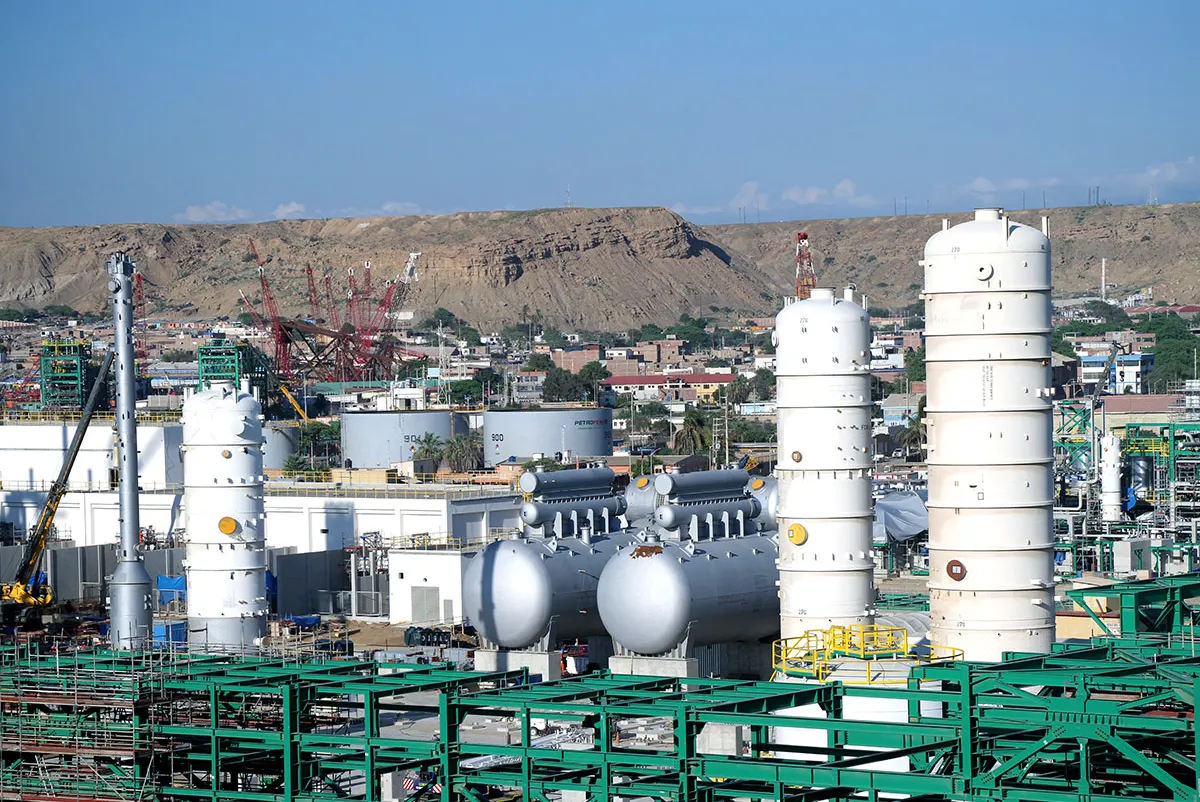
The Minister of Energy and Mines, Guillermo Shinno, has publicly acknowledged the critical state of the Talara Refinery, which is reportedly operating at a mere 63% of its installed capacity. He further conceded that substantial additional investments are required to achieve the refinery’s optimal operational targets. This operational deficit, coupled with the financial strain, paints a grim picture of the company’s current standing.
Adding to Petroperú’s woes, the company recently lost an arbitration case against the Consorcio de Terminales del Perú. This legal defeat mandates Petroperú to pay over US$1.5 million to the consortium, further draining its already depleted financial resources.
The Herculean Task Ahead for the New Leadership
The newly appointed leadership team at Petroperú, headed by Oliver Stark, faces a daunting and multifaceted challenge. Their immediate priorities will involve not only addressing the overwhelming debt burden and improving the operational efficiency of the Talara Refinery but also navigating the persistent stream of arbitration losses and the continuous findings of irregularities by the Contraloría.
The critical question looming over Petroperú and the Peruvian government is whether this new management team possesses the capacity and the strategic vision to instill order and implement necessary reforms before the company succumbs to its mounting liabilities and operational shortcomings. The effectiveness of their tenure will be closely watched, as the stability and future of Peru’s national oil company hang in the balance. The recent procurement blunder serves as a stark reminder of the deep-seated issues that require urgent and decisive action. The path to recovery will undoubtedly be arduous, demanding transparency, accountability, and a fundamental shift in operational and administrative practices.