By ProActivo Editorial Team
In a landmark event marking 15 years of humanitarian dedication, the Embassy of Australia in Peru hosted an institutional summit to reflect on the legacy of its Direct Aid Program (DAP). The gathering served as a crucible for discussing the future of international cooperation, emphasizing a paradigm shift from traditional aid models toward a sophisticated, multi-actor ecosystem that bridges the gap between state policy, corporate social responsibility, and grassroots community action.
The Genesis and Evolution of the Direct Aid Program (DAP)
The Direct Aid Program is not merely a funding mechanism; it is an expression of Australia’s commitment to localized, high-impact development. Over the last decade and a half, the embassy has acted as a catalyst for over 110 community-led projects across Peru and Bolivia. These initiatives have tackled critical challenges ranging from emergency disaster relief to the socio-economic empowerment of women and the urgent necessity of climate change mitigation.
During the opening session, Australian Ambassador to Peru, James Yeomans, underscored that the strength of the DAP lies in its "human-centric" philosophy. "DAP is a history of people, of communities, of values, and of ideas; it is not simply a program where one fills out a form," Yeomans stated.
The Ambassador emphasized that the embassy’s role is one of support rather than control. By prioritizing local leadership and community-driven solutions, the DAP ensures that the sustainability of these projects rests firmly with the beneficiaries themselves. "The Embassy of Australia only supports, because it is the community itself that achieves the results," he noted, highlighting that trust is the currency of true development.
Chronology of Influence: 15 Years of Grassroots Transformation
The history of the DAP in the Andean region is defined by its adaptability. While the program began with localized, small-scale grants, it has evolved into a strategic partner for regional development.
- 2011–2015: Building Foundations. The early years of the program focused on immediate needs, primarily in rural infrastructure, basic sanitation, and community education in underserved regions of the Peruvian highlands.
- 2016–2020: The Pivot to Empowerment. Recognizing that sustainable development requires gender equity, the DAP shifted its focus to support female entrepreneurship. This era saw the launch of numerous programs providing technical training and market access to women-led cooperatives.
- 2021–2026: Crisis Response and Structural Resilience. The global health crisis and an increase in natural disasters forced a re-evaluation of cooperation. The program pivoted toward strengthening local health resilience and climate adaptation, proving that small-scale, flexible funding could act as a "first responder" in times of systemic shock.
Bridging the Gap: The MIDIS Perspective on Modern Cooperation
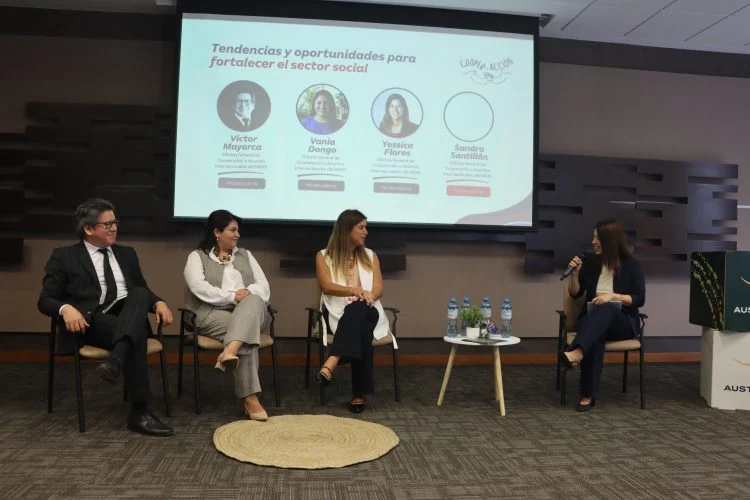
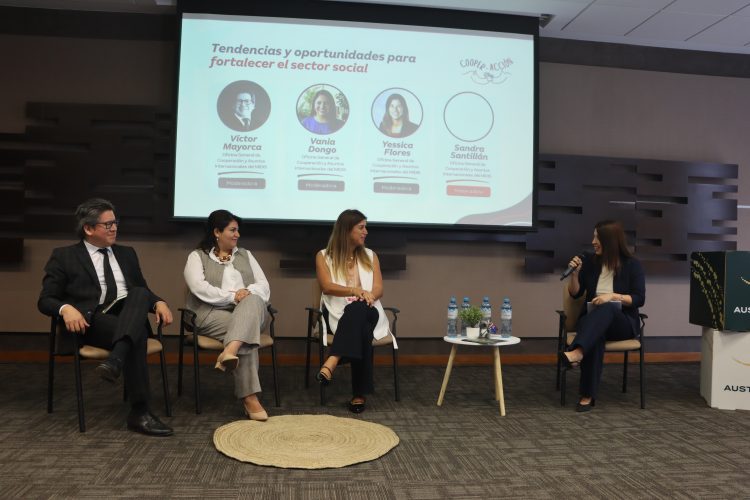
A pivotal moment in the summit occurred during the panel titled "Trends and Opportunities to Strengthen the Social Sector," moderated by Sandra Santillán. Víctor Mayorca, Head of the General Office of Cooperation and International Affairs at the Ministry of Development and Social Inclusion (MIDIS), provided a critical analysis of how international cooperation must align with the UN Sustainable Development Goal (SDG) 17: Partnerships for the Goals.
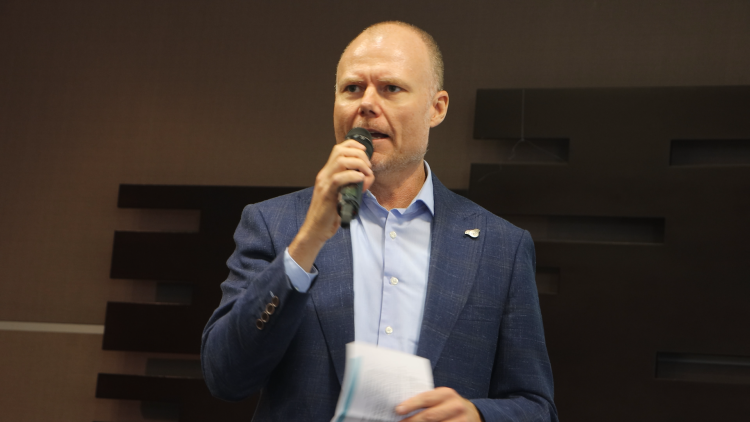
Mayorca redefined the role of modern cooperation, warning against the perception of aid agencies as mere "banks." He argued that the true value of cooperation lies in the mobilization of academic, technological, and bureaucratic expertise. "International cooperation is not a bank that gives you money, nor is it a travel agency; it mobilizes academic resources, technology, and public policy experiences," Mayorca asserted.
Strategic Recommendations for NGOs
Addressing the attendees—many of whom represented civil society organizations—Mayorca issued a call for professionalization. He urged NGOs to avoid the "silo effect," where organizations attempt to solve complex societal problems in isolation.
His key recommendations for enhancing impact included:
- Alignment with National Policy: Projects must be verified against existing ministerial and regional policies to ensure they complement rather than duplicate state efforts.
- Engagement with Regulatory Bodies: Organizations are encouraged to work closely with the Peruvian Agency for International Cooperation (APCI) to ensure their projects meet national standards.
- Regional Integration: Projects should be presented to municipal and regional governments to build a local support network, rather than seeking funding exclusively from central government or Congress.
Mayorca also highlighted the recent collaborative efforts between MIDIS and international partners like World Vision during natural disasters in Ayacucho, Arequipa, Puno, and the Junín earthquake. These experiences have prompted the Ministry to begin drafting a "Map of Strategic Allies" to streamline future emergency responses.
The Private Sector’s Evolving Role: From Charity to Capacity
Vania Dongo, Manager of Advocacy and Alliances at Roche Farma Peru, provided a compelling look at how the private sector is rethinking its relationship with the social sector. According to Dongo, the era of "checkbook philanthropy" is over. Modern corporate social responsibility requires the transfer of technical capacities and the scaling of successful models.
Dongo identified three persistent gaps in the healthcare ecosystem that require urgent attention:
- Information Asymmetry: The lack of data-driven decision-making in marginalized regions.
- Fragmented Healthcare Delivery: The disconnect between civil society health initiatives and the national public health system.
- The Gender-Health Nexus: Recognizing that health outcomes are inextricably linked to gender inequality, poverty, and the burden placed on unpaid caregivers.
"The issue is to identify that talking about health is talking about gender, talking about poverty, about opportunities, and sometimes about who cares for the caregivers," Dongo remarked. She offered a provocative view on the goal of any NGO: "If I need to stop existing to have fulfilled the mission for which I was born, it means that the entity capable of making this sustainable and scalable—which is the State—has adopted it."
Resiliency and Sustainability: The View from the Field
Yessica Flores, co-founder of the Asociación Kantaya, offered a practitioner’s perspective on the challenges of navigating the current landscape. Her organization, which focuses on educational and technical training for women, has become a model for integrating rigorous data and technical evidence into social intervention.
Flores emphasized that in an environment where funding is increasingly competitive, clarity of purpose is the primary survival mechanism for NGOs. "That clarity of purpose is so strong that, in the end, there is no ‘no’ that stops us," she stated. She advocated for a "rigor-first" approach, where civil society organizations invest as much in monitoring and evaluation as they do in field activities, thereby becoming attractive partners for both the state and the private sector.
The event, which was expertly managed by Gabriela Quevedo, Manager of the DAP for the Australian Embassy, concluded with a call to action: that the next 15 years of cooperation must be defined by deeper integration, greater transparency, and a relentless focus on the scalability of community-driven successes.
Implications for the Future of Cooperation
The 15th-anniversary celebration of the DAP in Peru is more than a milestone; it is a signal of a maturing relationship between international donors, host governments, and the civil sector. The implications for the future are clear:
- The End of Isolationism: Future development projects that operate in isolation will likely struggle to secure funding or long-term legitimacy. The trend is clearly toward projects that "talk" to national policies and regional development goals.
- Data as a Requirement: As highlighted by both the MIDIS and private sector representatives, the ability to produce measurable, evidence-based results is now the prerequisite for professional cooperation.
- The State as the Ultimate Scaler: There is a growing consensus that the role of NGOs and international aid is to "pilot" solutions that the State eventually adopts. This transition from "provider" to "policy-influencer" represents a fundamental shift in the development paradigm.
As Australia continues its diplomatic and humanitarian engagement in Peru and Bolivia, the DAP stands as a testament to the fact that when international resources are paired with local leadership and clear, strategic alignment, the impact extends far beyond the duration of the grant. It creates a cycle of empowerment that, when integrated into public policy, becomes the bedrock of sustainable development.