Introduction: A Geopolitical Powerhouse in the Energy Transition
Peru stands at a pivotal juncture in its economic history. As the global push toward decarbonization intensifies, the international demand for critical minerals—the raw materials necessary for battery technology, renewable energy infrastructure, and electric vehicles—has skyrocketed. According to recent findings from the Institute of Mining Engineers of Peru (IIMP), the nation currently produces more than 50% of the critical minerals essential for the global transition to a low-carbon economy.
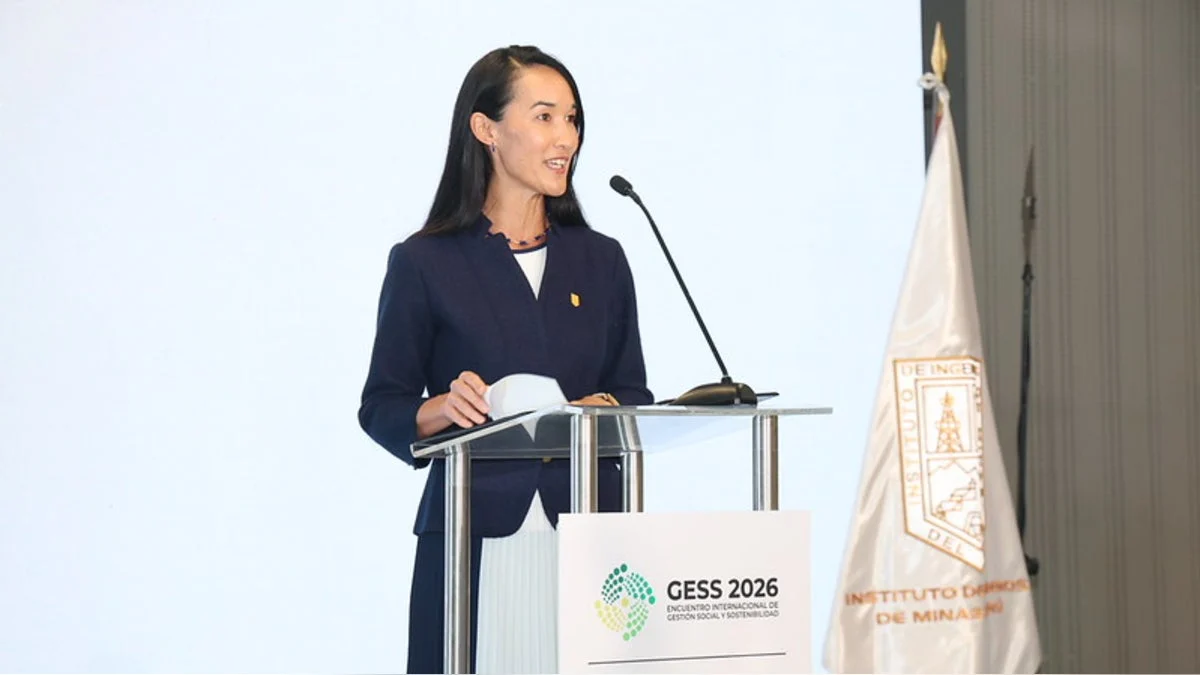
However, the path forward is not merely one of extraction. Tamiko Hasegawa, President of the International Meeting on Social Management and Sustainability (GESS 2026), posits that the true transformation of the mining sector lies in its ability to integrate innovation with social equity. For Hasegawa, the future of Peru’s mining industry must be defined by human capital development, specifically by opening doors for women and youth to lead the next generation of industrial operations.
The Pillars of Modern Mining: Copper, Lithium, and Global Supply Chains
The global energy transition is fundamentally a transition in materials science. To move away from fossil fuels, the world requires an unprecedented amount of copper for electrification and lithium for energy storage.
"The energy transition has elevated minerals like copper and lithium to the status of ‘critical’ because they are the building blocks of a low-carbon global economy," Hasegawa explained. Peru, already a top-tier producer of copper, is uniquely positioned to capitalize on this reality. As global supply chains are reconfigured to prioritize secure and sustainable sources, Peru’s role as a reliable partner in the international market is becoming increasingly vital.
The importance of these minerals cannot be overstated:
- Copper: Essential for power grids, wind turbines, and the internal wiring of electric vehicles.
- Lithium: The primary component in high-density lithium-ion batteries.
- Technological Integration: The sector is shifting from manual, labor-intensive processes toward automation and remote operations, requiring a more sophisticated and diverse workforce.
Chronology: The Evolution of Peru’s Mining Paradigm
To understand the current focus on social management, one must look at the evolution of the Peruvian mining landscape over the last decade:
- 2015–2018: The Era of Traditional Expansion. The focus was primarily on volume, output capacity, and large-scale infrastructure projects. Social management was often reactive, focused on conflict resolution rather than integration.
- 2019–2021: The ESG Pivot. Environmental, Social, and Governance (ESG) criteria became the industry standard. Companies began to recognize that "social license to operate" was not just a legal requirement but a business imperative.
- 2022–2024: The Technological Leap. The introduction of autonomous vehicles and digital monitoring systems began to change the physical profile of mine sites, reducing danger and inviting a more diverse workforce.
- 2025–2026 (The Road to GESS 2026): The current focus has shifted toward institutionalizing diversity and inclusion as a core pillar of technical excellence, ensuring that the wealth generated by mining benefits the youth and marginalized groups across the country.
Supporting Data: The Case for Diversity and Innovation
The economic argument for diversifying the mining workforce is supported by data on efficiency and labor gaps. As mines become more digitized, the demand for traditional manual labor is declining, while the demand for high-tech skills is surging.
Hasegawa highlights the case of the Quellaveco project as a benchmark for the industry. By implementing comprehensive training programs, the operation successfully integrated women into the driving of autonomous haul trucks—a role that was historically reserved for men. The results were twofold: the company closed internal gender gaps, and many of these women transitioned into highly specialized technical roles, proving that inclusive hiring practices lead to higher talent retention and operational stability.
Furthermore, the complexity of modern mining requires a multidisciplinary approach. It is no longer just a domain for geological and civil engineers. Economists, legal experts, environmental scientists, and social sustainability specialists are now essential to navigating the complex regulatory, community, and environmental landscapes of 21st-century mining.
Official Perspectives: Tamiko Hasegawa on Social Innovation
In her capacity as President of GESS 2026, Hasegawa emphasizes that the "social" aspect of ESG is often the most neglected, yet the most critical for long-term viability.
"It is fundamental that decision-making spaces include the perspective and experience of young people from the coast, the highlands, and the jungle," Hasegawa stated. She argues that top-down management models are becoming obsolete. Instead, the industry needs a "bottom-up" approach where the local youth—who are often the primary stakeholders affected by mining activity—are given the education and the platform to participate in the industry’s strategic direction.
Hasegawa’s vision for GESS 2026 is to foster a space where "innovation" is defined not just by new machinery, but by new social contracts. By prioritizing professional diversity, the industry can better anticipate community needs, mitigate environmental risks, and build a more resilient economic framework that serves the Peruvian people long after the minerals have been extracted.
Implications: Building a Resilient Future
The implications of this shift are profound for both the national economy and the global supply chain.
1. Economic Resilience
By diversifying the workforce, Peru mitigates the risks associated with labor shortages and social unrest. An industry that creates high-value jobs for its local youth is an industry that secures its own future through community support.
2. Strengthening the Energy Transition
If Peru can effectively scale its mineral production while simultaneously meeting high ESG standards, it will become the preferred supplier for Western nations looking to decouple their supply chains from non-transparent or environmentally hazardous sources.
3. Human Capital Development
The focus on training—specifically for women and youth—acts as a catalyst for regional development. By teaching high-tech skills in rural mining provinces, the industry is effectively decentralizing economic opportunity, pulling people out of poverty and into the modern, high-productivity economy.
Conclusion: A Call for Unified Action
The challenge for Peru is to avoid the "resource curse" by investing the profits from its mineral wealth into its greatest asset: its people. As the industry looks toward 2026 and beyond, the message from leadership is clear. The energy transition is not merely an opportunity to sell more copper or lithium; it is an opportunity to rewrite the social contract of the mining industry.
By embracing technological change, promoting gender parity, and empowering the youth of the coast, sierra, and jungle, Peru can prove that its mining sector is not just a driver of national GDP, but a engine for genuine, inclusive social development. The future of global energy depends on Peru’s minerals, but the future of Peru depends on its commitment to its people. Through platforms like GESS 2026, the nation is taking the necessary steps to ensure that both goals are achieved in tandem.