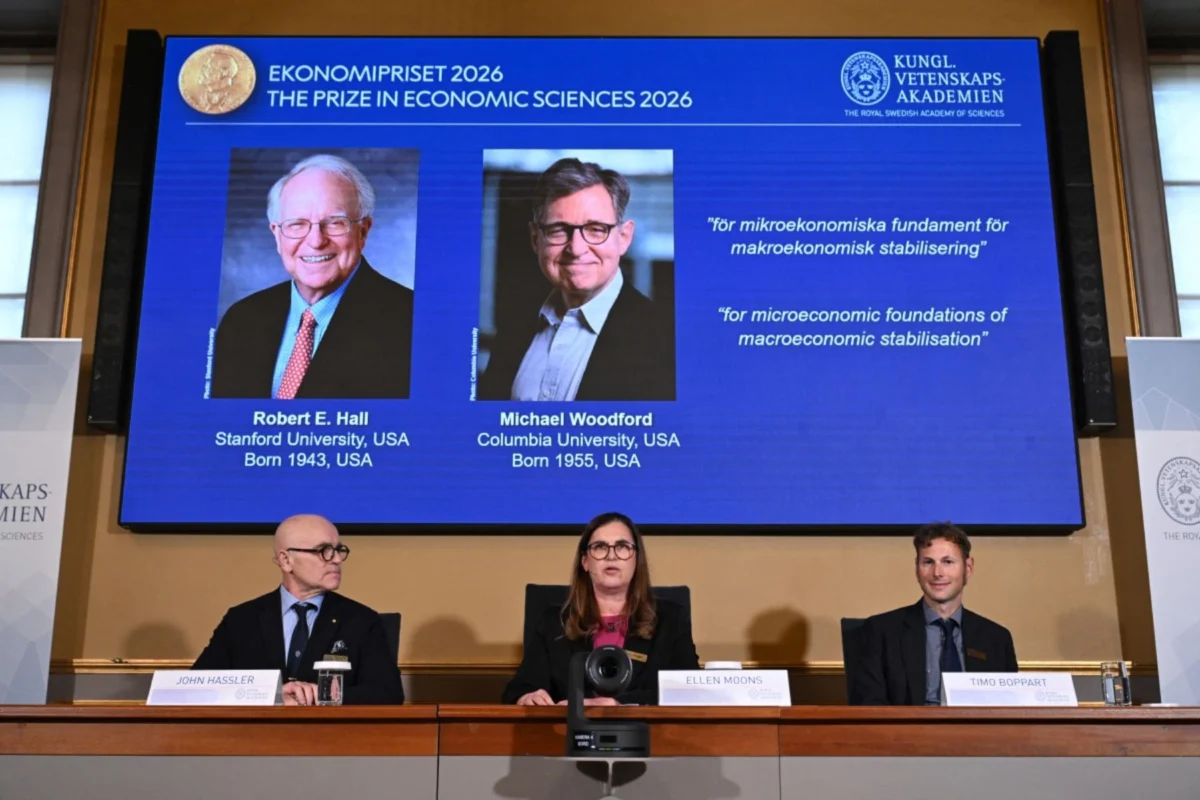
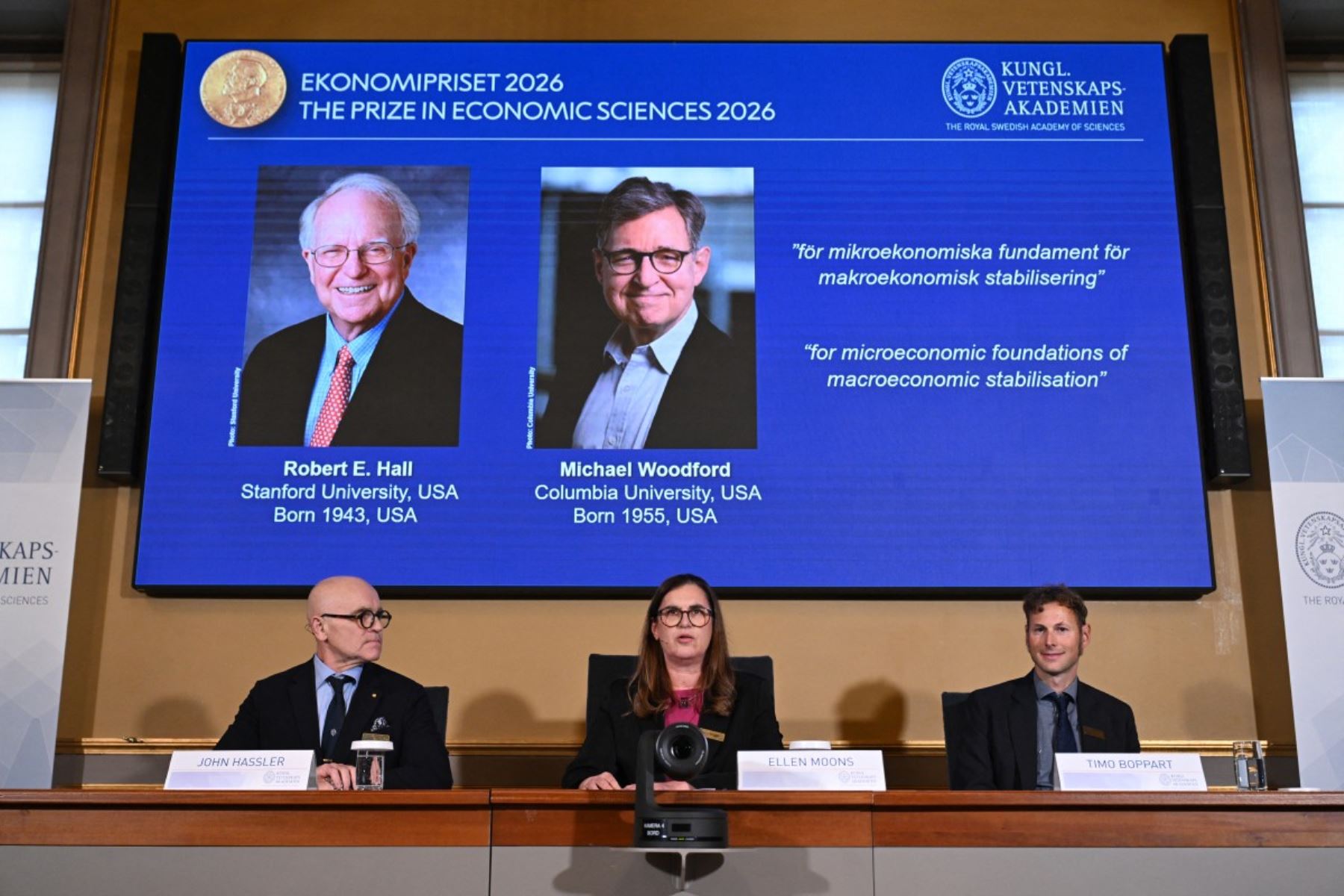
Stockholm, Sweden – October 12, 2026 – The Royal Swedish Academy of Sciences today announced that American economists Robert E. Hall and Michael Woodford have been awarded the 2026 Nobel Memorial Prize in Economic Sciences. Their groundbreaking research, which has fundamentally reshaped our understanding of macroeconomic stability by establishing robust microeconomic foundations, has provided central banks and governments worldwide with a powerful theoretical framework for navigating economic fluctuations. The prestigious award, shared equally by the laureates, comes with a prize of 12 million Swedish kronor, approximately US$1.2 million.
The announcement, made from Stockholm, marks the culmination of the 2026 Nobel Prize season. Michael Woodford, 71, expressed his astonishment and gratitude upon receiving the news. "It is an immense honor," he stated. "It is a surprise, but I am truly delighted."
The Microfoundations Revolution: A Paradigm Shift in Macroeconomics
The award specifically recognizes Hall and Woodford for their pivotal work in developing microfounded macroeconomic models. This theoretical leap was particularly crucial in the aftermath of the 1970s oil shocks, a period that exposed the limitations of then-dominant Keynesian models. These traditional models, which relied on statistical relationships between aggregate variables like inflation, production, and consumption, struggled to adequately explain or predict economic behavior in a rapidly changing global landscape.
Hall and Woodford’s innovative approach shifted the focus from aggregate statistics to the decisions of individual economic agents – households and firms. They demonstrated how these micro-level choices, crucially influenced by expectations about the future, collectively shape macroeconomic outcomes. This emphasis on forward-looking behavior and rational decision-making provided a more rigorous and insightful foundation for understanding economic phenomena.
"Thanks to these models, we are better equipped to confront economic impacts, such as energy crises or sudden changes in household consumption levels," explained John Hassler, chairman of the Nobel Committee for Economic Sciences. "Their work has provided a solid theoretical basis for the models that central banks and governments around the world utilize today."
Robert E. Hall: Unraveling the Mysteries of Consumption
Born in Palo Alto, California, in 1943, Robert E. Hall is an Emeritus Professor of Economics at Stanford University and a Senior Fellow at the Hoover Institution. His academic journey began with a Ph.D. from the Massachusetts Institute of Technology (MIT), where he was a student of Nobel laureate Robert Solow.
Hall’s most influential contribution, published in the late 1970s, established the concept of the "random walk" of consumption. This theory posits that individual consumption patterns are driven by forward-looking households that spend based on their anticipated future income. Consequently, any changes in consumption are primarily a response to new, unpredictable information. The Swedish Academy highlighted that Hall’s insights into the role of anticipation in consumption decisions resolved a long-standing puzzle for economists.
Since 1978, Hall has chaired the Business Cycle Dating Committee of the National Bureau of Economic Research (NBER) in the United States, the official arbiter of when recessions begin and end in the country. In collaboration with political scientist Alvin Rabushka, Hall also co-developed the "flat tax" proposal, a tax reform model advocating for a fixed percentage rate on consumption and income.
Michael Woodford: The Architect of Modern Monetary Policy Theory
Michael Woodford, born in Chicopee, Massachusetts, in 1955, is the John Bates Clark Professor of Political Economy at Columbia University in New York. His academic background is notably diverse, holding doctorates in both Law from Yale Law School and Economics from MIT.
Woodford is renowned for his seminal 2003 book, Interest and Prices: Foundations of a Theory of Monetary Policy. This comprehensive treatise is widely regarded as the modern "bible" of monetary policy, laying down the theoretical underpinnings for how central banks should set interest rates. Olivier Blanchard, former Chief Economist of the International Monetary Fund (IMF), has described Woodford’s model as the most influential in monetary policy for over fifteen years.
Furthermore, Woodford’s research illuminated the significant impact of transparent communication by central banks regarding their future policy intentions. His work demonstrated how such forward guidance could effectively stabilize financial markets. He is credited with defining key instruments that have become standard practice since the 2008 financial crisis, particularly in managing expectations about future interest rates.
In recognition of his profound influence on modern macroeconomic analysis and his establishment of rigorous foundations for the study of economic cycles, Woodford, alongside Olivier Blanchard and Jordi Galí, received the BBVA Foundation Frontiers of Knowledge Award in Economics in 2025.
A Legacy Beyond Academia: Shaping Policy and the Global Economy
The contributions of Robert E. Hall and Michael Woodford have irrevocably transformed how central banks design and implement their policies. The Royal Swedish Academy of Sciences emphasized that "well-timed fiscal and monetary policy measures can reduce the peaks and valleys of the economy." By clearly communicating their plans and strategies, governments and central banks can shape perceptions of the future and steer economies toward more stable and prosperous paths.
The Nobel Memorial Prize in Economic Sciences, established in 1968 by Sweden’s central bank, was not part of Alfred Nobel’s original will. It has been awarded annually since 1969, adhering to the same principles as the other Nobel Prizes. With this year’s announcement, a total of 101 individuals have received the economics prize, with only three women honored to date.
The 2026 Nobel Prize season concluded with this prestigious award. Previous laureates this year included Karl Deisseroth (United States) and Peter Hegemann and Georg Nagel (Germany) for Medicine; Francis Halzen (Belgium) for Physics; Henri Kagan (France) and Kenso Soai (Japan) for Chemistry; Anne Carson (Canada) for Literature; and Navi Pillay (South Africa) for Peace.
The work of Hall and Woodford represents a profound intellectual achievement that continues to resonate globally. Their insistence on rigorous microfoundations has provided economists and policymakers with an indispensable toolkit for understanding and managing the complexities of modern economies, ensuring greater stability and predictability in an often-unpredictable world. Their legacy will undoubtedly continue to shape economic thought and policy for generations to come.