By Editorial Staff
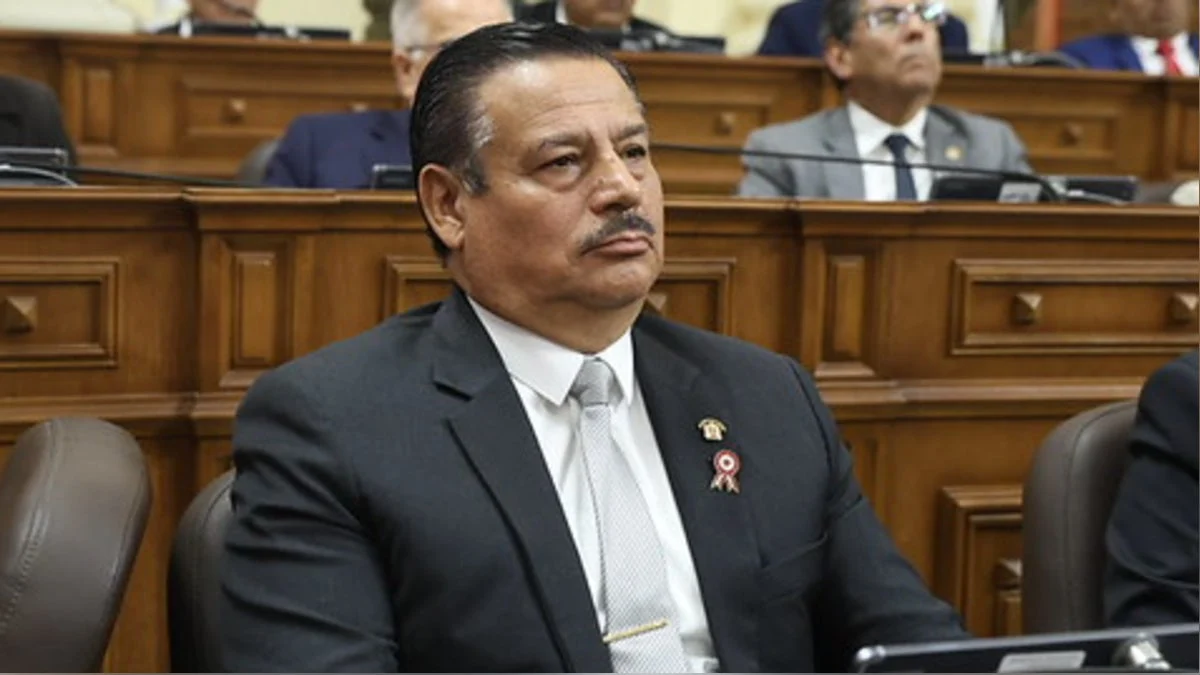
The political landscape regarding internal security in Peru has shifted dramatically following the introduction of a new legislative proposal by the "Juntos por el Perú" (JP) bench. The initiative, spearheaded by Congresswoman Catherin Palomino—who currently chairs the Chamber of Deputies’ Justice Committee—seeks to fundamentally alter the rules governing the tenure of the Commander General of the National Police. If passed, the bill would dismantle the current two-year fixed-term mandate, granting the President of the Republic the authority to remove the institution’s top official at any time should their performance be deemed inadequate.
This legislative maneuver arrives at a moment of heightened public anxiety regarding law and order, as the government faces mounting pressure to address the surging rates of organized crime and urban insecurity.
The Core of the Proposal: Flexibility Over Tenure
The central objective of the bill is to introduce a "performance-based" mechanism for the leadership of the National Police. Currently, the Commander General enjoys a degree of administrative protection through a mandatory two-year term, which was designed to insulate the position from the volatility of political cycles. However, Congresswoman Palomino argues that this stability has inadvertently turned into a barrier to accountability.
The draft law outlines specific "causals for removal," which would serve as the legal justification for the President to invoke a change in command. These include:
- Degradation of Operational Capacity: A demonstrable failure in the Police’s ability to respond to emergencies or criminal threats.
- Systemic Failure in Security Objectives: Persistent inability to meet national targets regarding the reduction of violent crime.
- Gross Negligence: Actions or omissions that directly threaten the safety of the civilian population.
- Institutional Harm: Any conduct that severely undermines the prestige, integrity, or functional hierarchy of the police force.
Proponents of the bill argue that in a national crisis, the Executive branch must possess the "political agility" to pivot leadership when results are not being delivered. Critics, however, fear that this could lead to the politicization of the police force, where the Commander General might be removed merely to satisfy shifting political winds or to scapegoat the institution for broader government failures.
A Chronology of Conflict: How We Got Here
The urgency behind this bill is inextricably linked to the ongoing friction between the legislative branch, the Ministry of the Interior, and the current police leadership.
Early 2026: The Security Crisis Peaks
Throughout the first half of the year, urban areas across the country experienced a spike in extortion, kidnappings, and retail-sector robberies. Public frustration reached a boiling point in mid-2026 following several high-profile criminal incidents that suggested a lack of coordination within the police ranks.
August 2026: The "Legal Impasse"
As pressure mounted on the government to replace Commander General Óscar Arriola, the Minister of the Interior, César Astudillo, appeared before the Chamber of Deputies. During his testimony, Astudillo revealed a reality that surprised many: he claimed his hands were tied. According to the Minister, the existing legal framework—a vestige of the previous parliamentary session—granted Arriola a protected mandate that could not be easily overturned without risking a protracted legal battle or violating civil service regulations.
Late August 2026: Legislative Intervention
Following the Minister’s admission of his inability to act, the "Juntos por el Perú" bench moved quickly. Recognizing that the current legal framework was being used as a shield by both the Executive and the Police high command, Congresswoman Palomino introduced the bill to retroactively allow for the removal of the Commander General, effectively bypassing the previous tenure protections.
Supporting Data and Institutional Context
To understand the weight of this proposal, one must look at the data regarding police performance and the current state of public perception. Independent security audits conducted in the first quarter of 2026 suggest a "decoupling" between budget allocation and operational results.
The Efficiency Gap
While the budget for the Ministry of the Interior has seen a 12% increase compared to the previous fiscal year, the clearance rate for crimes—the ratio of reported crimes that lead to a formal indictment—has dropped by 8%. Security analysts suggest that this is not a lack of resources, but a failure of command and control.
The Arriola Factor
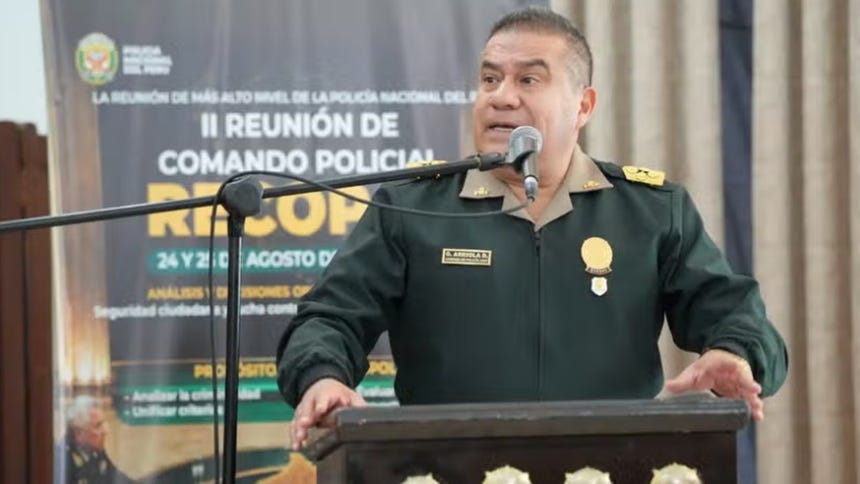
Commander General Óscar Arriola has become the focal point of this debate. While he maintains that his administration is working within the bounds of the law, he has faced intense scrutiny. Critics point to the recent incident in Cusco, where a criminal organization successfully robbed over 700,000 soles from a major supermarket chain despite, according to some reports, there having been intelligence warnings. These events have fueled the narrative that the current leadership is unable to adapt to the sophistication of modern criminal syndicates.
Official Responses and Political Maneuvering
The reaction to the bill has been sharply divided along party lines, reflecting the broader polarization in the Chamber of Deputies.
The Executive Branch’s Stance:
While the Minister of the Interior has publicly lamented his inability to remove the Commander General, there is internal caution within the executive branch. Sources close to the President suggest that while they welcome the power to make changes, they are wary of a bill that could be used by opposition parties to force the removal of police chiefs who are aligned with the government’s policy goals.
Congressional Opposition:
Opponents of the bill within the Congress argue that this is a "populist reaction" to crime. They contend that if the Commander General can be fired at the whim of the President, the position will lose its technical independence, and future appointees will prioritize political survival over professional police work.
The Police Union Perspective:
Within the rank-and-file of the police, there is a mix of frustration and anxiety. Many officers feel that the leadership has been disconnected from the realities of street-level policing. However, there is also a fear that the proposed bill could trigger a "revolving door" of leadership, where every new presidential administration cleans house, preventing any long-term strategy from taking root.
Implications: A New Era for Civil-Military Relations?
The implications of this legislative proposal extend far beyond the current police chief. If passed, it would signify a major shift in the balance of power between the civilian leadership and the security apparatus of the state.
1. Increased Accountability vs. Political Instability
The primary benefit is immediate: the government will have the tools to act when a crisis occurs. However, the risk is the institutional instability that follows frequent changes in leadership. In many countries, the "police chief" position is meant to be a professional, non-partisan role. By making it vulnerable to presidential whim, the bill effectively turns the position into a political appointee role, akin to a Minister.
2. The Path Forward: Parliamentary Hurdles
The bill must navigate a complex legislative process. First, it will undergo rigorous scrutiny by the Justice Committee. Given that the author of the bill is the chair of said committee, it is highly likely to receive a favorable dictamen. Once it reaches the Pleno, however, it will face a more diverse set of interests. Should it pass the Chamber of Deputies, it will proceed to the Senate, where it will likely be subjected to further amendments, potentially adding "checks and balances" to the removal process to ensure it is not used for purely partisan purposes.
3. Impact on Public Safety
Ultimately, the success or failure of this bill will be judged by the public’s sense of security. If the removal of the Commander General leads to a more proactive and effective police force, the law will be heralded as a necessary reform. If it leads to a series of short-lived police chiefs and a vacuum of authority, the government may find itself in an even more precarious position regarding public safety.
As the debate continues, one thing remains clear: the status quo is no longer sustainable. Whether through this specific piece of legislation or a different reform, the relationship between the Peruvian political class and the National Police is undergoing a necessary, if painful, redefinition. The eyes of the nation remain fixed on the Chamber of Deputies, waiting to see if this bill provides a solution to the crime crisis or merely adds a new layer of political conflict to an already strained system.